


[ad_1]
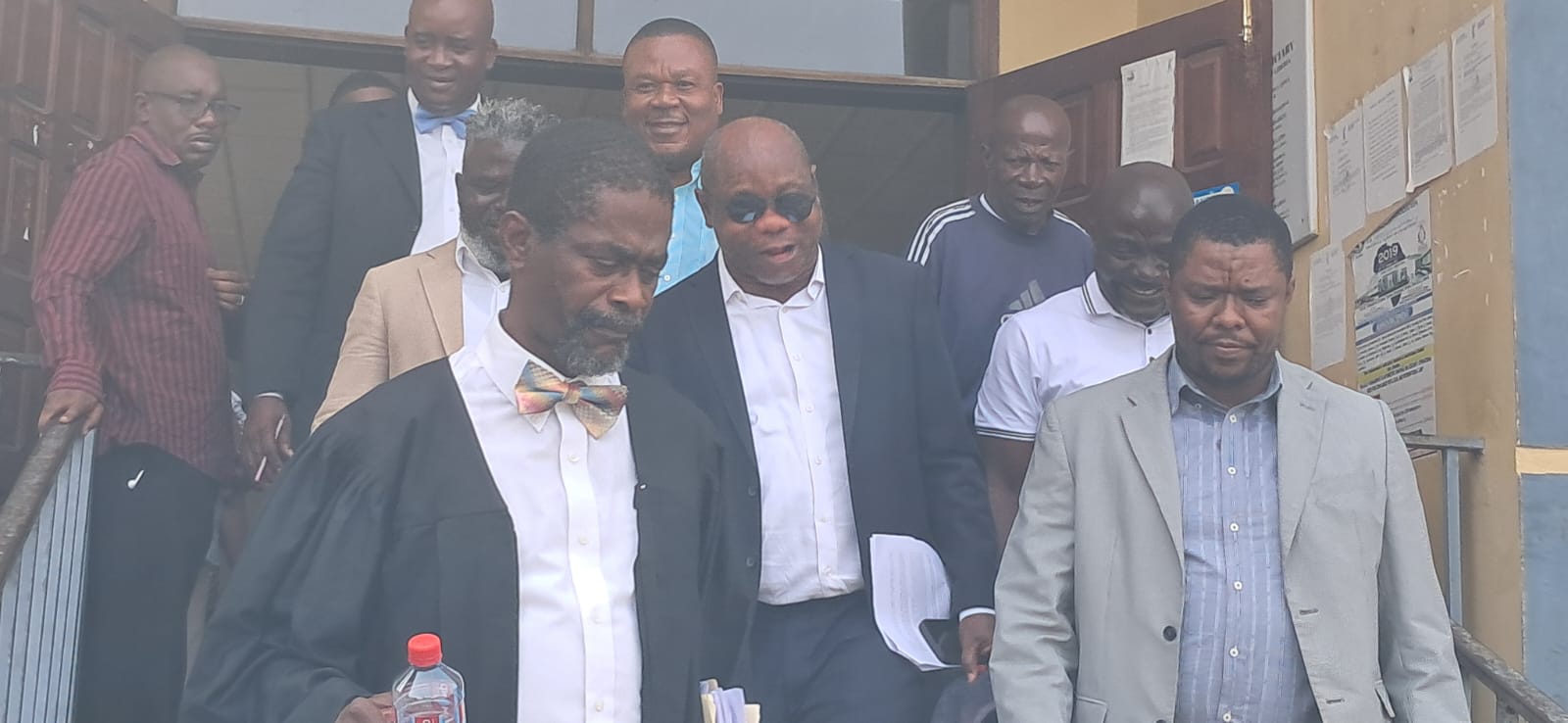
Monrovia-Criminal Court “C” under the presiding judge, Roosevelt Z. Willie, has rejected a motion to dismiss the alleged corruption case against Defendant Samuel D. Tweah and others.
By Willie N. Tokpah 0777039231
The decision has serious implications for the ongoing legal battle, as the court determined that the case must proceed to trial.
The Defendants, including Samuel D. Tweah, former Minister of Finance and Development Planning, and other Co-defendants had filed a motion arguing that their actions were shielded from prosecution by the National Security Reform and Intelligence Act of 2011. Specifically, they invoked sections 7(c) and 11(d) of the Act, which they argued granted them immunity for actions undertaken in the interest of national security.
However, in its ruling, the court emphatically disagreed, stating that not all actions, including financial transactions, undertaken by members of the National Security Reform Intelligence (NSRI) are exempt from prosecution. Citing Section 7(c) of the NSRI Act, which specifically mandates that members are not exempt from legally required accounting within the government, the court determined that any allegations of financial impropriety must be addressed through legal proceedings.
The prosecution, represented by the Ministry of Justice and the Liberian Anti-Corruption Commission (LACC), countered the motion, asserting that the defendants’ actions, including the alleged misappropriation of funds, fall outside the scope of national security interests.
The prosecution emphasized that the defendants’ conduct, specifically the unauthorized transfer of funds to the Financial Intelligence Agency (FIA), was not shielded by the provisions of the NSRI Act.
The case revolves around allegations that Samuel D. Tweah, along with co-defendants, conspired to illegally transfer substantial amounts of money to the FIA’s operational accounts.
According to the LACC’s investigation, these funds were not requested or authorized by the National Security Council or the National Joint Security, raising concerns about economic sabotage and theft of public property.
Criminal Court “C” further ruled that the Defendants’ claim of immunity under Article 61 of the 1986 Constitution of Liberia, which protects the President from prosecution, did not apply in this case. Although Tweah was a member of the National Security Council, the court found that the investigation did not uncover evidence of direct instructions from the President, which would have granted the defendants immunity under the said article.
The court’s decision to deny the motion to dismiss ensures that the prosecution will have the opportunity to present evidence and prove its case in court.
This ruling also underscores the court’s stance on holding individuals accountable for alleged financial misconduct, regardless of their positions within national security agencies.
The case is set to proceed, and the legal battle will continue to unfold, with the prosecution seeking to hold the defendants accountable for the alleged misappropriation of government funds.
The decision marks a critical moment in Liberia’s ongoing efforts to tackle corruption at the highest levels of government.
[ad_2]
Source link


