


Prices’ check
- Portable power stations won’t solve all your load shedding problems and they look better like giant battery packs.
- Most do not function as always-on transfer devices, such as auto-start inverters.
- But they can keep your laptop, WiFi and other home devices powered from the mains during power outages.
- Some are also charged by portable solar panels, and are also useful if you’re inclined to do historically powerless things like camping.
- If you must carry your power bank around the house during load shedding, here’s how to compare locally available options.
- For more stories, visit www.BusinessInsider.co.za.
Portable power stations are becoming increasingly popular around the world and have been the subject of massive marketing campaigns in recent years, especially on social media.
Much of the hype and availability has been in regions where their use cases feel a bit shoehorned in, like micro-influencers paid to paint post-apocalyptic scenes, like a freak storm knocking out a power line. Or present them as the perfect accessory when you have no other way to power the projector and popcorn machine for your seasonal outdoor movie theater.
But thinking about it, this is not as strange as it may seem. While South Africa may be a global electricity basket case right now, ripe for any kind of home power assistance, these portable power plants were never intended to solve the problems of a permanently ailing grid.
These wheeled blocks, the largest of which weighs about the same as three bags of charcoal briquettes, can accept standard plugs, and some even power larger devices like power tools, laptops, or even TVs.
Some are also rechargeable via portable solar power panels and have things like apps or digital displays that can tell you exactly how much electricity your fryer is consuming and how slowly cloudy winter skies are replenishing the giant internal battery.
Although they are not designed to run non-stop through South African level load shedding and will be less profitable and reliable in the long run than a traditional inverter, they are quite useful tools to have on hand.
The sheer number of products now entering the market also means there are a number of items now competing for your credit card details, and which one to choose will likely depend on how you intend to use it.
Significant points of difference between competitors are often somewhat frivolous add-ons given the seriousness of our electrical needs, such as additional AC and USB outlets, carrying handles, LCD screens, built-in flashlights, sturdiness, and pleasing color combinations.
For South African purposes, the main point of difference will probably be how long it will actually last before the battery dies, also known in the battery world as cycles.
Most locally available portable power stations will give you around 500 cycles, which is one full charge and discharge, before they start to slow down.
With this in mind, it’s probably worth investing a bit more in larger batteries: a power station that only lasts a single stage of load shedding before needing a recharge, for example, will only survive about two years under current circumstances. load disconnect.
If your bigger, more expensive battery means you’re only charging your power station every two or three stages of load shedding, it’s likely to last a bit longer.
You’re also paying a bit more for its convenience and clutter-worthy novelty factor. Since they were initially built for freak storms, outdoor movie theaters, and biannual camping trips, you’re probably better off sticking with an original inverter setup if portability and convenience aren’t essential.
And most also aren’t designed for always-on transfer functionality like many inverters, so you’ll have to plug them in when the power goes out.
Still, it’s hard to beat the ability to carry a battery around the house with easy AC plugs, especially if you spontaneously want to keep your beer cold in the fridge or do a little computer work away from your desk.
Here’s how various portable power station options currently available in South Africa compare:
EcoFlow DELTA
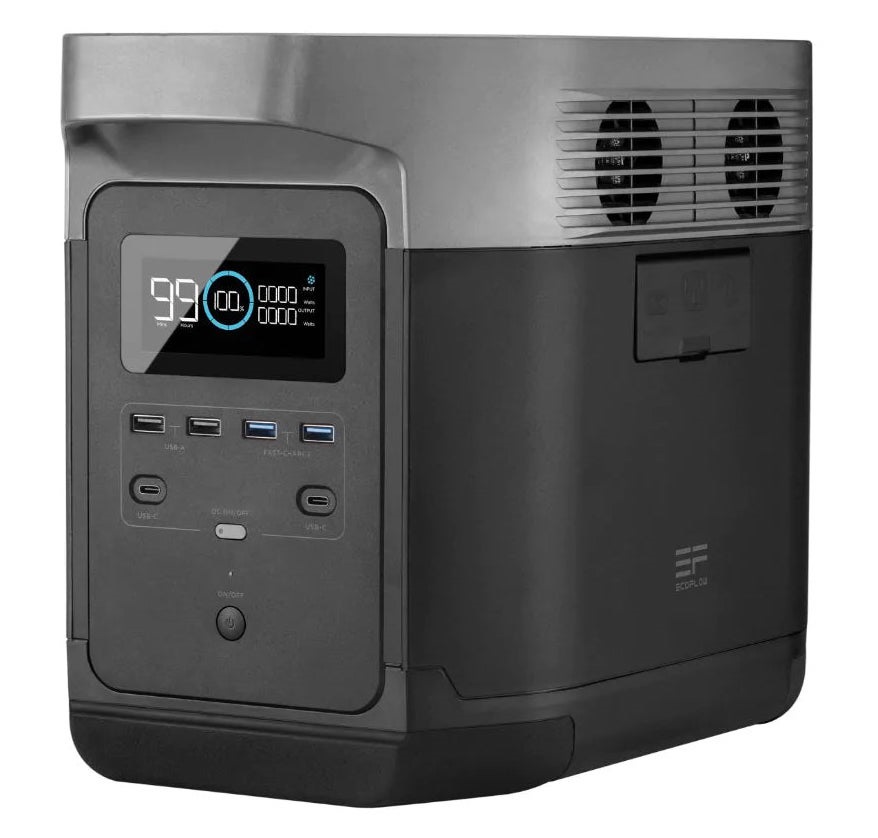
The EcoFlow DELTA offers great power at a reasonably competitive price when it comes to keeping you powered up during blackouts. It has four AC outlets, charges up to 11 devices at once, and supports anything from small appliances to power tools. Its 1260Wh capacity is impressive. And it claims a recharge time of 0-80% in less than an hour, perfect for those days of incessant Stage 6 charge disconnection. Optional EcoFlow solar panels and car accessories allow you to charge when there’s no power.
Ability: 1260Wh
AC outlets: 4 (SA sockets)
Weight: 14kg
Dimensions: 40x21x27cm
Battery Cycles: 800 cycles at 80%+ capacity
Cost: RRP: R26,999; lowest price found online: R23,900.
EcoFlow DELTA Max 1600
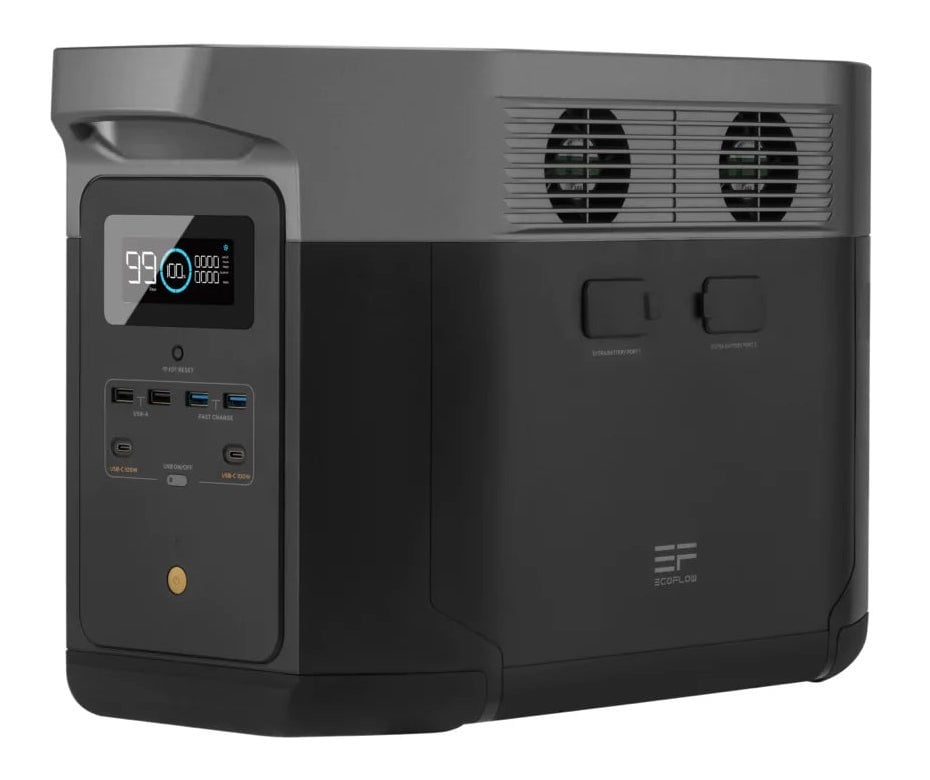
For those with a little more gear to spare, DELTA’s Max version of EcoFlow takes things up a notch. It will cost you at least R6,000 more, but you get a capacity boost to 1612Wh, more if you go for the 2000 version. With this, you aim to easily power up devices and appliances like fridges and microwaves up to 3000w. It also has fast dual charging and can be connected to solar panels.
Ability: 1612Wh
AC outlets: 4 (US plugs)
Weight: 22kg
Dimensions: 49.7 x 24.2 x 30.5cm
Battery Cycles: 500 cycles at 80%+ capacity
Cost: RRP: R33,999; lowest price found online: R30,300.
Jackery Explorer 1000
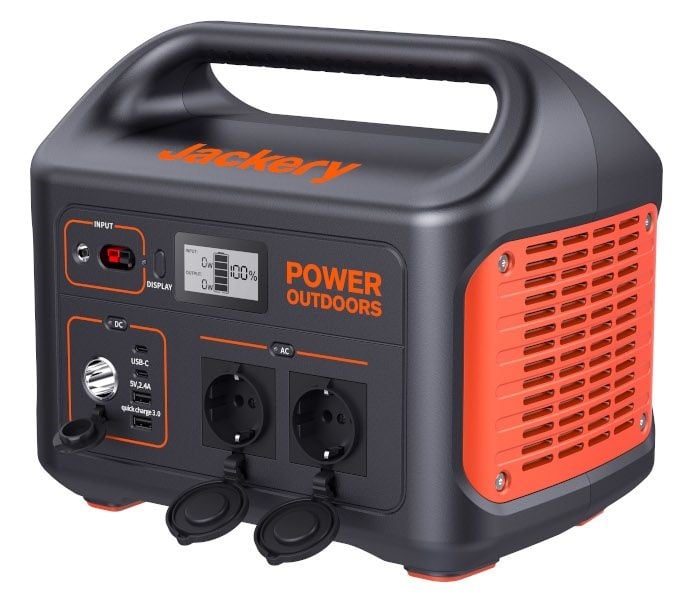
The Jackery Explorer 1000 has a 1002 Wh lithium battery and claims to be one of the most powerful on the market. It is available in South Africa, with South African plugs, and is very portable at only 10kg and with a large carry handle. You can charge electronics and household items through AC outlets and USB-A and USB-C ports, and you can recharge it from your car battery or optional solar panels.
Ability: 1002Wh
AC outlets: 2 (SA sockets)
Weight: 10kg
Dimensions: 13″ x 9″ x 11″
Battery Cycles: 500 cycles at 80%+ capacity
Cost: RRP: R22,950; lowest price found online: R22,800.
Jackery Explorer 250
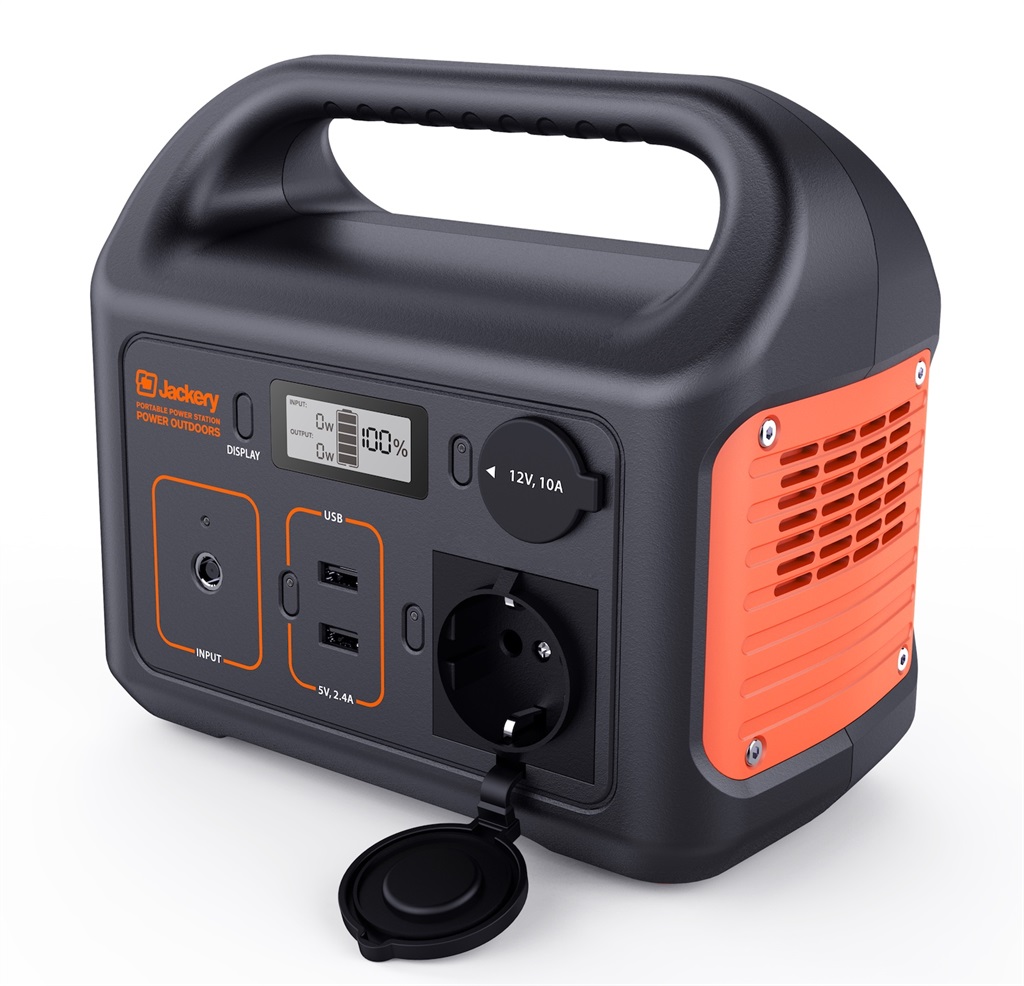
The smallest and cheapest version of the Jackery Explorer 1000 is the Explorer 250. You’ll save a lot on your initial capital outlay, which means you’ll lose some features and a lot of capacity and be able to charge fewer devices at once. Still, with the ability to power a TV for three hours and keep your laptop, phone and fiber running, it’s a good choice for Stage 2 optimists. And it weighs just 3kg if you’re considering taking it elsewhere. As with the Explorer 1000, you can also charge this powerhouse via optional solar panels.
Ability: 257Wh
AC outlets: 1 (SA sockets)
Weight: 3.1kg
Dimensions: 14x23x20cm
Battery Cycles: 500 cycles at 85%+ capacity
Cost: RRP: R6,950; lowest price found online: R6,500.
Gizzu 518Wh
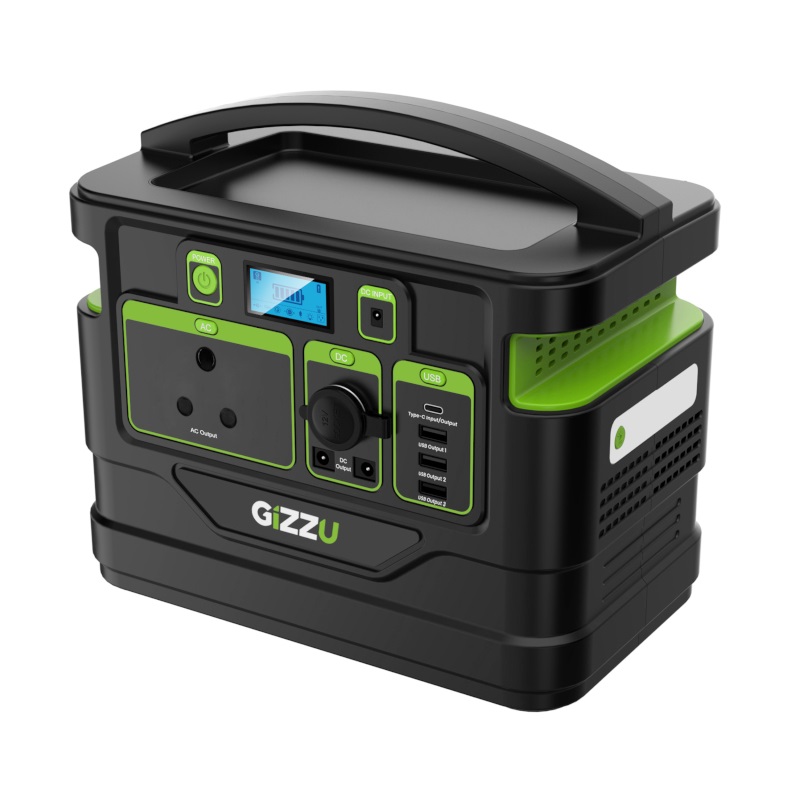
Gizzu is a popular accessories brand that sells a variety of load shedding related items, including portable power stations. Items currently available in local markets are generally smaller in capacity than higher-end power plants, but they are also considerably cheaper. The higher capacity Gizzu power plant is your 518 Wh option. It has a three-prong AC plug that can power a refrigerator, router, or small appliances. Like others on the market, it also has an optional solar panel to recharge from the electrical network. A big plus point: the Gizzu 518Wh has a lifespan of 1000 battery cycles.
Ability: 518Wh
AC outlets: 1 (SA sockets)
Weight: 5.14kg
Dimensions: 26.4 x 23.4 x 16.3cm
Battery Cycles: 1000 cycles
Cost: Lowest online price found: R7,890.
Gizzu 155Wh
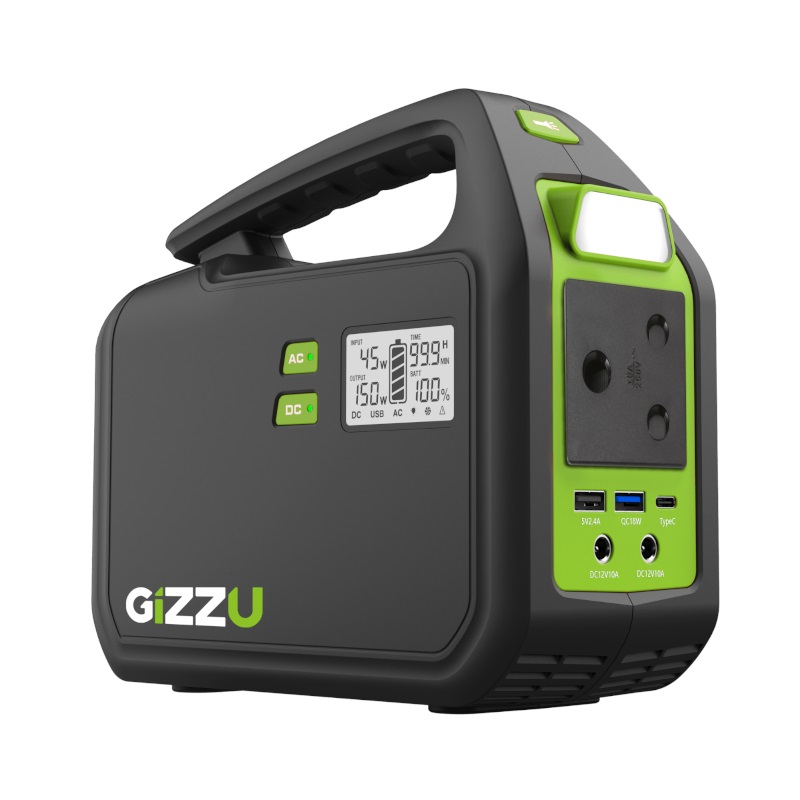
The smallest and cheapest of Gizzu’s portable power stations is just 155 Wh, but it’s a good budget option for keeping routers and laptops alive during blackouts. It has an AC plug and three USB ports and is lightweight and durable. Although it’s only a few steps away from a recharged battery pack, it’s useful for emergency mains-style charging.
Ability: 155Wh
AC outlets: 1 (SA sockets)
Weight: 1.89kg
Dimensions: 20.4 x 9.1 x 18.7cm
Battery Cycles: 500 cycles
Cost: Lowest online price found: R2,950.


