


That’s according to the UN trade and development agency UNCTAD, whose analysts said global growth “turned negative” during the second half of 2022.
The UN agency said trade in goods and services is expected to reach $25 trillion and $7 trillion, respectively, by the end of the year.
the the recession began in the third quarter of the yearwith goods trading around one percent lower than March through May.
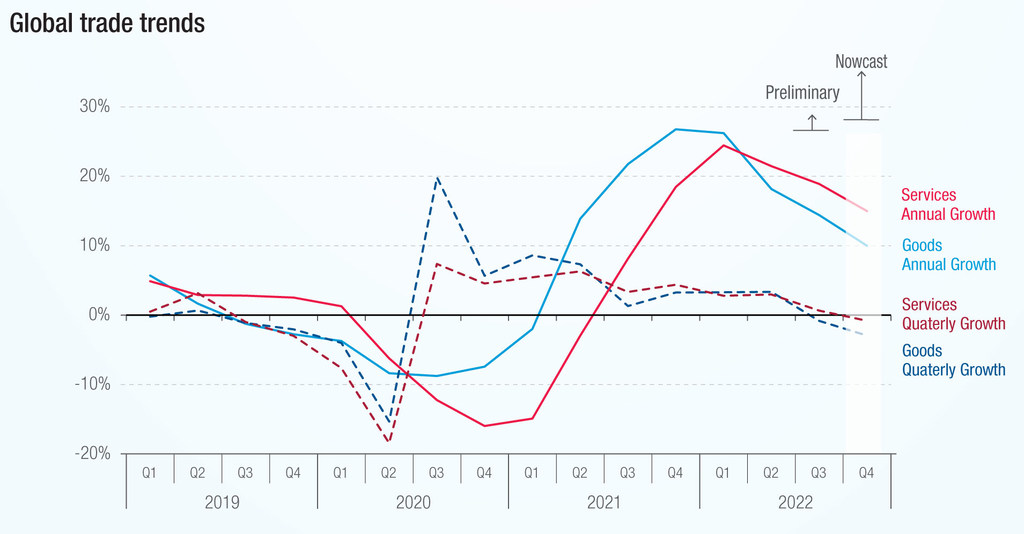
UNCTAD calculations based on national statistics.
values go down
In its world trade update, UNCTAD said that while services actually raised At 1.3 percent in the third quarter, both goods and services are expected to lose value in the run-up to the end of the year.
Demand for foreign goods “proved resilient” through 2022, according to the Trade and Development Update, with an overall increase in trade volumes of three percent.
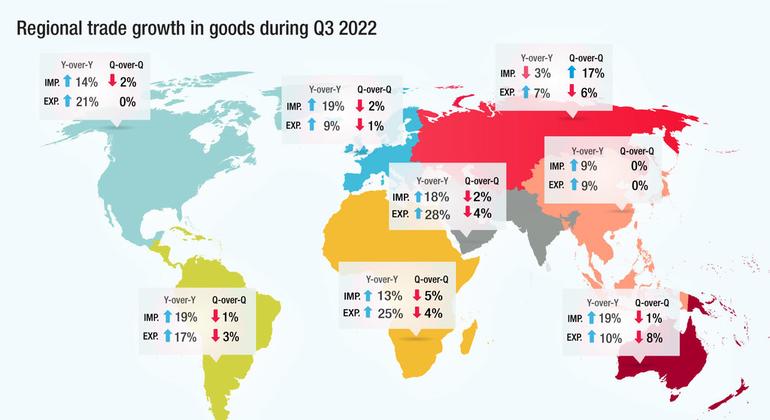
Trade volumes of the East Asian economies have shown resilience, while South-South trade lagged during the third quarter.
General, “Geopolitical frictions, persistent inflation and weaker global demand are expected to negatively affect world trade during 2023”, UNCTAD said in its highlights report.
negative factors
Among the negative factors that are revealed are the forecasts of lower economic growth until 2023 due to high energy prices, rising interest rates, sustained inflation in many economies and the depressing impact of the war in Ukraine.
The prices of components and consumer goods are expected to decrease the demand for imports and lead to a decrease in the volume of international trade.
Record levels of global debt and rising interest rates, “raise significant concerns for debt sustainability”, increasing the pressure on the most indebted governments, and “amplifying vulnerabilities”.
positive factors
At the top, ports and shipping companies have adjusted to the supply chain crisis brought on by the COVID-19 pandemic, with new ships coming into service and port congestion largely resolved, UNCTAD said.
Recently signed trade agreements, such as the Regional Comprehensive Economic Partnership in Asia-Pacific (RCEP) and the African Continental Free Trade Area (AfCFTA), “should come to fruition and give some impetus” to the entire international system, highlights the report. .
Risk and uncertainty remain high for global supply chains in general, but Efforts to build a greener global economy are expected to stimulate demand. of environmentally sustainable products, UNCTAD said, as demand for high-carbon goods declines, and for fossil fuels.


