


It’s been a surprisingly eventful year for providers of plant-based meat alternatives.
For years these products sat innocently stored in supermarket freezers, often ignored by carnivores until faced with the dilemma of hosting a vegan in a braai.
That all changed when the agriculture department decided to clamp down on plant-based meat alternatives with regulations that could see them seized from supermarket shelves.
If that happened, it would have been the end of Herbi Vohr, a small Johannesburg-based company that has been producing these alternatives for six years.
Instead, the verbiage had the effect of drawing more attention to the industry, says Anneke Malan, co-owner of the company.
Rather than feel oppressed by the dispute, which has stalled until at least mid-May, when the requested injunction against the department will expire, Malan and Herbi Vohr CEO Daniel Malan are hopeful. This is because the plant-based lifestyle has become more common, with more options in supermarkets and restaurants for vegans and others who just want to cut back on meat.
‘angry vegans’
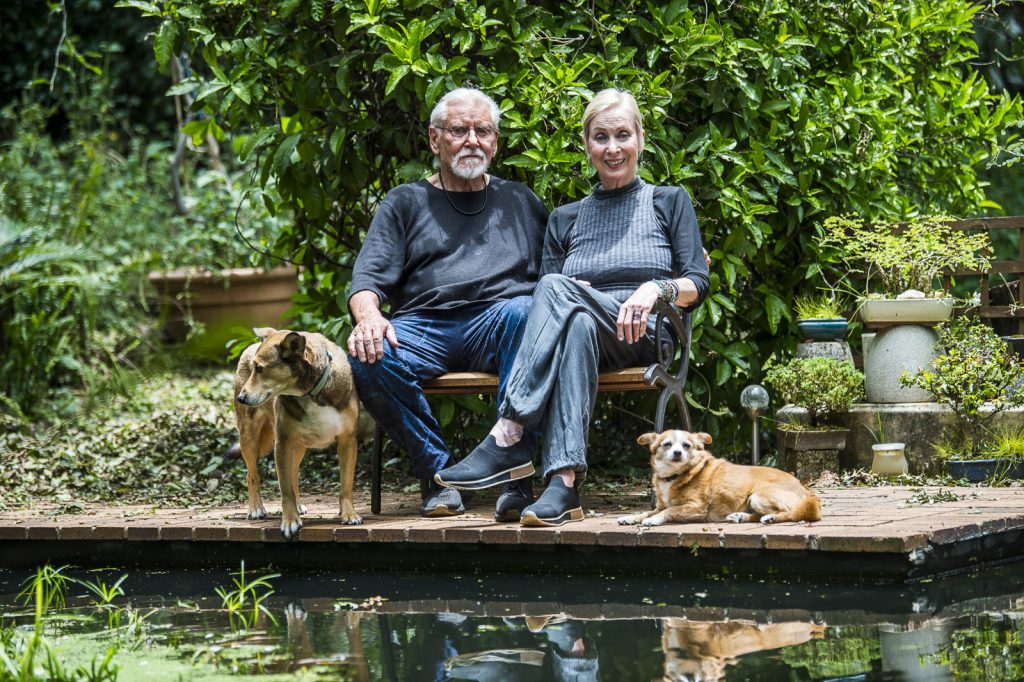
The couple sit in their lush Joburg garden, which has recently been hit by a summer hail storm. The neighbor’s cat, Raku, has positioned himself in front of Daniel, who speaks over the soft coos of his rescued chickens, Daisy, Rosie and Poppy.
“The point is, if you look at it from a human point of view, it’s taken us a long time to get to where we are now. But if you look at it in a global sense, it’s like an instant. It has taken so long and so many thousands of years to get to where we are. And all this is happening in a very short time,” says Daniel, reflecting on the current state of the plant-based industry.
Anneke describes Daniel, the mastermind behind Herbi Vohr’s product range, which includes vegan steaks, bacon and pastrami, as a cross between an artist and an alchemist.
For Daniel, it was important that the products looked and tasted as close to the original as possible.
“Many people who are not vegan or vegetarian ask why we would want to eat things that look and taste like meat. But we don’t stop eating meat because we don’t like its taste. It is for ethical reasons,” he says.
“And we still like to eat things that we’re familiar with… Also, we initially made this for vegans, but I think what we do is important to show people that they don’t have to eat animals to have something similar to what they want. you are used to
Anneke adds: “Some vegans are really scared by our products. But most people appreciate the fact that we give them a replacement that reminds them of the original.”
The first stage of veganism, Anneke explains, often requires being quite radical. “We were angry vegans. Then after a while you get pragmatic and realize that being an angry vegan actually backfires. So instead of trying to exclude non-vegans, we should be actively including them and making it easy for them.”
This more pragmatic attitude towards the market also underlies On The Green Side’s business strategy. Founded in 2018, the small start-up creates a plant-based alternative that mimics the texture, flavor, and mouthfeel of chicken.
Adaptation
“In South Africa, we eat a lot of meat,” says John Uys, general manager of sales and distribution for On The Green Side.
“Hence, the products they make in this category, plant-based meats, have to appeal to flexitarians. We need people who eat meat to take advantage of our category. That will drive growth.”
Uys says that On The Green Side aims to make a plant-based diet more accessible to people who want something different that they can adapt to recipes that typically use meat. Unlike the tried and tested versions of plant-based chicken (usually breaded nuggets or burgers), On The Green Side makes steaks that are closer to raw protein.
“We want adoption to happen on a larger scale. People try plant-based, because it’s a novelty. But they don’t do it again for various reasons”, explains Uys.
“With our products, because it’s a full-cut, clean-label product…you can include it in any meal. You can make a Thai chicken curry, a Malaysian satay, a Korean barbecue, or just a South African braai. But you can’t do all that with pips.”
This characteristic of On The Green Side’s plant-based chicken has made it an attractive option for restaurants, which have shown a growing appetite for plant-based menu alternatives.
Vida e Caffè recently launched a vegan range using On The Green Side’s plant-based chicken. In doing so, the coffee franchise has followed in the footsteps of other well-known restaurant brands, including Burger King and Nandos, which recently revamped their plant-based offering by launching their “Great Pretender” menu items.
Competition among restaurants, as well as with major retailers like Checkers and Woolworths, has fueled growth in the category, says Uys.
“That is driving sales [and] it seems south africans are very open to at least trying it plant based. So there’s definitely some movement. I must say that I am surprised by the acceptance”.
Earlier this year, Deloitte released a report suggesting that the market for plant-based meat products in the United States was more limited than many previously thought. The American population open to repeat purchases of plant-based alternatives may have already reached a saturation point.
The number of consumers who sometimes buy these products for themselves or their homes did not grow in 2022, according to Deloitte.
Deloitte’s research coincides with recent reports that Beyond Meat’s growth has stalled. Launched in the US a decade ago, Beyond Meat was one of the first companies to offer plant-based alternatives that closely mimicked the look, taste and mouthfeel of meat. The range of the brand is sold in South Africa at a high price.
But it’s harder to tell if South Africa’s plant-based market is growing or slowing. There is almost no data to show how far the country’s plant-based market has grown over the years, says Donovan Will, director of ProVeg South Africa.
ProVeg advocates for the transition to plant-based lifestyles and economies, working with the public and private sectors.
Sustainability
Research by global consultancy Nielsen showed that in 2017 just 0.1% of South Africans were vegan, 2% vegetarian and 14% flexitarian. Without data from previous years, or those that followed, this still doesn’t tell the whole story.
“But then the next thing to consider would be the new products, the longevity of the products that came in a while ago and are still here,” Will says.
“For example, Beyond Meat has been here for just over four years and they are selling two burgers for R120. The fact that they are still here and still selling products shows that there is a demand for it.”
Greater variety at retailers and more choice at restaurants are also indicators of demand. Pick n Pay offers at least five brands that make plant-based meat alternatives. Ladies too. Woolworths has its own extensive line of plant-based food products.
“It’s definitely growing, but there’s very little evidence to show that it’s growing because of vegans and vegetarians, because of the small group they represent,” says Will. “When the growth rate starts out so small, it doesn’t explain all these products at Woolworths.”
Demand for these products is clearly driven by people who want healthier, more sustainable food, Will adds. This gives brands like Herbi Vohr and On the Green Side access to a much larger market, while also making the transition to a plant-based lifestyle easier for the unsaved to chew on.
“If you ask the average South African, ‘Are you concerned about the environment? Do you worry about your health? Do you care about animals? Everybody says yes,” Will notes.
“There are very few people who will say, ‘I don’t care about my health at all. I don’t care about the environment at all. I don’t care about animals at all. But would you be willing to go vegetarian for all that? No… So, by offering products that taste exactly the same [as meat], you don’t have to convince anyone of the health benefits, environmental benefits, or any benefits. You just say that there is a better product here.”


