


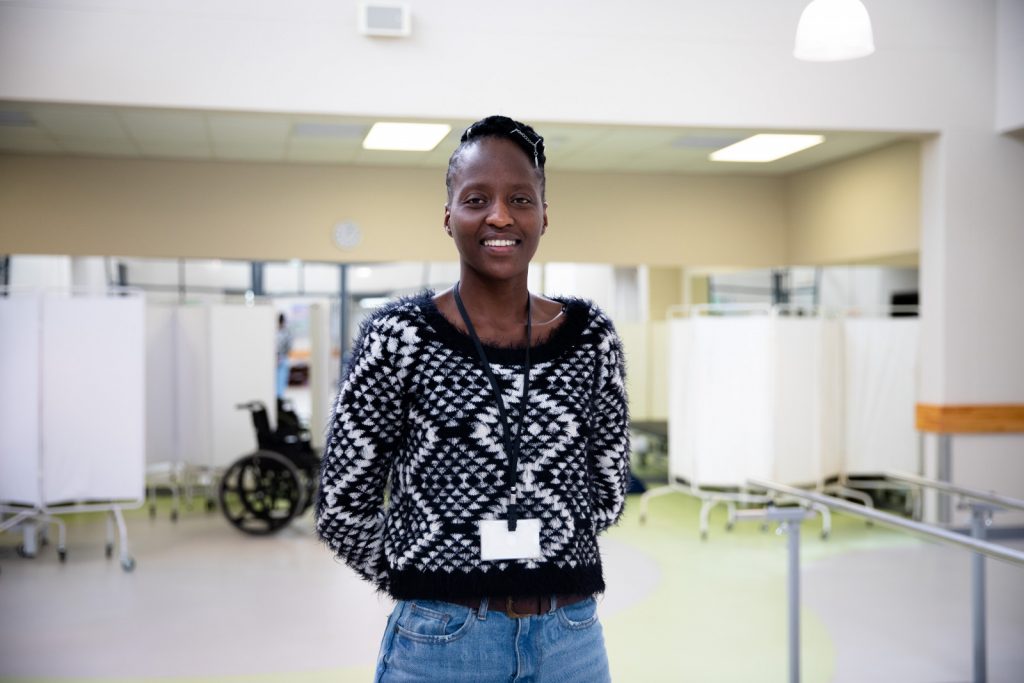
Nomkhosi Mkhwanazi, 35, sits in her office at Hlabisa Hospital in the small rural settlement in KwaZulu-Natal that gives its name to this district health center, about a three-hour drive north of Durban.
She is a dietician and the only one in the hospital.
Mkhwanazi grew up in Hlabisa and has spent most of her life here.
She is also one of 500 health workers who have been helped by the Umthombo Youth Development Foundation to study health sciences since 1999. Like Mkhwanazi, the students come from poor rural backgrounds and receive funding and mentoring during His studies.
In return, they are expected to work at the hospitals in (or near) the cities or towns they grew up in after graduation, for the same number of years the foundation supported them.
Mkhwanazi was contractually forced to work in the Hlabisa area for four years, but stayed much longer. This month, she would have worked here for nine years.
In fact, her desire to help people in her community is what led her to become a dietitian in the first place.
“I always wanted to come back and work here,” says Mkhwanazi. “Before I became a dietitian, I was a nursing student here at the hospital. I noticed that many patients were not gaining weight due to their illnesses or because they had difficulty buying food.”
Dietitians provide these patients with evidence-based advice on what kinds of foods they should eat. “If patients are too sick not to eat, dietitians prescribe the appropriate nutritional supplements,” adds Mkhwanazi.
If the patients Mkhwanazi was seeing lived in cities like Cape Town or Durban, they probably would have had the option of consulting dietitians in public hospitals.
But here in Hlabisa, things are different.
“There wasn’t a single permanent dietitian at the hospital until I started working here in 2013,” says Mkhwanazi. “So I decided to study dietetics and then come back to serve my community.”
Doctors raised in rural areas are more likely to work there
Mkhwanazi’s story reveals why Umthombo was created.
People who grew up in rural towns are much more likely than their urban counterparts to take jobs in rural clinics and hospitals, where they are desperately needed.
A 2019 study following medical students at the University of the Witwatersrand (Wits), for example, showed that five years after graduation, doctors who grew up in rural areas were almost five times more likely to work in rural hospitals than those who greeted of cities
Research from other South African medical schools has found similar results.
So what about Umthombo’s own data?
A 2015 study showed that almost 95% of the 185 health sciences students who had graduated in 2013 fulfilled their contracts and worked during the entire period they received support in a rural health center or were in the process of doing so . And of those who had fulfilled their obligations, 71% stayed in these areas afterwards.
Foundation graduates gain skills that rural hospitals and clinics struggle to attract or retain at those facilities, according to a 2021 study published in BMC Health Services Research found.
A 2011 health department report shows that of the 1,200 medical students who graduated each year, only 3% ended up working in rural areas 10 to 20 years later. There is no new data from the health department, but a 2019 study that tracked doctors who graduated from Wits between 2007 and 2011 found that only 7% worked in rural areas.
This contributes to the huge mismatch in the ease with which people in remote districts can obtain healthcare compared to those in the country’s metropolises.
But why do people who grew up in rural areas and now have the means to live anywhere in the country (or even emigrate) choose to work in small South African settlements and often in resource-poor facilities?
To find out anecdotally, Bhekisisa traveled to three hospitals in rural KwaZulu-Natal, where Umthombo graduates now work. We spoke to 10 of them, each of whom grew up in these districts.
We also spoke to six Umthombo-supported medical students at the University of KwaZulu-Natal (UKZN) who come from deep rural communities about their intentions to return.
Family and finances: the advantages of living in a rural area
Many of the students and health workers who Bhekisisa Whom he spoke to echoed Mkwhanazi’s reason for returning to working in rural areas.
Knowing how deprived their communities are of decent healthcare is a big part of what drives them home.
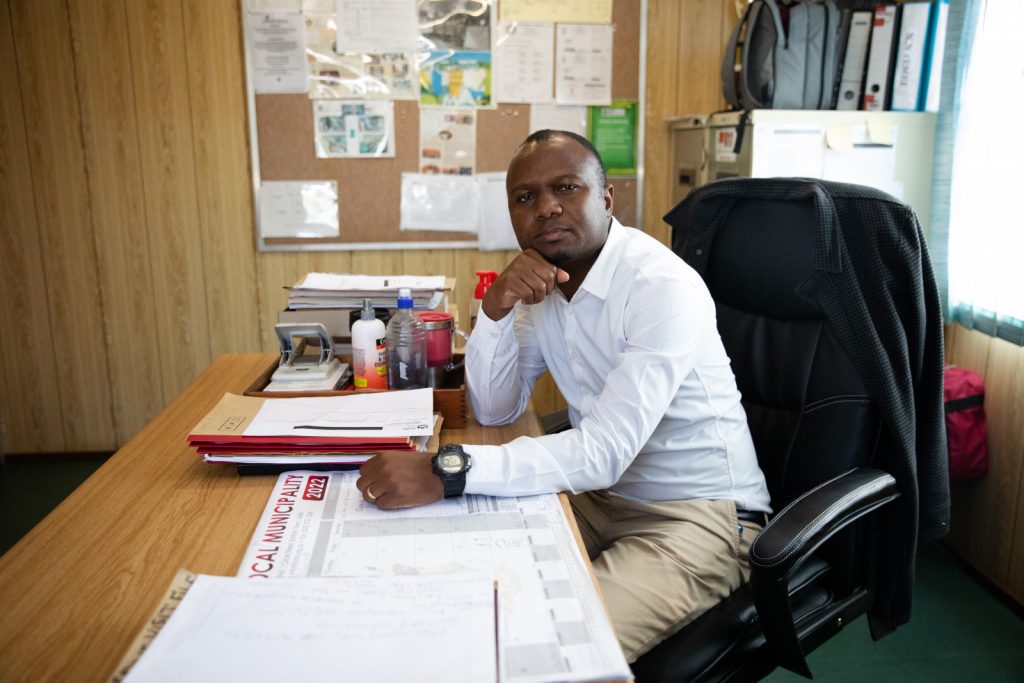
Mthokozisi Gumede, a social worker at Bethesda Hospital in Ubombo, a small town about a four-hour drive from Durban, says he takes great pride in serving the people who knew him as a child.
“Some people recognize me as that kid from that house in that town, and now they see that I have grown and am giving back to my community.”
But economic considerations can also play a role.
It’s much easier to save money living in a rural location, where rent is cheaper than in the city, says Lungile Thwala, a social worker at Bethesda Hospital, where she has worked since 2015. She grew up in the small town of Mbazwana. , about 60 kilometers away.
To make working in state hospitals in rural areas attractive, the health department also offers medical professionals an additional allowance, worth between 8% and 18% of their basic monthly salary in some cases.
many of the people Bhekisisa The person I spoke to said that working in or near the rural settlements where they grew up makes it easier to see their families regularly.
“It’s important to me that I don’t have to travel long distances just to see my family,” says Thwala.
the town next door
Some rural health workers prefer to work near their hometown, but not in it.
But most of Umthombo’s former students approached their pay differently from the Mkhwanazi: very few wanted to work in the exact town in which they grew up, preferring instead to work in neighboring villages.
“When patients come from the same town as the health worker, they try to take advantage of them and demand special attention. [medical] care,” says Lungile Njokweni, a physiotherapist at Hlabisa Hospital.
Back at Bethesda Hospital, Gumede agrees: “In the healthcare profession, you try to work according to ethical principles of fairness, but when people meet you, they demand extra favors from you.”
In Durban, some of the UKZN medical students were also looking forward to going home.
A young doctor-in-training, Sbonginkonzo Mncwango, said he would prefer not to treat patients he knows personally, as it could be uncomfortable learning intimate details about them.
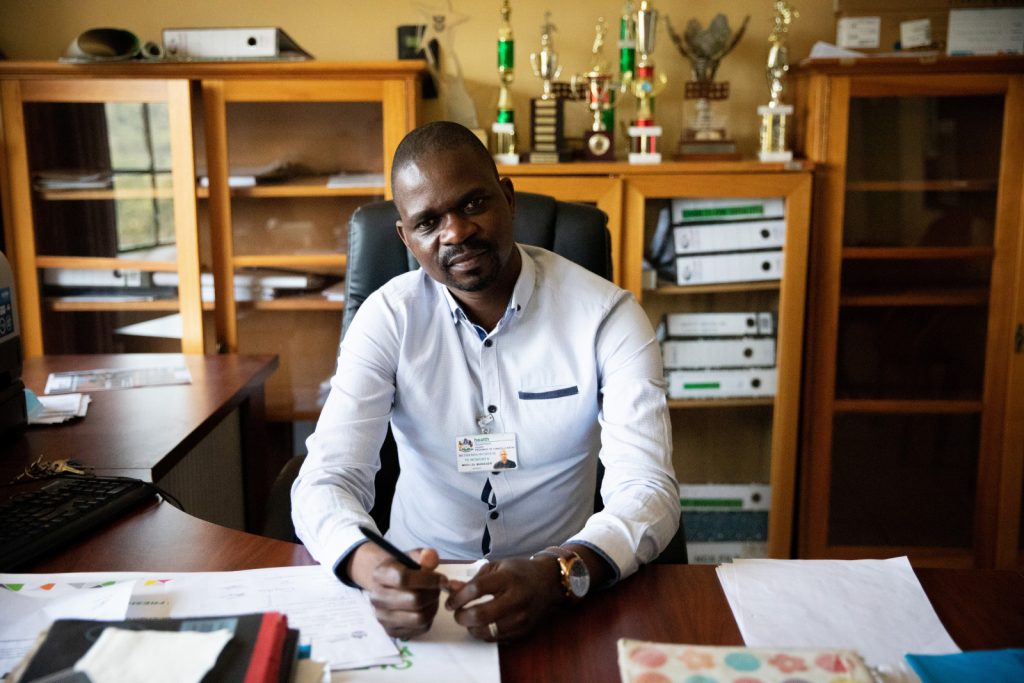
Thulani Ngwenya had a similar concern when she started working in rural KwaZulu-Natal in 2013 after graduating as a doctor. It has always been important to him to serve the people in uMkhanyakude, the municipal district where he grew up and now works.
But he wanted some distance from his hometown of Ingwavuma, a rural town near the northwestern tip of KwaZulu-Natal, where the province borders Eswatini. Today, Ngwenya is the medical director of Bethesda Hospital, about 50 miles from Ingwavuma.
“In my culture, a mother or grandmother wouldn’t feel comfortable being scrutinized by someone they saw grow up,” she explains.
Smiling, Ngwenya says that he will return to his childhood village in time: “I just need the community to forget about me running naked in front of them as a child. Hopefully, then they can be comfortably naked in front of me.”
This story was produced by the Bhekisisa Center for Health Journalism. Sign up for the Newsletter.


