


In little more than a year, the democratic advance of 1994 will mark its 30the anniversary. A whole generation will have lived through a democratic era. As we approach our pearl anniversary, it can be said that we are a shadow of the promise of the miracle nation of Madiba.
Despite the liberation movement’s glorious victory over an unjust system, the last 29 years have not been a perfect announcement of the ideals we held to when we took office in 1994. While the democratic state can legitimately claim massive victories in all fronts of life as we know it, the last 10 years have also seen a staggering setback in those victories and, coupled with the inability to erode the spatial and economic legacy of the pre-1994 era, we remain a deeply divided society, social, economically and spatially.
Mandela’s presidency was a time of healing. A necessary prerequisite for the job ahead of him. Our national psyche was filled with a new patriotism and a deep belief that by working together South Africa and its people would live up to not only our expectations but also those of the community of nations for whom South Africa assumed a new moral stature. of righteousness. hope and resilience.
The Mbeki era began to lay the foundation for sustainable growth and development. Of course, it was also a period that saw the first outbreaks of the sins of incumbency, with the outbreak of the now infamous “arms deal” saga, the rise of the first generation of “BEE” beneficiaries, and the furious debates antiretrovirals. However, there was a real sense that we were on the cusp of something great and that “Mandela’s miracle nation” was taking shape.
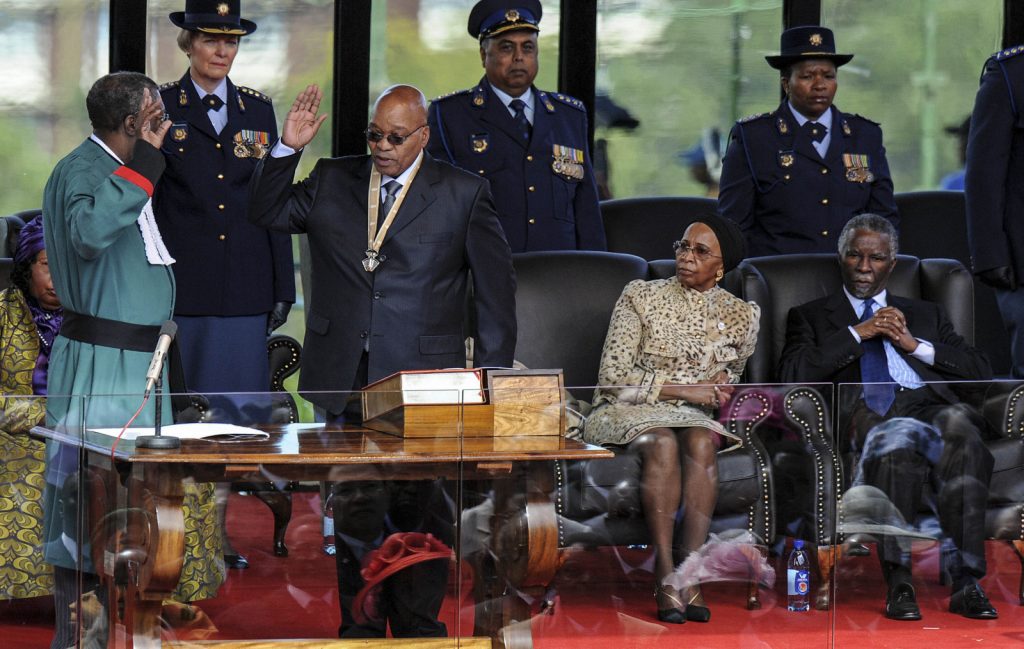
Within the ANC, however, a rebellion was brewing that reached boiling point at the opening session of the 2007 ANC national conference. That rebellion was arguably a watershed moment for the country and our democratic project. Jacob Zuma emerged as president of the ANC and then president of South Africa in 2009, after a brief stint with Kgalema Motlanthe at the top of the national executive. In the process, Thabo Mbeki prematurely resigned from the presidency in 2008, following the ANC’s decision to “recall” him months before the end of his term in 2009.
Ironically, Zuma himself would resign following a similar “retirement” in 2018, paving the way for Cyril Ramaphosa to take the high position of president. If the notion of the predecessor’s sins being the headline menu is any good, Ramaphosa’s presidency had a lot of work to do.
Ramaphosa came under political pressure almost immediately, as a result of the residual divisions that characterized the 2017 ANC national conference. Then, in early 2020, the unthinkable: a global pandemic that brought the world economy to a standstill, including ours, with millions exposed to basic income and food insecurity.
Just as our economy was starting to recover, cargo loss hit with an intensity we’ve rarely seen before and only got worse, despite various interventions and commitments to end the scourge of planned outages due to shortfalls in supply for to satisfy the needs. the growing energy demand of the country.
The depth of corruption, mismanagement and low economic growth continue to put South Africa on a downward spiral. Increasingly, public services are being usurped by private providers, with everything from healthcare, education, security, energy, and postal services to even the most basic services like lawn mowing and maintenance of roads, parks, and public open spaces. , by private or community companies. initiatives, with the State in an apparent state of inertia.
The result is that South Africa has the precarious title of “the most unequal society in the world” (World Bank, 2022). Given our history, this inequality assumes a racial identity in which, to state the obvious, the majority of the country’s black population lives in a valley of poverty and underdevelopment, a growing but unstable middle class, one payday away. from the precipice of poverty, and at the top end of the equality scale, the richest 1% in South Africa, who currently account for around 41% of the country’s total wealth (Shorrocks, Davies and Lluberas, 2022).
The Matthew effect (Study.com, 2022) or “superstar” phenomenon observes circumstances in which those, from the get-go, have an advantage and continue to accumulate more advantage over time. Conversely, those who start out in a disadvantageous position become more disadvantaged over time. To put it bluntly, privilege begets privilege, and what this means, South Africa, on its current trajectory, will continue on a path that reinforces the stubborn failures of the past, and structural inequality will continue to entrench. The consequences are disastrous.
Franz Fanon famously postulates: “Sometimes people have a core belief that is very strong. When presented with evidence that goes against that belief, the new evidence cannot be accepted. It would create an extremely uncomfortable feeling, called cognitive dissonance. And because it is so important to protect the core belief, they will rationalize, ignore, and even deny anything that does not fit the core belief.”
That is the core of our challenge as a country. An ideological fixation or “cognitive dissonance”, and no one is off the hook one way or another.
Capital is adamant in its refusal to understand or accept redistribution beyond the realm of superficial handouts, putting profit before people and development. Political parties seek to “polarize through populism”, selling the same recycled rhetoric to an electorate that is increasingly demobilized or politically and socially unconscious. A government constrained by the political environment and consequently less concerned with empirical and evidence-based decision-making. A labor movement that has imploded into a narrow labor ethic, seemingly unaware or careless about the impact of its demands on our aggregate national progress and well-being.
In the early 1990s, the Convention for a Democratic South Africa (CODESA) sought to define the shape, form and content of our democratic order. Not surprisingly, at the time, the ANC offered possibly the best approximation of what South Africa should be like and codified it as a national democratic society, in which there are fundamental elements: a democratic order with a united people living in conditions of prosperity when non-racism and non-sexism were the defining characteristics of our national existence. The narrative of a national democratic society remains as relevant now as it was in the 1990s. Yet it would seem that we are no closer to that today than in the formative years of our democracy.
The 2012 National Development Plan (PND) was intended to be a social pact and a foundation through which a democratic national society would be possible. The 2013 implementation plan further set out the critical areas of intervention that needed to be achieved to ensure that, by 2030, South Africa is a substantive reflection of what we the people envision. Critically, the NDP called for an active and engaged citizenry.
Poor leadership, porous consequence management, rampant corruption, malfeasance and ineffective policy coherence were designed, among others, along with the Covid-19 pandemic, to inhibit any meaningful progress on NDP goals.

Our body politics need to be reinvented
As we look to the future, we must surely realize that doing the same things and expecting different results is patently insane, and the compelling question is, what needs to be done differently?
- South Africa urgently needs electoral reform to build a new culture of public responsibility. Political parties will always be a feature of democratic societies, but electoral systems for the direct election of public representatives are critical, along with a strategy of accountability and consequence management. This is particularly true for the state president, vice president, prime ministers, and mayors.
- Technological advances make direct citizen participation in the development of policies and laws and in the accountability of public representatives eminently possible in the context of our representative democracy. Parliament must urgently start working in this direction and introduce legislation to cater for direct citizen participation in the work of legislatures, including municipal councils. This legislation should focus on access to these systems for rural, semi-urban and other disadvantaged communities.
- In the recent past, a lot of work has been done to professionalize and modernize our public service. The National Prosecutor’s Office is in the process of modifying its donor funding policy. This should serve as a model, together with the Reconstruction and Development Program Fund Law, to create the possibility of more significant direct financing from the private sector of critical interventions to support the professionalization and modernization of the public service.
- While the responses to the load shedding and the generation crisis continue to worry society, a crisis of a similar magnitude is brewing in the municipal reticulation capacity. The debate on the institutional arrangements for electricity (energy) reticulation needs urgent attention to create adequate capacity to support municipalities with the necessary investments for the operation and maintenance of electricity reticulation.
- Similarly, in the context of the district development model, a policy position on the introduction of a business tax to finance massive municipal infrastructure, together with the most appropriate institutional arrangements for the design, implementation, maintenance and operation of drinking water, sewerage and sewerage. treatment, public transport and municipal roads (and stormwater) is necessary and must borrow from international best practices and the dictates of a developmentalist state.
- With the support of industry and the private sector, upgrading FET universities into world-class craft centers to train unprecedented numbers of young people to support a massive program built by the public infrastructure sector is a crucial and inevitable intervention.
- The private sector must commit to a 10 to 15-year investment plan in productive capacity, research and development, and human capital, taking advantage of the growth potential in the technology and renewable energy sector.
While there are a plethora of other interventions, including in public safety, health and education, the above interventions are an attempt to develop a minimal program of action to get public services and infrastructure back on track to support growth and development as a essential requirement to firmly undermine and erode poverty and underdevelopment during our lifetime.
South Africa belongs to everyone who lives in it. Everyone who lives on it must roll up their sleeves to get our precious earth working again.
Subesh Pillay is a social and political commentator, local government governance advisor and former Tshwane City Councillor. He is a former member of the national executive committee of the South African Local Government Association.


