


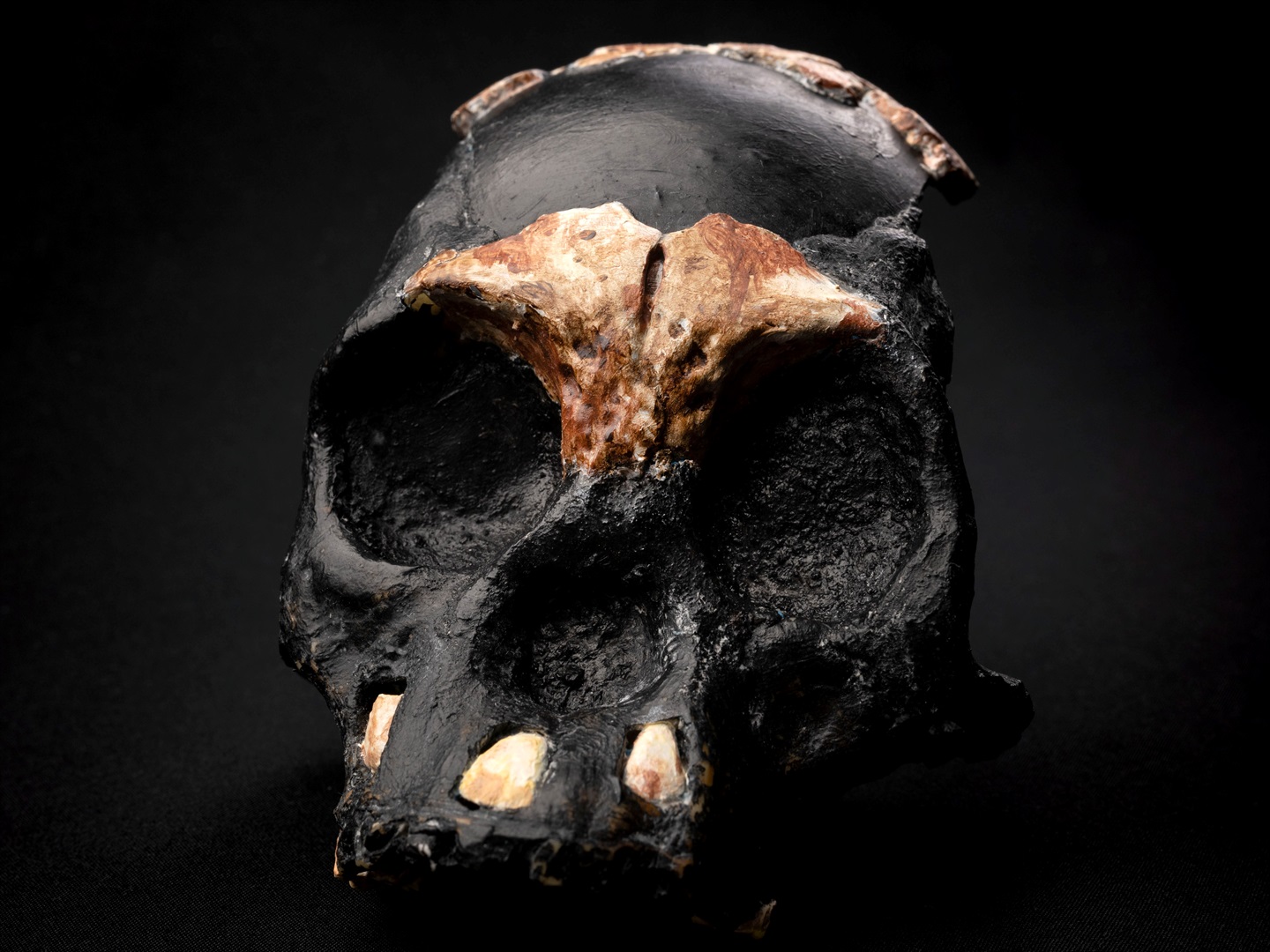
A reconstruction of the skull of Leti, a Homo naledi girl, whose remains were found in Johannesburg, South Africa.
- A paleoanthropologist believes he has found evidence that Homo naledi used fire.
- Professor Lee Berger says he made the discovery earlier this year after exploring caves where Homo naledi inhabited.
- Scientists first revealed Homo naledi to the world in 2015.
World-renowned paleoanthropologist Professor Lee Berger believes that he and his team have made another significant discovery.
During a lecture at the Carnegie Institution for Science in the US on December 1, Berger said they had found evidence that Homo naledi used fire.
Homo naledi is the extinct species of archaic human discovered in 2013 in Rising Star Cave, the cradle of humanity, on the West Rand, dating to the Middle Pleistocene between 335,000 and 236,000 years ago.
The initial find comprises 1,550 specimens, representing 737 different items and at least 15 different individuals.
In August, Berger and his team explored Dinaledi’s “narrow” chamber.
“How could Homo naledi work in the dark? They couldn’t have gotten in there. They couldn’t have moved in these highly dangerous spaces; we used headlamps to get into these very, very difficult spaces.”
He said that looking up, he noticed that the ceiling of the cave was blackened by fire.
Berger said that in a “fortuitous miracle of paleontology,” when he left the cave, he found Dr. Keneiloe Molopyane, who, along with her team, had also discovered a small fireplace and burned antelope bones in the Drakensburg chamber. .
“As I was looking at this remarkable coincidence of simultaneous discovery, it made me think about the other spaces. Clearly we had been missing things.”
He said that after the first expedition, the team entered the Lesedi chamber, which was “extraordinarily remote.”
READ | Rare skull of Homo Naledi boy found in South African cave suggests these ancestors ritually buried their dead
“It takes us 250 meters of crawling passages and difficult areas. But it’s a pristine chamber. It’s a chamber that humans discovered only 35 years ago. It’s been almost untouched by humans.”
Berger told the audience they found piles of burnt rock, ash and animal bones.
“There’s no sign of Homo sapiens… beyond the twilight zone of that system. We’re in the deep end, places humans don’t go. The entire floor, as we search, is covered in burned animal bones , ash… suddenly, our eyes widened. Fire is not hard to find. It is everywhere in the system.”
He said that in the early years of the expedition they found two pieces of ash in the Lesedi chamber.
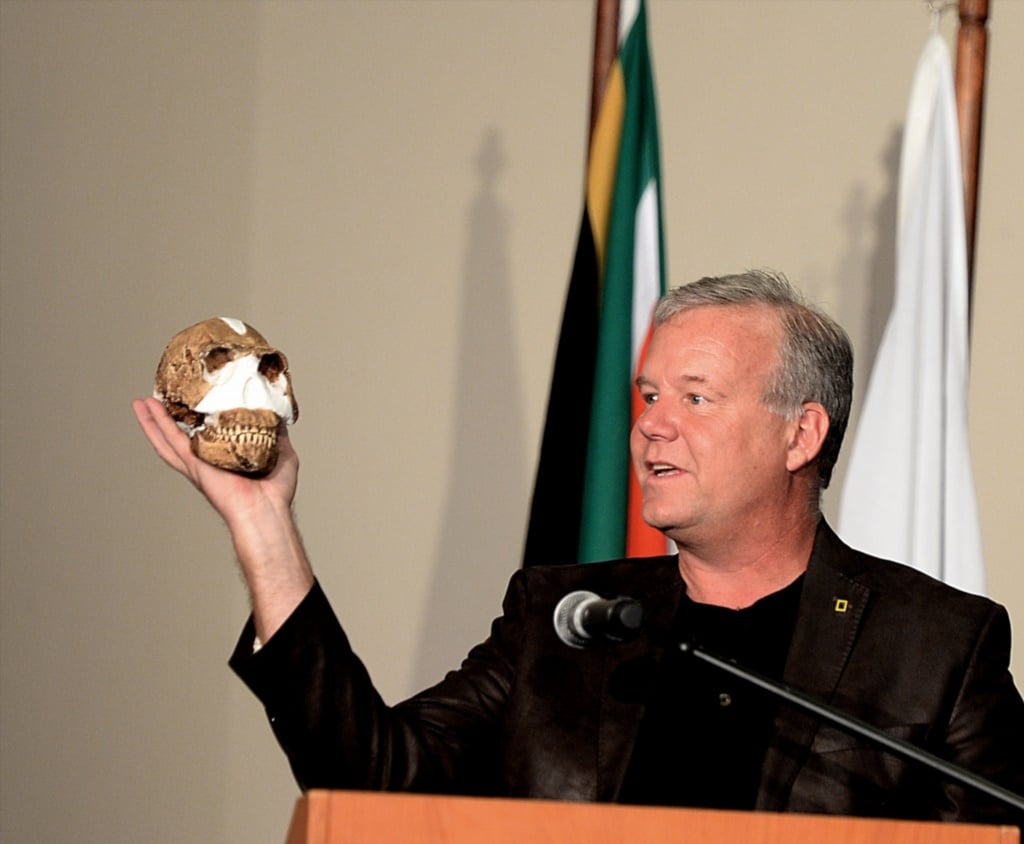
Berger at the reveal of Homo Naledi in The Cradle of Humankind in 2015 (Gallo Images, Denzil Maregele)
“The archaeologists convinced us that we did not have enough evidence [to prove Homo naledi used fire].
“I assure you that what you are looking at, this heart of the Drakensberg, is actually on the path that we have been walking and crawling on since the beginning of the expedition. Every cave system adjacent to the chambers, where we believe they were, was falling apart. of the dead, they made bonfires and cooked animals, that is extraordinary.
“We are fairly confident to hypothesize that Homo naledi existed in an early time and place, but that it exists in the same place where we believe Homo sapiens shared parts of Africa. Within this system, it is using and developing widespread fire for a variety of reasons.
“I suspect that as we start looking through the scientific papers, you’ll see that we’re probably looking at a culture of another species. The emergence that will give us information of another real culture for the first time in truly non-human species.”
Berger said that this discovery was now opening the field to further exploration.
“Fire was seen as a critical lack of evidence in our small-brained hominoid arguments, and I think we found it in abundance. Over the next few years and decades, we’ll see if they associate everywhere… but it’s a association as clear as any.
“This is the most extraordinary period of exploration and discovery.
“Those of us in the field of paleoanthropology could never have imagined that we could have been in this age of exploration. It will continue. The next generation is not afraid of exploration.
“Technology is opening up spaces and places in ways none of us could have imagined. It really is the time to stand back and say ‘don’t explore.’ This is the time all of you should encourage us to get out there.” and see knowledge.”


