


The confrontation of the nuclear agreement with Iran
Fox News correspondent Amy Kellogg interviews a former State Department official and adviser to Iran’s nuclear negotiating team on the latest news surrounding the JCPOA.
Former President Trump left the Iran nuclear deal in 2018 because he thought it was “horrible.” President Biden tried to pick up the pieces, believing that the broken deal was the best chance to prevent Tehran from building a nuclear weapon on the sly. Iran wanted to return to the sanctions relief that would come with a new deal.
There have been many meetings between the international parties involved to revive the Joint Comprehensive Plan of Action (JCPOA) in recent years and the parties came very close to renegotiating a deal to prevent Iran’s nuclear program from spiraling out of control. Then finally the impulse died. The deal has unofficially been declared dead. So what happened?
“I think Iran basically decided it wasn’t that interested in it,” Mark Fitzpatrick, an associate fellow at the International Institute for Strategic Studies (IISS), tells Fox News. “They made commitments that met their end results and then added new results.”
Fitzpatrick said the United States had grudgingly agreed to a final text and then Iran wanted assurances that no future US president would be able to break the deal the way Trump did, which Fitzpatrick said is something Biden would not have the power to do. . In addition, Fitzpatrick adds, Tehran wanted the United Nations nuclear watchdog, the IAEA, to cancel its investigation into Iran’s past nuclear development work and agree not to start any new investigations. The United States would not and could not, says Fitzpatrick, agree to shackle the IAEA.
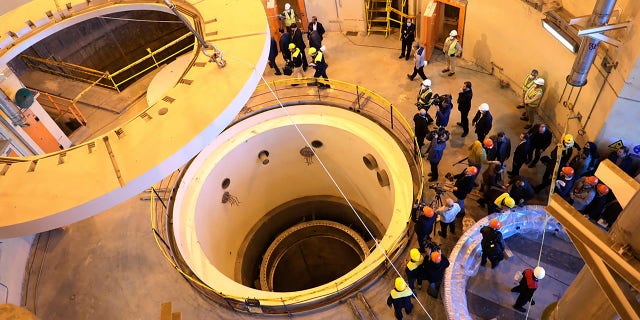
The secondary circuit of the Arak heavy water reactor, as officials and media visit the site 150 miles southwest of Tehran, Iran, on December 23, 2019.
(Atomic Energy Organization of Iran via AP, FILE)
REPORTER’S NOTEBOOK: THE AYATOLLAH’S EXIT RAMP?
Mohammad Marandi was an adviser to Iran’s nuclear negotiating team. He believes that the Europeans at the table thought Iran’s demands were reasonable, but that US policy once again wrecked the deal.
“The problem,” he tells Fox News from Tehran, “is that the White House didn’t show political will before the midterms. They were afraid that the Republicans and their opponents would say that Biden has made too many concessions to the Iranians and that Biden is weak and that would hurt them during the election… I don’t even know if Biden is in charge in the White House,” he said. “But whoever it is needs to make a decision.”
But that decision is made. The White House has confirmed that the president is not looking to advance the deal any time soon. Iran’s brutal crackdown on protesters since September and its sale of drones to Russia for use in Ukraine appear to have put the last nail in the JCPOA’s coffin. Even if Iran had dropped its final demands, Fitzpatrick believes, it would be too late.
“I don’t think President Biden could have made a deal with a regime that was killing its own people and was shown shortly thereafter to be sending drones into Russia that were killing Ukrainian civilians,” Fitzpatrick said. “And there are a lot of other things that Iran was doing that made it unpleasant to do a deal with them.”
Marandi follows the Iranian government’s line that the protests are violent “riots” and disputes the widely reported death toll of more than 500, including dozens of children. Her figures contradict what the White House and the West generally believe to be true, and she criticizes the United States for its criticism of the Iranian regime’s crackdown.
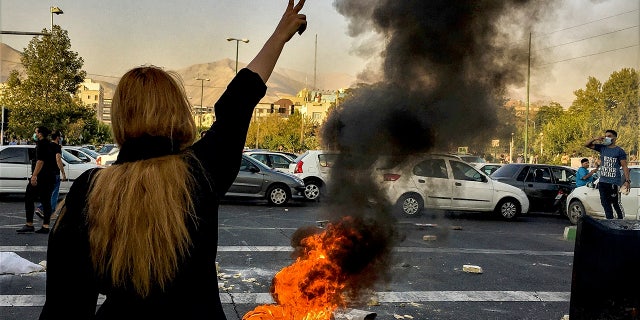
Iranians protest the death of 22-year-old Mahsa Amini after she was detained by the moral police, in Tehran, on October 1, 2022.
(AP Photo/Middle East Images, File)
IRAN SENTENCES THREE MORE PROTESTERS TO DEATH FOR “MAKING WAR AGAINST GOD” DESPITE WORLD CRITICISM
“Iranian internal affairs have nothing to do with the United States and the nuclear deal. And the negotiations to restart the nuclear deal are not tied to any other issue, be it defense capability or regional politics or internal Iranian politics. And America, if it’s concerned about police brutality, should look closer to home.”
Fitzpatrick says there is no comparison, noting that the United States is grappling publicly with the issue of political brutality, while the situation in Iran is quite different. “It’s not like the (US) federal government sends morality police to beat up women and then other police officers to beat up peaceful protesters. Iran has killed 71 children in its crackdown.”
This gives an idea of what must have happened in those rooms in Vienna, where nuclear talks were most often taking place. Fitzpatrick says that Iran’s leaders, despite talk of wanting sanctions relief, may in the end be quite content where they are.
“I think one of the reasons Iran is not interested in the deal is because the Islamic Revolutionary Guard Corps, the IRGC, benefits from sanctions when sanctions drive out private companies,” Fitzpatrick said. “The IRGC, as a state organization, can take over the trade and can impose its own tax, hidden or not. So what is there for them to go back to a deal where they lose their trade and more avenues of power?”
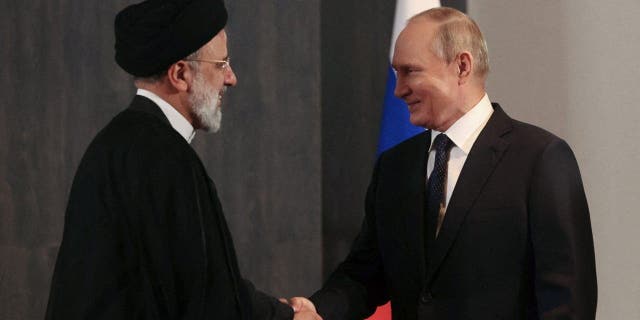
Russian President Vladimir Putin shakes hands with Iranian President Ebrahim Raisi during the Shanghai Cooperation Organization summit in Samarkand, Uzbekistan, on September 15, 2022.
(Sputnik/Alexandr Demyanchuk/Pool via Reuters)
CLICK HERE TO GET THE FOX NEWS APP
Fitzpatrick believes that the JCPOA, while not perfect, was a good deal and contained Iran’s nuclear program, buying some time until perhaps a better solution could be found. Buying time, she says, is also political. Marandi, at least at first glance, also seems to believe that a deal is worth making.
But since that seems unlikely, Iran’s partners in the deal find themselves at a crossroads where there is no tangible or effective Iranian policy other than deterrence through the ominous warning that “all options are on the table.” to prevent Iran from ever building a bomb. But, Fitzpatrick concludes, it’s important above all that diplomacy in this story dies in the end, even if the JCPOA has stalled.


