


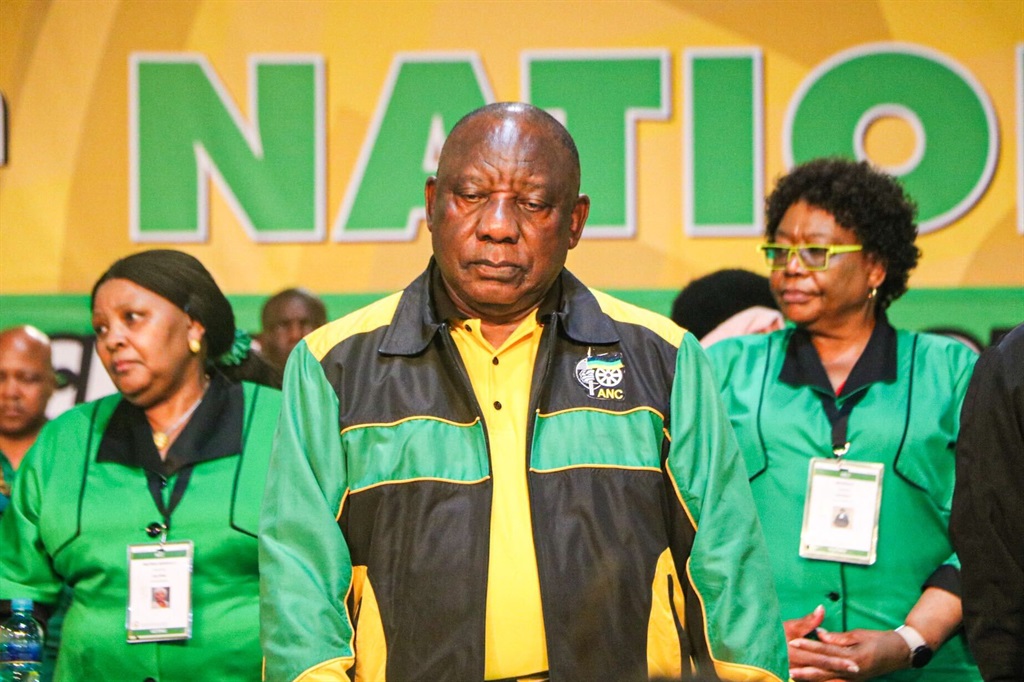
ANC President Cyril Ramaphosa.
- President Cyril Ramaphosa has given Jacob Zuma until Monday to withdraw his personal accusation.
- State prosecutors, speaking on Ramaphosa’s behalf, said the move was intended to ruin Ramaphosa’s chances of re-election at the ANC conference.
- Furthermore, they state that Ramaphosa can ignore Zuma’s “invalid summons”.
President Cyril Ramaphosa has given his predecessor, Jacob Zuma, until Monday to drop his “abusive” private accusation against him, otherwise an unprecedented and politically explosive situation could emerge in which a sitting president faces in court with a former president.
Ramaphosa believes Zuma made this move on the eve of the ANC’s national election conference to ruin Ramaphosa’s chances of retaining the party’s presidency, according to a letter state prosecutors sent to Zuma’s lawyers on Ramaphosa’s behalf.
“The alleged subpoena was delivered to the president one day before the 55th National Conference of the African National Congress began. It is common knowledge that the president will be running for re-election as a presidential candidate. It appears that the alleged subpoena was served to curb this candidacy This is an abuse of process,” the letter says.
On Thursday night, minutes after Ramaphosa addressed businessmen at the ANC gala dinner, the JG Zuma Foundation announced that its sponsor, Zuma, had launched a private prosecution against Ramaphosa.
READ | ‘Abuse of judicial process’ and a ‘perversion’, Ramaphosa rejects Zuma’s private accusation
Zuma accused Ramaphosa of “being [an] accessory after the fact to crimes committed, inter alia, by Adv Downer” in alleged breaches of the National Prosecution Authority (NPA) Act.
Attorney Billy Downer is prosecuting Zuma on behalf of the state for corruption related to the arms deal.
Zuma seeks to privately prosecute Downer and News24 legal writer Karyn Maughan for allegedly violating the NPA Act by sharing court documents, filed by Zuma’s and state attorneys, that contained a sick note from the former military doctor. President.
According to the foundation’s statement, Zuma “duly instituted” the private prosecution against Ramaphosa in the Gauteng High Court in Johannesburg, where the “defendant” (Ramaphosa) is due to appear on January 19.
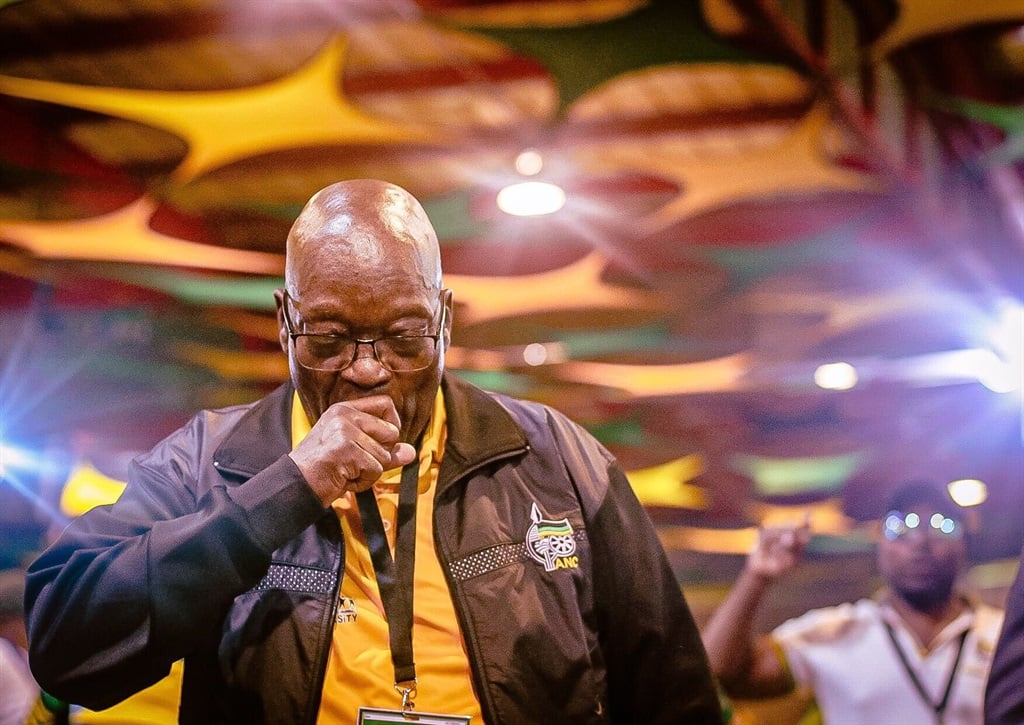
Former President Jacob Zuma.
Zuma wanted Ramaphosa, as president, to intervene after he first complained about Downer.
Early Friday morning, the Presidency issued a statement in which Ramaphosa rejected Zuma’s move with the “utterest contempt” and characterized it as an “abuse of due process” and a “perversion” of the private prosecution provision. .
On Saturday, the State Attorney’s Office addressed a letter to Zuma’s lawyers.
The letter says:
At first glance, the delivery and content of the documents [Zuma’s summons to Ramaphosa] It amounts to a breach of the integrity of the constitutional institutions of the Republic of South Africa, a gross abuse of process, and evidence of multiple breaches of the Criminal Procedures Act 51 of 1977 (“the CPA”).
The letter continues: “It is an act that by law can and should be ignored.”
A certificate of nolle prosequi, a certificate stating that the National Prosecution Authority (NPA) does not intend to prosecute a person, is a requirement for a private prosecution.
State Attorneys claim that the document delivered at Ramaphosa’s private residence did not include such a certificate in relation to Ramaphosa.
“The nolle prosequi certificate that is included in the summons refers to a certain Mr. Willian John Downer. The president was never summoned in those proceedings and, therefore, could not be the object of said certificate, in any case.”
State prosecutors said Ramaphosa has the right to ignore the “invalid subpoena.”
READ | Friends of the Court: Inside the Helen Suzman Foundation’s application to join Zuma vs. Downer, Maughan
“For these purposes, the President may not be subject to any disadvantage or limitation of rights based on the manifestly invalid subpoena,” the letter reads.
“Therefore, we are asking your client to withdraw the invalid subpoena on the basis that each party pays its own costs. If your client does not do so by December 19, 2022, we reserve the right to take further action.” that are necessary and we will seek punitive measures”. costs against his client for unnecessary costs arising therefrom”.
After Zuma asked delegates not to allow Ramaphosa to present his political report at the conference, rioting delegates from the Musa Dladla region, Zuma’s home region, sang anti-Ramaphosa songs and interrupted Ramaphosa as he delivered the report Friday afternoon. Zuma, a delegate at the conference, also arrived at the Nasrec plenary hall after Ramaphosa started speaking, prompting further interruptions.


