


Two years after a man detonated a bomb from his parked RV in downtown Nashville on Christmas morning, in turn causing millions of people to lose phone service for several hours, the city is making proactive changes to ensure that they are protected against certain types of interruptions in the future.
“It was our loss of the phone system that really shed light on what all of our critical pieces of infrastructure are, and we would call that phone, radio, internet and network,” explained Stephen Martini, director of Metro Nashville’s Emergency Department. communications. “What are our critical pieces, and how do we build in redundancy to make sure that if something happens, it doesn’t affect us?”
Anthony Quinn Warner, 63, parked his RV along Second Avenue North in downtown Nashville, about a block from the city’s famous AT&T Building, early on Christmas morning in 2020. The public address system of the RV played an audio recording warning of an impending explosion before switching to the song, “Downtown”, a 1964 hit by Petula Clark.
911 CALLS ABOUT THE NASHVILLE BOMBING GIVE A GLANCE AT PUBLIC PANIC, CONFUSION AROUND THE EXPLOSION
Police had been responding to a gunshots call in the area when they noticed the suspicious RV as the warning sounded. Officers had begun trying to evacuate local residents when the explosive went off around 6:30 a.m.
NASHVILLE FIREFIGHTER’S GIRLFRIEND TOLD POLICE IN 2019 SHE WAS MAKING EXPLOSIVES INSIDE RV: REPORT
Several people were injured, but only Warner was killed in the blast, which caused extensive damage in a popular part of a city already affected by the stresses of the COVID pandemic. The FBI later determined that Warner acted alone and built the improvised explosive device himself.
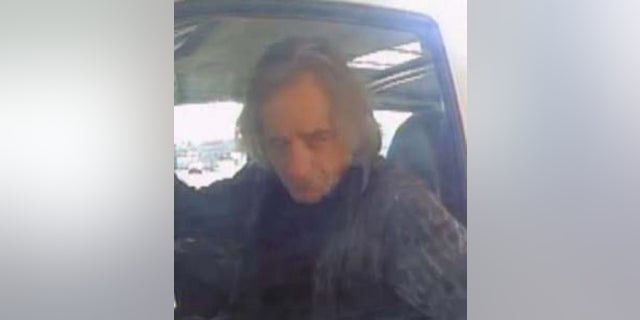
The FBI released a new photo of Nashville bombing suspect Anthony Quinn Warner.
(FBI)
Investigators called the explosion “an intentional act in an effort to end his own life, driven in part by a totality of life stressors, including paranoia, long-standing individualized beliefs borrowed from various eccentric conspiracy theories, and the loss of stabilizing anchors and deterioration of interpersonal relationships.” Authorities determined that the detonation was not an act of terrorism.
NASHVILLE BOMBING SUSPECT ANTHONY QUINN WARNER WAS GIVING AWAY PROPERTY, CLAIMED HE WOULD RETIRE, ILL: REPORT
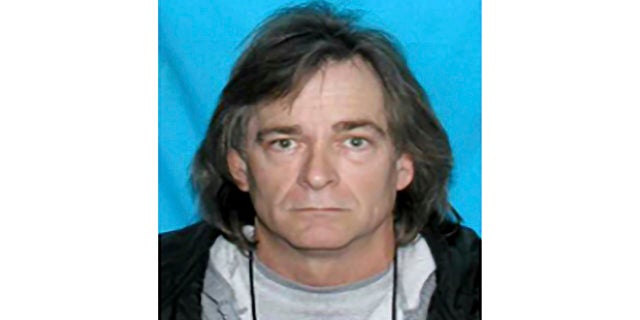
This undated image released to social media by the FBI shows Anthony Quinn Warner.
(Courtesy FBI via AP)
ANTHONY QUINN WARNER: WHAT TO KNOW ABOUT THE NASHVILLE BOMBING SUSPECT
Beginning at Christmas noon, just hours after the attack and for three days, residents of the famed Music City lost the ability to make calls to numbers other than 911, including 10-digit apartment numbers. police, fire departments. , fire alarm systems and even “Life Alert” response services, Martini said.
“You’re talking about millions of people involved, for sure,” Martini told Fox News Digital.
But the effects of Warner’s attack also spread beyond the city of Nashville and spread to 66 Tennessee counties, “all Kentucky counties” and parts of Georgia and Alabama, Martini said. Residents in several of the regions were unable to reach their emergency systems by calling 911.
While only non-emergency lines were affected in the Nashville metropolitan area, Martini said the outage prompted his agency to take steps to ensure they were covered in the event of more serious outages in the future.
“We know we needed more than one way to receive a phone call,” Martini said. “We know we need more than one way to be able to dispatch or use our radio system. We have that.”
But what Metro Nashville’s Emergency Communications Department didn’t have was an alternative to their computer-aided dispatch, or CAD, system.
CAD systems give dispatchers the ability to organize and prioritize 911 and emergency calls and deploy first responders, whether police, fire, medical, or other, as needed.
“We looked at our CAD system and said, you know, we really only have one way to use our computer-aided dispatch system. If we ended up in trouble, we’d be on pen and paper,” Martini continued. “It doesn’t happen often, but in our world, the predictable is preventable.”
The agency turned to Mark43, a public safety software company that offers cloud-based CAD and record-keeping capabilities. Allowing its customers to customize the types of CAD capabilities, Mark43 makes such technology more accessible to dispatchers who may be working with limited resources or who need to use the software in extenuating circumstances.
Metro Nashville will use Mark43’s CAD software and is in the process of building and testing the system to meet the agency’s needs. According to Martini, the Metro Nashville Emergency Communications Department hopes to have Mark43 as a “reliable option” by New Year’s Eve.
Matthew Polega and his co-founders came up with the idea for the software during their undergraduate years at Harvard University, during their work with the Massachusetts State Police. They jumpstarted the company with their records management application, which they filed through the Washington, DC, Metropolitan Police Department.
“The biggest thing that we’ve seen in the last 10 years is that agencies have really adopted, or are starting to adopt, a cloud-native approach when it comes to trying to set up their technology portfolio. So about 10 years ago, many, many agencies had all of their applications powered by servers in their basements that were plugged into the same outlet as the air conditioner,” Polega said. “When the power went out, not only did AC die, but these apps that are trying to power these 24/7 mission-critical operations also died.”
Since then they have expanded to include CAD systems and now have a clientele of over 200 agencies.
Ten years after its founding in Massachusetts, agencies of various sizes, including the Seattle, Boston, and Atlanta police departments, the Louisiana State Police, and even some outside the United States, have begun using its services.
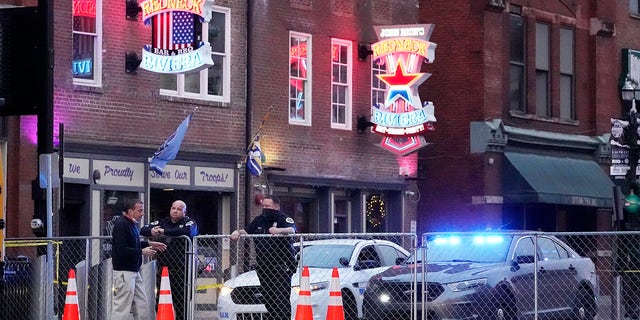
Police block off a portion of the Broadway tourist district Monday, December 28, 2020 as a result of a Christmas Day bombing in Nashville, Tennessee. The blast sent shockwaves across the country, killing the attacker and injuring three others and damaging dozens of buildings. Yet for those who call Music City home, the bombing feels like a cruel end to an already dark year.
(AP Photo/Mark Humphrey)
CLICK HERE TO GET THE FOX NEWS APP
“When the public thinks of public safety technology, they think of handcuffs and they think of what they see in the movies,” Polega continued. “But these are the apps that make sure that the police car gets to where the police car needs to go to provide that help, provide that service, and then hopefully make sure that justice is served or… Public safety, which is a huge foundation of our democracy, is still able to keep moving the way we want to.”


