


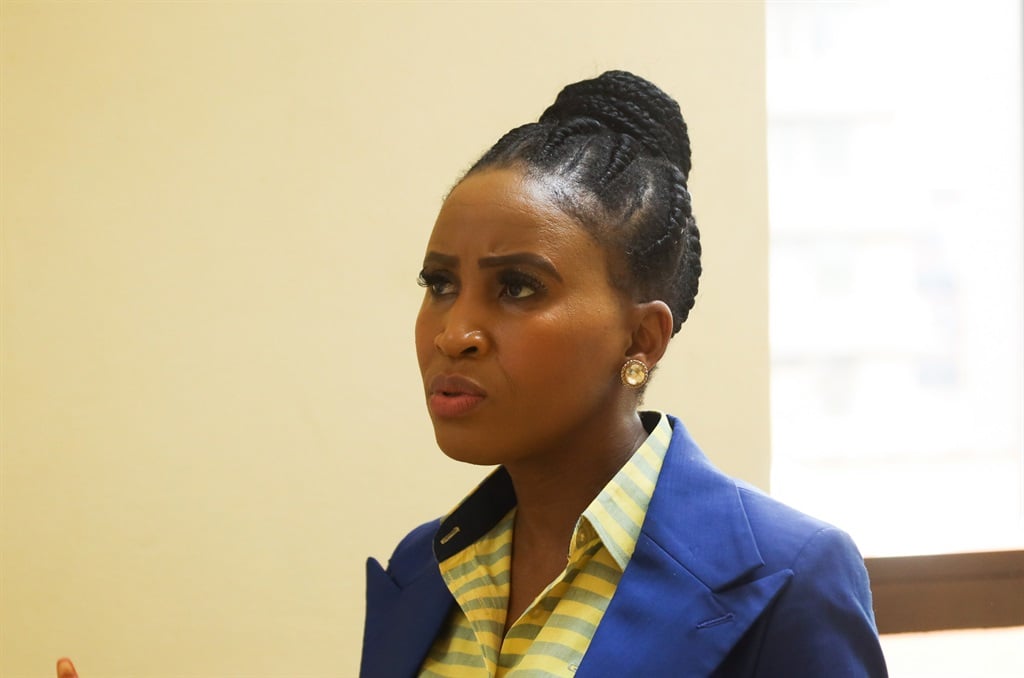
Mayor of the city of Joburg, Mpho Phalatse.
- City Power has gone to market for alternative power sources in an effort to mitigate load loss.
- Johannesburg is seeking energy companies for a short-term purchase agreement of up to 36 months.
- Ninety percent of the city’s power comes from Eskom.
City Power has finally gone to the market for alternative power sources in an effort to mitigate load loss.
On Thursday, the mayor, Mpho Phalatse, announced that the bulk electricity provider had published requests for proposals from companies for a short-term purchase agreement of up to 36 months.
This comes after Energy Indaba in May last year. The two-day event brought together energy officials, experts and city officials to discuss solutions to the energy problem.
At the close of the event, Phalatse said that within the next three months, City Power would come on the market. She said the projects would then start in a phased approach over 18 to 24 months.
Now, almost eight months later, and with the cargo spillage getting worse, the city is finally moving forward.
Johannesburg sources 90% of its electricity from Eskom and 10% from Independent Power Producer (IPP), Kelvin Power.
The City expects to add 400-500MW of additional power to the grid.
READ | SA is one step away from Stage 8 load shedding as breakdowns, cash shortages lead to disaster
Phalatse said publishing the requests for proposals marked “a clear start for Joburg as we embark on the journey of securing reliable, sustainable and affordable energy that will keep the economy running and the lights on, sustaining and improving lives and livelihoods.” “.
“A city whose contribution to the national economy is almost 16%, while accounting for 40% of Gauteng’s economy, cannot be left without power for hours on end,” he said.
Michael Sun, MMC for the Infrastructure and Environment Service, said the launch of the first phase of the IPP Program was the culmination of many hours of work by City Power.
“While I am proud of the efforts made thus far, this is only the beginning of the multi-party government’s determined effort to protect residents from the socio-economic poison of rolling blackouts.”
The City is also going through an approval process for the ministerial determination to purchase longer-term power from the IPPs.
By coming to market now, City Power seeks to secure additional capacity from diversified energy sources, including solar, gas, battery storage, waste-to-energy and gas-to-energy option, according to the statement.
City Power CEO Tshifularo Mashava said: “The traditional business model of purchasing most of our power from Eskom is no longer viable. Eskom itself has conceded that. For this reason, we have developed a power strategy sustainable that includes the acquisition of energy from various sources”.
READ | City Power runs out of stock to replace vandalized mini substations
According to Phalatse, this step follows a five-month consultation with the National Departments of Treasury, Mineral Resources and Energy, Cooperative Governance and Traditional Affairs, the South African National Energy Regulator and Cape Town.
Johannesburg hopes to follow in the footsteps of Cape Town, which has embarked on its plans to move away from Eskom altogether.
The City will begin its second phase of IPP acquisition in February.


