


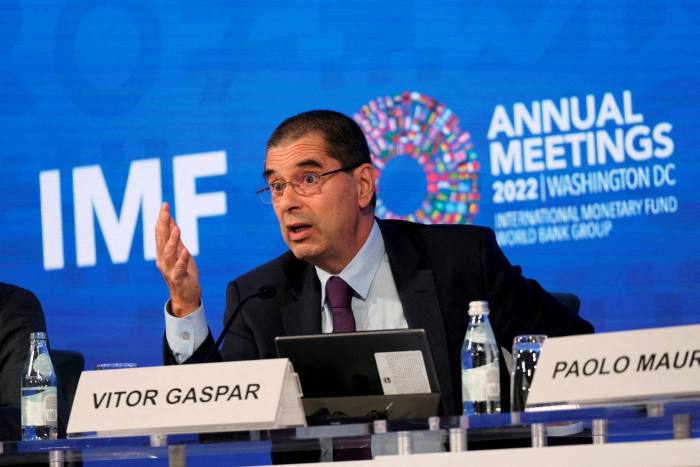
Vítor Gaspar, director of the IMF’s fiscal affairs department, described 2021 as “a very unusual year” © James Lawler Duggan/Reuters
Global debt as a percentage of output fell by the most in at least 70 years last year as economies recovered from their sudden slowdown in 2020 and inflation soared, according to IMF data released Monday.
The ratio of global public and private debt to gross domestic product fell 10 percentage points in 2021 after rising 29 points the year before, according to data from the IMF’s World Debt Database released Monday.
The figures highlight how massive government bailouts to pandemic-hit economies triggered not just a surge in growth, but also global inflation on a scale not seen in decades.
Last year’s drop was the largest since the IMF data series began in 1950 and followed the largest rise recorded the previous year. It brought the amount of debt worldwide to 247 percent of global GDP in 2021, up from 228 percent of GDP in 2019, the IMF said.
The decline was almost entirely due to picking up growth and rising prices. Together, those two factors caused a 9.5 percentage point drop in the debt-to-GDP ratio for the G20 group of the world’s largest economies.
In dollar terms, the total amount of public and private debt in the world rose slightly to a record high last year of $235 trillion, the fund added. Relative to GDP, after a further slight decline this year, the amount of debt is likely to stabilize in 2023 as the global economy slows, the fund said.
Vítor Gaspar, director of the IMF’s fiscal affairs department, described 2021 as “a very unusual year” and added: “As we enter 2023, the global outlook is dominated by the need to fight high inflation accompanied by real interest rates. substantially higher and lower risk tolerance, especially for countries with perceived weaker fundamentals”.


