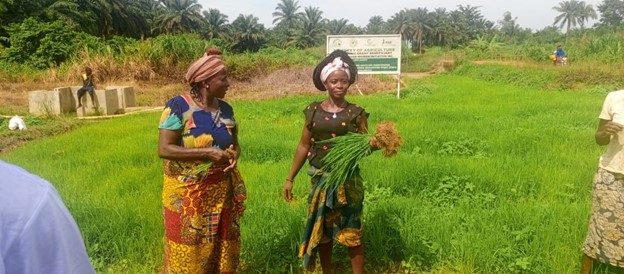
Voinjama – Lofa County has witnessed a significant transformation in its agricultural sector due to the combined efforts of the Smallholder Agriculture Transformation and Agribusiness Revitalization Project (STAR-P) and the Rural Economy Transformation Project (RETRAP).
 A significant component of the projects is helping farmers transition from Farmers Based Organization (FBO) status to cooperative status.
These initiatives, funded by a $48 million World Bank grant, are set to conclude this November after a five-year run, leaving behind a legacy of enhanced productivity and sustainable farming practices.
The projects have focused on working closely with farmers to encourage increased productivity through agricultural mechanization and commercialization. The process begins with verifying farmers across various districts.
After verification, farmers apply to the program, and their information is forwarded to the head office in Monrovia with the help of the implementing partner, the Cooperative Development Agency (CDA).
A significant component of the projects is helping farmers transition from Farmers Based Organization (FBO) status to cooperative status. Aspiring cooperatives are linked with the CDA for necessary training.
Once they become cooperatives, they can apply for a matching grant. Currently, the projects are assisting 21 grantees, including SMEs, cooperatives, and financial institutions, and are directly supporting 65 Farmers Based Organization (FBOs). In addition to grants, the projects provide direct inputs to farmers, supplying essential farming tools such as fertilizers, hoes, shovels, cutlasses, and rain boots.
For those applying for grants, a detailed business plan must be presented, which the Ministry of Agriculture reviews before facilitating the purchase of necessary materials. Recent inspections by independent journalists highlighted several success stories. At the Makona River Farm, near-complete mechanized farming with tractors and combine harvesters was observed.
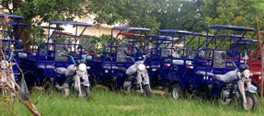
The After the Rain Farming Cooperative is constructing a large warehouse for storage and selling agricultural chemicals. Additionally, two rice processing facilities in Kpasegbedou, Foya, and Voinjama City were visited. To ease transportation burdens, the Ministry of Agriculture, through RETRACP, has provided 68 tricycles for farmers. Mechanization hubs are also being constructed in Foya District and Voinjama City for equipment storage and repair.
These interventions are crucial for sustaining farming activities in Lofa County. The projects also include support for financial institutions like the Korlahu Financial Bank, which provides loans to local farmers.
As a grantee of the World Bank STAR-P Project, Korlahu Financial Bank plays a vital role in supporting farmers in Korlahu District and its surroundings.
With the projects nearing completion, sustainability has become a primary focus. Farmers are building dams, reservoirs, mechanization hubs, and warehouses to maintain progress in case of reduced external support. These efforts are vital for ensuring the long-term success of the agricultural sector in Lofa County.
The STAR-P and RETRAP projects aim to boost rice production, ensuring Liberia can feed itself. Lofa has the largest rice farms in the country, reinforcing its status as Liberia’s breadbasket. The World Bank’s inspection of these projects in Lofa County concluded on Tuesday, June 11, 2024, affirming the substantial progress and sustainable practices established in Lofa County.
As the projects wrap up, the improvements stand as a testament to strategic intervention and local empowerment in transforming agriculture. Farmers in Lofa County expressed their gratitude to the World Bank STAR-P and RETRAP projects for the impacts the projects have made in their lives.