


A Japanese court on Tuesday rejected a damages claim brought by a group of children of Hiroshima atomic bombing survivors seeking government support for medical costs, saying the hereditary impact of radiation exposure is still unknown.
A group of 28 plaintiffs whose parents suffered radiation exposure in the US atomic attack on August 6, 1945, were demanding that the central government include them in the medical support available to survivors.
The Hiroshima District Court said the possibility of a hereditary effect of radiation cannot be denied, but there is no established scientific consensus and the exclusion of the plaintiffs from government medical support is not unconstitutional.
THE UK TO INVESTIGATE WHETHER THE 1998 OMAGH BOMB, ONE OF THE DEADLIEST INCIDENTS IN IRELAND, COULD HAVE BEEN PREVENTED
The government has insisted that there is no scientific evidence to show a hereditary effect of parental radiation exposure on their children.
The plaintiffs filed a lawsuit in 2017 seeking $760 each in damages from the government, alleging that their exclusion violated their constitutional right to equality.
A similar demand from his peers in Nagasaki was also rejected in December.
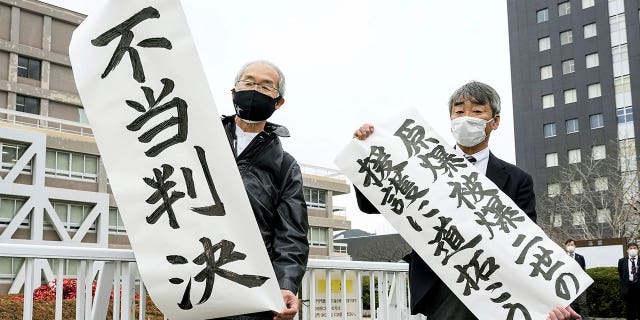
Plaintiff Katsuhiro Hirano, right, and an unidentified attorney for the plaintiffs display banners in Hiroshima, Japan, on February 7, 2023. The banners read ‘Prepare the way to support second generation atomic bomb survivors on the right, and “Unfair Trial.” (Kyodo News via AP)
The plaintiffs said they plan to appeal Tuesday’s decision, which they called “unfair.”
“It was an extremely cold ruling,” plaintiff Taku Kakuda told reporters. “It was like we were told to demonstrate the impact of radiation on humans with our bodies.”
The atomic bombing of Hiroshima destroyed the city and killed 140,000 people. The United States dropped a second bomb three days later on Nagasaki, killing another 70,000 people. Japan surrendered on August 15, 1945, ending World War II and its nearly half-century of aggression in Asia.
AFGHANISTAN INTELLIGENCE OFFICER ALLEGED TO ORDER ATTACKS THAT KILL HUNDREDS OF CIVILIANS
Many bombing survivors have lasting injuries and illnesses as a result of the blasts and radiation exposure and have faced discrimination in Japan.
Their children, known as “hibaku nisei,” or second-generation atomic bomb survivors, say they constantly worry about the possible hereditary effects of radiation from their parents’ exposure, and many have developed various forms of cancer and other problems. of health. They estimate their number between 300,000 and 500,000.
CLICK HERE TO GET THE FOX NEWS APP
Currently, only survivors and those with prenatal exposure who have been certified can receive government medical support for their radiation sickness and cancer checkups. The government started providing free medical checkups for your children in 1979, but cancer screenings are not included.
“We understand that the court recognized our argument,” Chief Cabinet Secretary Hirokazu Matsuno said of Tuesday’s ruling.


