


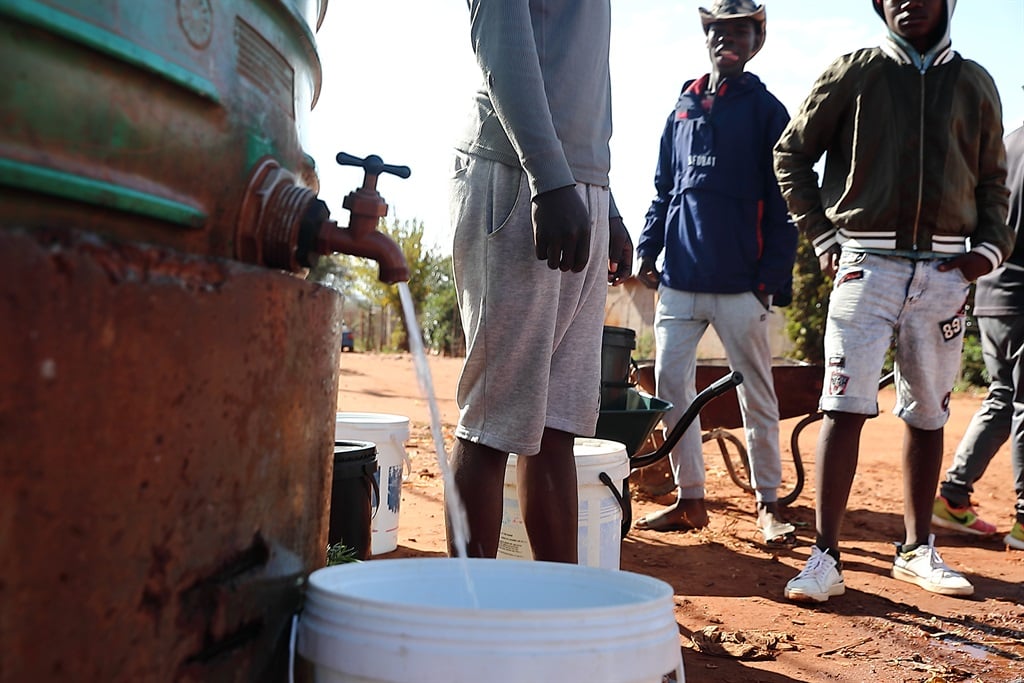
People fill buckets with water.
Gallo Images/Fani Mahuntsi
- Johannesburg could see water cuts again due to a heat wave.
- Joburg Water warned that the water systems were “severely overloaded”.
- The bulk water provider asked residents to use the water for critical purposes only.
Johannesburg Water warned residents that the sustainability of their water supply only depended on water use during the day.
This was after the bulk water provider informed residents over the weekend that their water systems were “severely overloaded.”
The Hursthill system was especially vulnerable and some upland areas might not have water.
Since then, the entity has asked its customers to use the water only for critical needs.
In a message over the weekend, Joburg Water said its infrastructure was facing challenges, including increased demand for water due to the heat wave and loss of load.
On Monday, it reported minor improvements in water levels.
READ | Water ‘wars’: Thirsty Free State residents set fire to municipal building, demand water
The entity described the water situation as follows:
- Honeydew Systems: Levels remain low in the reservoir and the tower is stable;
- Parktown Reservoir 2: The reservoir is stable;
- Helderkruin systems: Low levels are observed in the reservoir. Tower levels have improved and the system is stable at the moment;
- Linden Systems: Linden deposit is low, but stable. the Linden tower is low;
- Hursthill Reservoirs – Both systems remain extremely low. The Hursthill 2 reservoir is critically low. Customers in higher areas will not experience water or low pressure;
- Brixton Systems: Brixton reservoir levels are low. The tower is stable, but it depends on the fluctuating levels of the reservoir;
- Horison Tower: The tower is stable; Y
- Load shedding is affecting pumping at the Quellerina and Northcliff towers. The pumps will resume at the end of the load shed.
Joburg Water said it had noticed high water use in the following areas:
- South Joburg;
- Joburg center;
- Midrand;
- sandton;
- Hamburg and Randburg;
- Commando system (Brixton, Hursthill and Crosby);
- Helderkruin;
- Honeydew; Y
- park city
The entity reminded residents that Johannesburg was under a Tier 1 water restriction, which had been in place since September and would continue until cooler weather at the end of March.
Tier 1 restrictions prohibit the use of a hose or potable water for watering gardens, filling pools, washing cars and cleaning driveways, etc. between 06:00 and 18:00.
ROLL-UP COVER | Eskom and cargo shedding news as it happens
The high temperatures, in most of the country since the second week of January, have been especially severe in the North Cape.
Johannesburg suffered from severe water restrictions last year after Rand Water, which purifies water from the Vaal Integrated System and sells it to Joburg Water, reduced its water supply in October.
At the time, Rand Water said the heat wave had caused increased consumption and the entity was unable to meet demand.
The restriction resulted in significant blackouts, sometimes for days, in high-rise areas.
Experts, however, said that the problem was old and aging infrastructure, which needed to be updated and could not keep up with the growing demand of the population.
The effect of load shedding in the pumping stations worsened the situation.


