


In at least five African countries, many people consider sports play as a way of being regular entry.
Some see sports betting as a way out of poverty. But critics warn that sports bet in Africa it is increasing, while poverty, unemployment and lack of industrial standards remain big problems.
In one example, a Ugandan health official was so sure Argentina would win their World Cup soccer match against Saudi Arabia that he bet $1,800. The officials lent him the money from an amount intended for 243 people who had participated in a vaccination campaign against polio.
Argentina lost the game and the official lost the money. He later was chased by an angry mob and locked himself up at home for days. His supervisor said that he could lose his job.
In Uganda, the official’s loss was a lot of money. The annual income per person in the country was $840 in 2020.
Sports bettors include students, politicians, workers, or government officials.
No information is available on sports betting for the whole of Africa. But data from some countries shows its growing popularity. Online gambling has grown in recent years. The increase has been driven by increasing use of mobile payments and demand online entertainment. Much of the betting is on soccer matches in Europe.
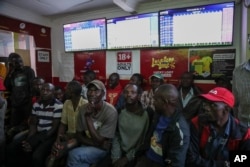
A 2017 South African government study was one of the most recent on gambling. It found that sports betting grew by 14 percent a year between 2008 and 2016. But the number of South Africans who gambled fell from 57 percent to less than a third of the country’s adult population.
Today, online sports betting accounts for 45 percent of the South African gaming market. just 10 years ago casinos it had an 80 percent market share, the National Gambling Board said.
In Zimbabwe, most people earn no more than $100 a month. Sports betting there “has become an important source of income even for those who have formal employment,” said Japhet Moyo. He is the General Secretary of the Zimbabwe Congress of Trade Unions. “The problem is that it becomes addictive and some lose their wages from betting.”
A salary is money earned from work.
African players often hope to pay for their daily needs with gambling winnings. Philo Ragada is an unemployed schoolteacher in Harare, the capital of Zimbabwe. He bet on England to beat Senegal in a World Cup match. Ragada supported the African team but said he wanted England to win because “that’s where my money is.” His earnings, he said, would be “sufficient for tomorrow’s bread and tomatoes.”
Wale Babalola graduated from university in the Nigerian city of Lagos and owns eight betting shops after struggling to find work. “If it wasn’t for the gambling, I wonder how some people in this country would survive.”
Concern for the industry is also growing. Reagan Wamajji is a research fellow at the Uganda-based Center for Policy Analysis. He said there should be campaigns against gambling, especially sports betting. “However, it is such lucrative business that meaningful reforms could be hard to push through,” he said.
A Ugandan parliamentary group earlier this year suggested banning daytime betting.
Neighboring Kenya has reported a decline in gambling since 2019. That’s when the country began taxing all gambling. The government also withdrew the licenses from several major gaming companies.
A Kenyan government study said gamers who considered gambling a good way to earn money halved, to 11 percent, between 2019 and 2021.
For regular players, especially those who bet money that is not theirs, the recent World Cup has been a punishment.
Gideon Matua is a security guard in Uganda. He said two friends recently lost their jobs after losing other people’s money.
“I have seen a lot of people here crying,” he said. “Someone comes here and puts a huge amount into a team. If the team loses, they just go home. Some of them have been kicked out of their jobs.”
I’m Dan Novak.
Dan Novak adapted this story for VOA Learning English according to a report by The Associated Press.
_______________________________________________________________
words in this story
play — no. play a game of chance in which money is risked in an effort to win other people’s money
entry — no. money earned from work, investment or business
bet — no. play a game risking losing money in exchange for the chance to win someone else’s money
mobile – adj. related to the use of mobile or cell phones to carry out activities such as communication or making payments
entertainment — no. hobbies intended to give pleasure and are not work
casino -north. a business or building where people gamble
addictive – adj. Causing a strong and harmful need to do or have something on a regular basis.
license — no. official permission to conduct a business or perform an activity
lucrative — no. profitable, producing large financial returns


