


Australia is calling for a centralized database to track sperm donors amid fears the current system could lead to a host of family complications.
“We need one central registry across Australia and one central bank for everyone to operate from the same… and not be dependent on which doctor they go to,” Rebecca Kerner, president of the Australian and New Zealand Association of Infertility Counselors, told her. he told The Guardian.
The current system in Australia doesn’t track sperm once it leaves the state of origin: with six states and two territories, that’s a lot of genetic material moving around unchecked.
Each state and territory also has its own laws regarding the tracking and disclosure of donor information to donor-conceived individuals.
THE STATE OF MICHIGAN RESERVES THE ‘UNCONDITIONAL LOVE FUND’, BUT ONLY ‘LGBTQIA2S+’ STUDENTS ARE ELIGIBLE
The current system tracks and limits a donor to just enough material for five to 10 families, but nothing prevents someone from doing it in every state, raising fears of “prolific” donors who could end up fathering dozens of children across the country. .
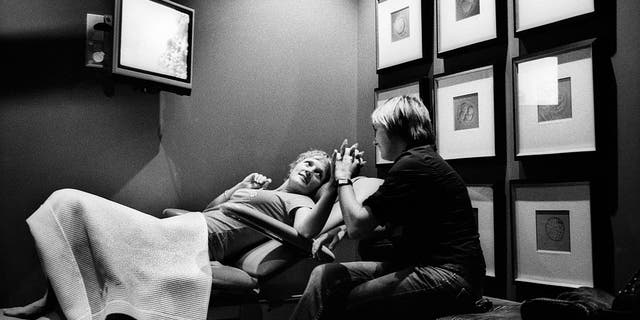
Partners Jen and Jane hold hands during the fertility process at a fertility clinic in Sydney, Australia. (Tim Clayton/Corbis via Getty Images)
That would lead to the possibility of someone having, then, dozens of half-siblings across the country, raising the risk of “accidental incest” and trauma when someone finds out they are part of a much larger family than they realized.
CHRISTIAN NURSE FIRED BY CVS: YOU SHOULD NOT HAVE TO CHOOSE BETWEEN YOUR FAITH AND YOUR JOB
“The sperm has been transferred through the states of Australia and once it leaves a state, no one keeps track of what happens to it,” said Amiee Shackleton, director of Donor Conceived Australia. “When donor-conceived people find out they have so many siblings, it’s very distressing.”
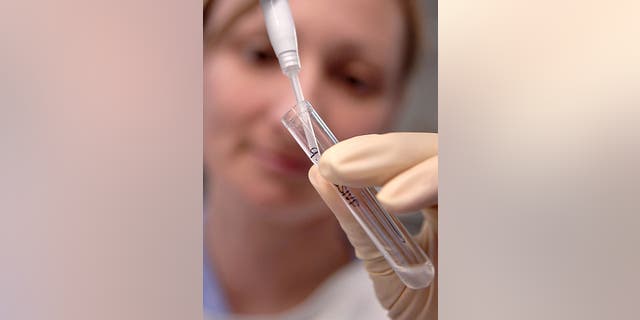
BER 12: A laboratory worker fills a test tube at the Sydney IVF Clinic in Sydney, Australia, Thursday October 12, 2006. The Australian government spends around A$100 million a year to subsidize fertility treatments. (Jack Atley/Bloomberg via Getty Images)
The system also doesn’t track anyone unless they’ve donated inside a fertility clinic, raising concerns about the rise in informal sperm donation, thanks to the internet. Shackleton claimed that thousands of people have obtained sperm or eggs online.
CALIFORNIA COMES INTO 2023 WITH NEW ABORTION LAWS, TRANSGENDER YOUTH AND ILLEGAL IMMIGRANT POLICE
Adam Hooper, one of Australia’s most “prolific” sperm donors, with 20 donor-conceived children, flew to Brisbane, Western Australia, last year to deliver his sample cups to women who were eager to find a donor. of sperm, The Daily Mail reported.
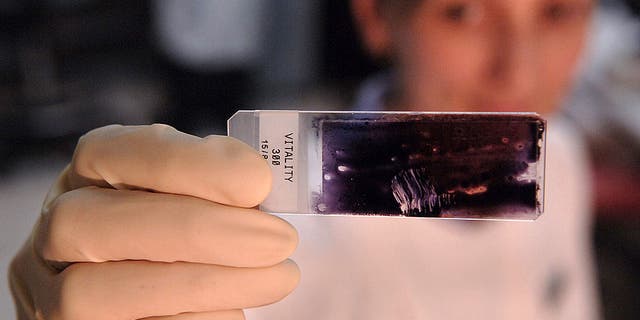
A lab holds a sperm slide at the Sydney IVF Clinic in Sydney, Australia, Thursday, October 12, 2006. (Jack Atley/Bloomberg via Getty Images)
Some mothers-to-be turned to Hooper because they were finding it difficult to raise the money for IVF treatment or because clinics had run out of samples. Accepting money for donations is illegal in Australia, although compensating men for travel, parking or other expenses is not.
Hooper said he wanted to foster a close-knit group of mothers who could be linked by their children’s shared DNA, telling the Courier Mail that it was important to him that children “feel a sense of knowing where they are from.”
The same fear exists in the US, despite the country’s population being 10 times that of Australia: The New York Post in 2017 urged more regulation of sperm donors, noting a fear similar to sexual intercourse between half-siblings who are unaware of their connection.
CLICK HERE TO GET THE FOX NEWS APP
Professor Fiona Kelly, dean of La Trobe University Law School in Australia, said creating a central database would be a complicated process, but states could pull it off if they were willing to put in the work.
“If all the state governments were willing to come together and agree to a uniform law that each would adopt, it could be run and funded at the state level,” Kelly said.


