


NORFOLK, Va. – Sunday marks June 16, a day that celebrates the end of slavery in the United States in 1865, but for many enslaved Americans, freedom began decades earlier…in a new country.
It’s a story related to Norfolk State University, home of the Joseph Jenkins Roberts Center for African Diaspora Studies.
“It’s very personal to me because I’m a founding black American. I’m a direct descendant of [of slaves]said Melissa Williams, a history senior who spent her last year involved with the Roberts Center, which studies the complicated, often tragic journey of African people around the world.
Williams’ project studying the domestic slave trade from Norfolk to New Orleans is one of several the center has taken on since its founding more than ten years ago.
“What we wanted to do was create a center that would look at these complications,” said Dr. Cassandra Newby-Alexander, professor of history, dean of the College of Liberal Arts, and founder of the Roberts Center.
Initiatives at the center have included studying the Hampton Roads Underground Railroad to follow the 4,700-mile journey back to the African continent.

Newpor-Alexander, Cassandra
Liberia is a West African country founded in the first half of the 19th century by a group called the American Colonization Society as a place to send free black Americans.
The Roberts Center is named for that country’s first president, Joseph Jenkins Roberts, who was born in Norfolk, VA.
“He was a free black, but they migrated to Liberia hoping for real freedom,” Newby-Alexander said.
According to the US State Department, 16,000 African Americans traveled to Liberia in the 19th century. Newby-Alexander says that for many, the trip was the only way to escape the harsh treatment that freed blacks still received in the United States at the time.
“Virginia would pass a law in this early period stating that if you recently became free, you have one year to leave the state. And if you don’t, you will be sold into slavery,” he said, adding. that many in the American Colonization Society were looking for a way to remove free blacks from American society. “(They were) seen as rioters, because they were groups of people who would inspire enslaved people to escape.”
But for those like Roberts and her family, moving to a new country was still an opportunity to start anew.
Newby-Alexander says that he became governor of the then colony and eventually became the first president after Liberia established its independence. Roberts was also the seventh president; over time, creating a government in the image of the United States.
“But without the obstacles, the racial obstacles that the American government put up,” he tells News 3.
200 years later, despite numerous challenges, including unrest between Liberian-Americans and indigenous African peoples and, more recently, the Ebola outbreak, Liberia has survived.
It is now the oldest republic in Africa with the Roberts Center ensuring a legacy is left in Roberts’ hometown, where Norfolk State University was founded as an institution for the education of African Americans.
Eckstine, Heather
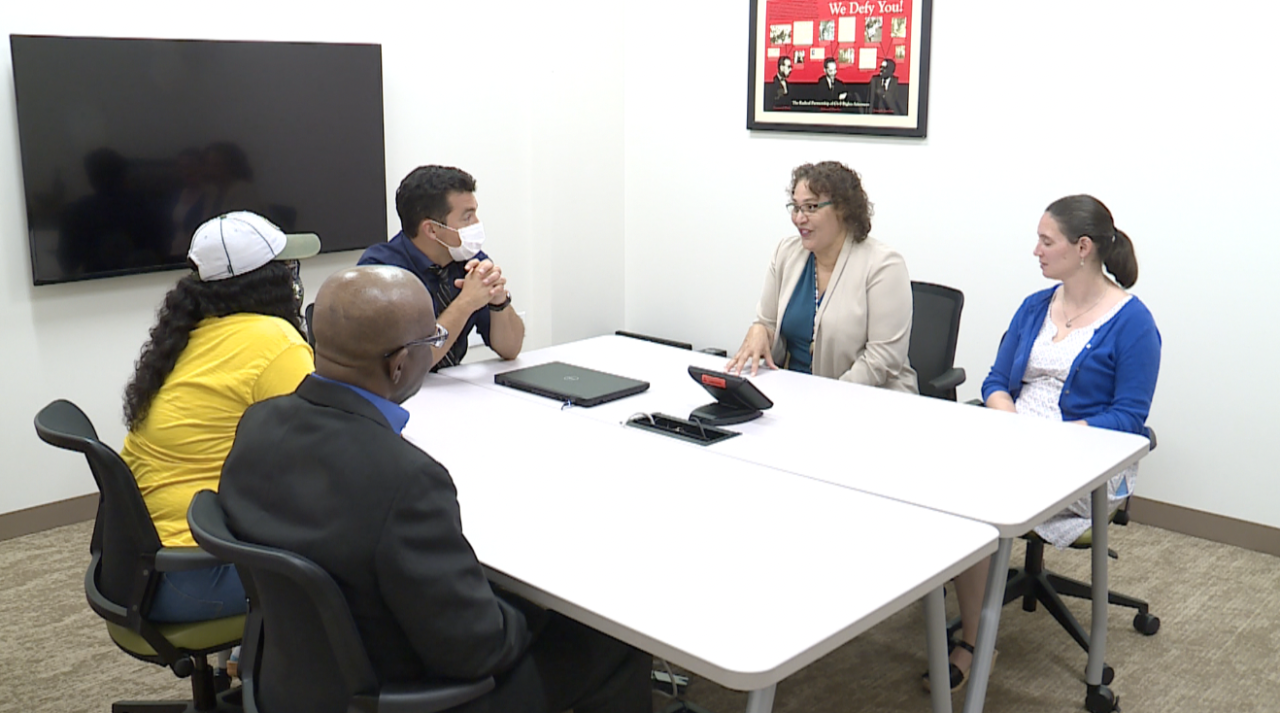
“The center operates across the entire campus,” said Dr. Patrick Mbajekwe, who co-directs the center with Dr. Stephanie Richmond. “Many events have been held by the center, from the 150th anniversary of the Civil War… to the commemoration of 1619.”
1619: The year slaves first came to the United States. Then there’s Juneteenth and the celebration of freedom in 1865. The Roberts Center connection?
“That very complicated story that you see Juneteenth representing … African-Americans and their search for freedom,” Newby-Alexander said. “In the same way, you have these free blacks represented by Joseph Jenkins Roberts and the slow movement they endured in their quest to achieve freedom.”
It is a reminder that the story of freedom has many characters and spans multiple continents.
Related: Hampton University Professor Explains Juneteenth Story


