


Look Ahead 2023: Gloomy Forecasts Underscore Importance of Climate Adaptation for Middle Eastern and North African Countries
DUBAI: For much of the past year, climate change has been high on the global political agenda as extreme weather events, including floods, dust storms, heat waves, droughts and blizzards, have been reported in different parts of the world. .
At the same time, governments committed to reducing greenhouse gas emissions, moving toward cleaner and renewable energy sources, taking steps to increase resilience, and advancing the cause of environmental justice. But are these commitments bold enough or too few too late?
Over the holiday period, the UK Met Office warned that next year would likely be the warmest on record, indicating that not enough was being done to prevent average global temperatures from rising by more than 1.5°C per year. above pre-industrial levels.
In fact, Met Office research suggests that 2023 will be the tenth year in a row that global temperatures are at least 1C above pre-industrial levels.
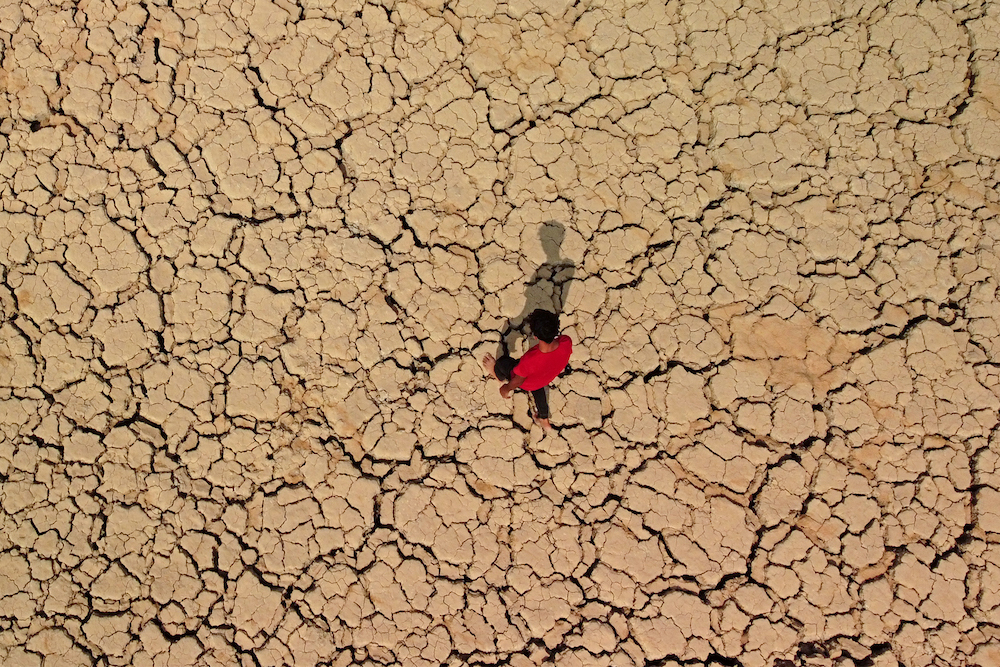
Last year’s weather extremes, such as droughts and floods, will become more frequent, with countries in the Middle East facing “magnified effects,” forecasters warn. (AFP)
For many countries in the Middle East and North Africa (MENA), where temperatures are rising at nearly twice the rate of the rest of the world, the threat posed by an even hotter year cannot be underestimated.
Climate-related problems will continue to place a huge financial burden on Arab countries, and some estimates suggest that adaptation to climate change could cost developing countries up to $340 billion annually by 2030.
To help developing countries, particularly those vulnerable to climate change, the decision was made at the UN Climate Change Conference, COP27, in Egypt’s Sharm El-Sheikh in November to establish a “loss and damage” fund. “.
The fund aims to encourage wealthy, industrialized nations to compensate low-emission developing countries when they suffer climate-related disasters.
Addressing delegates to COP27, Antonio Guterres, the UN Secretary General, called for them to be more ambitious with their emission reduction targets in line with the 1.5 C target agreed in Paris in 2015.

“Our planet is still in the emergency room,” Guterres said, highlighting the need to “invest massively in renewable energy and break our addiction to fossil fuels.” With too many countries missing their targets, “the world still needs a big leap in climate ambition,” he added.
Climate scientists say weather events of the past 12 months, including record temperatures in the UK, bushfires in Europe and Australia, floods in Pakistan, dust storms in the Middle East and the “bomb cyclone” in North America North, have shown that concerted climate action is much more needed.
Zoltan Rendes, ambassador of the European Climate Pact and chief marketing officer of SunMoney Solar Group, says the impact of rising temperatures is expected to be “magnified” in 2023, especially in the warmer countries of the Middle East and Eastern Mediterranean.
A recent study published by the Review of Geophysics found that average temperatures in countries like Egypt, Greece and Saudi Arabia are projected to rise by about 5°C by the end of the century. Climate adaptation, among other measures, is therefore essential for these nations.

People use a cradle service to cross a flooded river in Pakistan’s mountainous north. (AFP)
“Temperatures could reach dangerous levels where it would be almost impossible for people to work,” Rendes told Arab News. “This would lead to decreased productivity and the potential for humanitarian crises due to heat-related illness.”
He says that adaptation strategies, such as increased spending on renewable energy sources and cooling infrastructure, must be put in place immediately.
The use of climate-smart agriculture techniques such as crop diversification, energy optimization through smart power grids, and water conservation measures will also be crucial for the region’s development in the coming decades.
“This increase in temperature can give rise to a variety of extreme weather events, including sandstorms, heavy rains and floods, droughts and heat waves…. These conditions can put enormous pressure on vital infrastructure and essential life-sustaining resources in the region,” Rendes told Arab News.

While dust storms are not uncommon in the Middle East, an increase in wind speeds due to higher temperatures can mean these storms become more frequent and intense.
Similarly, areas prone to flooding during heavy rains could experience increased risk due to possible increased rainfall, Rendes said.
Compounding the problem, according to Dr. John A. Burt, associate professor of biology and director of environmental studies at New York University in Abu Dhabi, rising temperatures will lead to increased evaporation in the Middle East region, where water is scarce, which will negatively affect ecosystems and agriculture.
“Since our seas are a major sink for thermal energy, we can also expect an influence on marine heat waves and consequent effects on sensitive ecosystems such as coral reefs,” he told Arab News.
“If we look back in August 2017, low winds over a period of just several weeks triggered a marine heat wave that wiped out nearly three-quarters of all coral reef areas in the Arabian Gulf.”

A Somali girl collects water from a well in the Tawakal IDP camp, on the outskirts of Mogadishu, Somalia. (AFP/File photo)
This is partly due to the already hostile environment found in most Middle Eastern nations. Even modest changes in temperature and wind speed can have a staggering impact on ecosystems and human health.
“While climate change represents a long-term trend, climate variability, where we may experience much stronger extremes, may have more acute impacts in the short term,” Burt told Arab News.
It is also important to consider that global temperatures are also influenced by El Niño and La Niña events, which cause warmer or cooler periods, respectively, depending on changes in ocean temperatures.
“These phenomena refer to large-scale wind patterns that occur in the southern Pacific Ocean, which have the ability to affect weather patterns globally, as our atmosphere and seas are a large and complex interconnected system,” he said. .
Over the past three years, La Niñas have cooled the average global temperature, an effect that is expected to end in 2023, causing warmer weather conditions.

“It is important to recognize the potential impacts of these weather events, as they can have significant human and economic costs,” Rendes told Arab News.
For example, an increase in rainfall during El Niño could mean flood risks for some countries, while a decrease in rainfall during La Niña could lead to water shortages.
Rendes added that areas of the Middle East suffering from drought are likely to experience reduced rainfall, resulting in severe water shortages.
Consequently, heat waves could become much more frequent and potentially longer lasting as temperatures in the region reach record levels.
In turn, this could lead to an increased risk of heat-related illnesses, such as dehydration, heat stroke and heat exhaustion, according to Rendes.

In the dazzling turquoise waters of Egypt’s Red Sea coast, divers swim among delicate pink jellyfish and admire coral, but the rebound in the tourism sector is worrying the fragile marine ecosystem. (AFP)
“It is essential that governments work together to implement policies that address both climate change mitigation efforts and adaptation strategies,” he told Arab News.
The recently released United Nations Environment Program Emissions Gap Report 2022 shares the same conclusions.
It shows that the world is not on track to meet the goals of the 2015 Paris Agreement. Instead, global temperatures are projected to reach 2.8C by the end of the century, while temperatures in 2023 are on track to reach between 1.08 C and 1.32 C above the pre-industrial average.
The report also says that the world must cut emissions by 45 percent to avoid a global catastrophe and that multilateral action is needed to address the crisis.
Several Arab countries are taking measures to mitigate climate change. For example, Saudi Arabia has announced its intention to achieve carbon neutrality by 2060. The Kingdom is investing in renewable energy sources such as solar and wind power to achieve this goal.
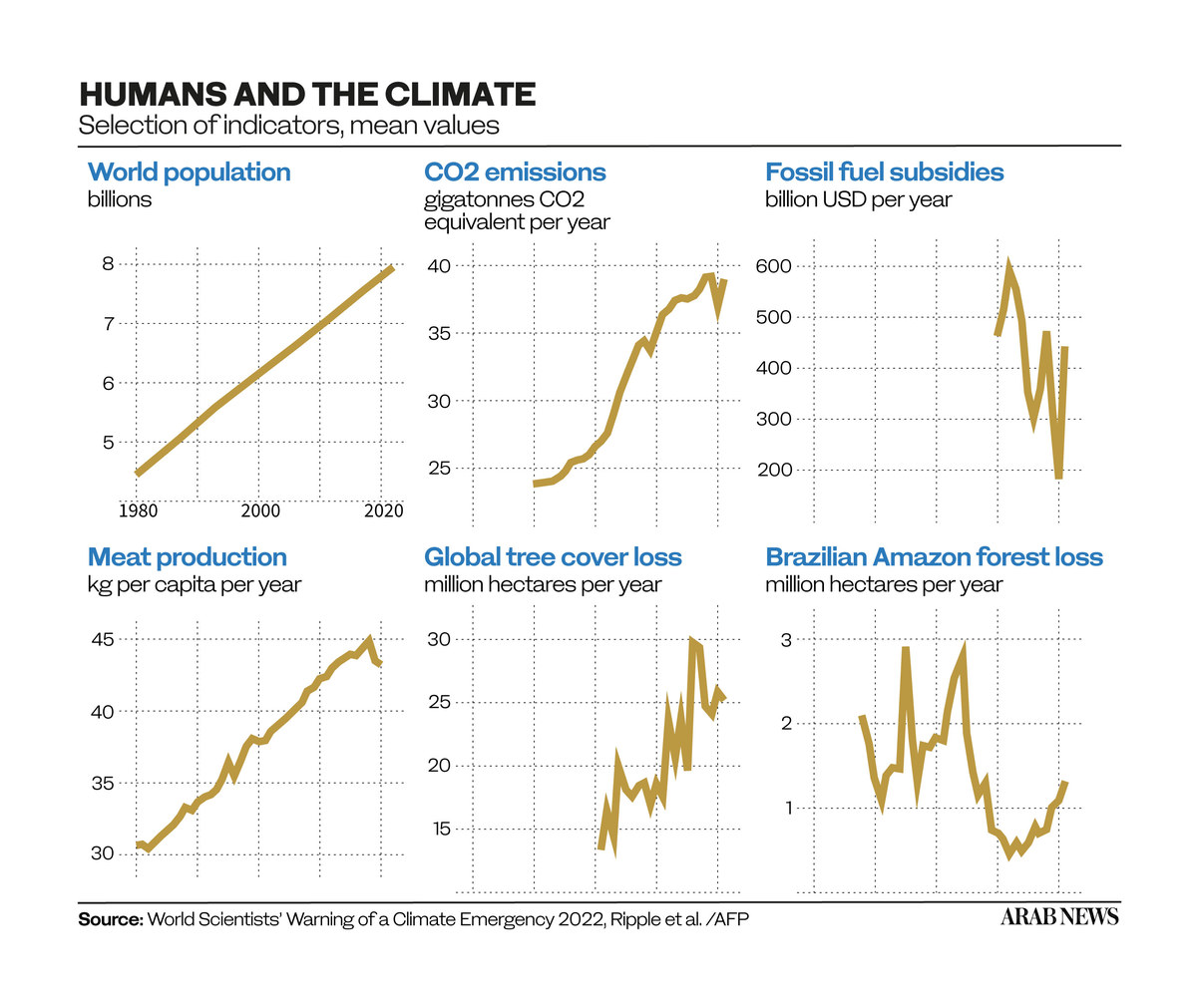
The Saudi government also plans to reduce its dependence on fossil fuels and establish a trading platform for carbon credits and offsets for the MENA region.
“By 2023, Saudi Arabia aims to complete 840 MW of solar PV projects and is currently in the process of building an additional 13 renewable energy projects with a total capacity of 11 GW,” Rendes told Arab News.
The Kingdom has announced one of the world’s leading carbon capture and storage centers on the east coast of Jubail which will be operational by 2027.
At the same time, ambitious projects like the Saudi Arabia and Middle East Green Initiatives, launched by Crown Prince Mohammed bin Salman in 2021, aim to drive emissions reductions, carbon sequestration and green energy transition across the region.
Similarly, the UAE is taking steps to reduce emissions from power generation and transportation to achieve carbon neutrality by 2050.
“The UAE government and leadership have wholeheartedly invested in solar energy projects, setting the stage for them to be the first country in the Middle East and North Africa region with a national path to net zero emissions,” he said. You surrender to Arab News.
He cautions that, as with any major undertaking, cooperation between the governments of the Arab region is a prerequisite for significant progress.
“The time to act is now, let’s make sure that 2023 is not too late,” Rendes told Arab News. “Make no mistake, the planet will survive. But let’s make sure that we survive with that too.”


