


What is it? school choice
With debates about school choice in states across the country, author Neal McCluskey helps us answer important questions like “what is it?” and “why is it controversial?”
The school choice debate has loomed large in recent years as states across the country enact laws in favor of more educational choices for students.
Voices against school choice have also increased, and not only in the form of Twitter posts and opinion pieces, but also in opposition to such legislation, as is the case in Arizona.
WHAT IS SCHOOL CHOICE AND WHY IS IT SO CONTROVERSIAL? LOOK:
Some are unsure what school choice is and how it would help address parental frustrations and issues that have become prevalent in the public school system, especially since COVID-19.
“An education system consistent with a free society has to be based on individual family choices of what they think is right in education. And the freedom of educators to educate as they think is right. And then people can freely unite around the education I agree to,” Neal McCluskey, director of the Cato Center for Educational Freedom and author of “The Fractured Schoolhouse,” told Fox News.
SCHOOL ELECTION HAS A WIN YEAR, BUT POLITICIANS MUST LEARN FROM PARENTS TO GO BIG OR GO HOME IN 2023
He said we see the need for school choice in the battles going on right now, such as the material covered in AP African American studies, how history is taught, gender identity issues, and what books are allowed. in the library.
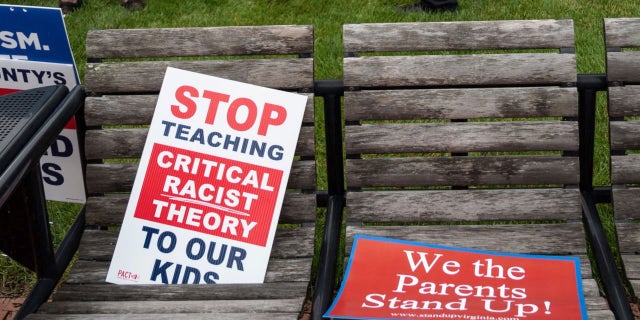
There have been many battles between parents and school boards over public school curriculum options since 2020. As these battles continue, the school choice debate rages. (fake images)
What is school choice?
Although “school choice” can mean different things, the most basic form is when government education funds accompany the child to the family’s choice school that best suits their needs.
School vouchers are a common form, where “state money that would be spent on a child in public school instead follows that child to a private school or a public school,” McCluskey explained.
“Then we have many other types of school options,” he said, listing charter schools, which allow more flexibility for children’s individual needs, and magnet schools, which are public schools that have “something special,” as two options.
“And then often within your school district, you have options” to choose the best public school for your family rather than just being assigned one based on location, McCluskey continued.
Why is school choice controversial?
Much of the opposition comes from people who want good things and “maybe value other things above freedom,” McCluskey told Fox News.
One of the original arguments against school choice is that “children would not receive an education and become good citizens in a democracy unless the government took over education,” he said.
SARAH HUCKABEE SANDERS GOVERNMENT TO UNVEIL BIG EDUCATION REFORMS, ADDRESSING CRT, SCHOOL CHOICE, TEACHER SALARIES
More modern opponents of school choice argue that it would lead to balkanization where “we all fall apart [and] we are no longer a country or a community,” McCluskey explained.
McCluskey told Fox News that some opponents also claim that public schools are “a fundamental American thing,” but he himself argues that they are not because “it was a long time before public education became the norm.”
“There was always a substrate of people choosing private education,” he continued.
McCluskey said “people feel we need a safety net” to ensure equal access to education, but “history suggests that’s wrong.”
“Before public education, there was general education, except when the government said, most notably to African-Americans, ‘You can’t access education,'” McCluskey said.
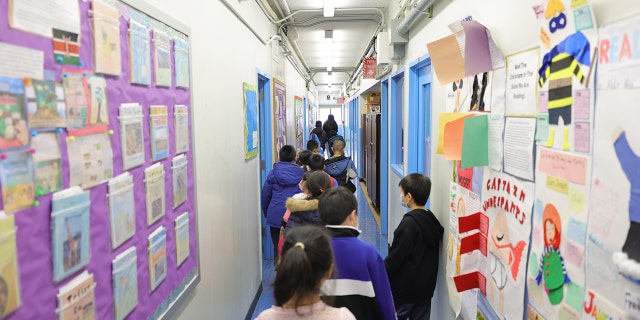
McCluskey says that public schools are not essential to the American educational system. He adds that the education system must continue to change and adapt as it did when schools integrated students of different races. (Michael Loccisano/Getty Images)
Avoiding discrimination is another concern raised by the opposition.
“It gets a lot more difficult when we talk about religious school choice,” McCluskey said. “On the basis of equality, the correct answer is that religious people should be able to access religious schools without being discriminated against by the government, including those schools that operate in accordance with their religious beliefs and convictions.”
“Opposition to school choice is simply not as powerful as the reasons to support it. First, if we want a free, diverse and equal society, in other words, equal before the law, education must be provided by people freely .choosing schools and educational options and teachers freely choosing what they teach and how they teach it instead of government control over everything,” he argued.
When decisions at school are decentralized, “bad” decisions are not imposed on everyone, such as when “public schools segregated or barred African-Americans from accessing education,” he said.
“If you don’t allow free choice, you can’t have competing ideas to see which worked best,” McCluskey said. He expanded on this argument to say that this freedom is also better for innovation within education.
FLORIDA LEGISLATION FEATURED AS THE ‘BIGGEST’ EXPANSION OF SCHOOL CHOICE IN THE STATE: ‘EMPOWERING PARENTS’
McCluskey said school choice allows families freedom of choice to select a school based on what they believe to be the most important purpose of education.
“The only correct way to provide education is not to impose some politically driven final idea of what is right or wrong, but to let various people choose among various options,” he said.
When did school choice start?
“To know the history of school choice, you have to know something about the history of public schools,” McCluskey explained. In colonial times, “there really wasn’t this divide between public and private. Governments often helped, what today would be considered, private schools, financially.”
“So there are a lot of private options, and it wasn’t uncommon for the government to provide some money to help them run,” McCluskey said. “But the expectation was that you would choose the school.”
Over time, the idea began that the government should run the schools, becoming “common schools”. The idea, as McCluskey put it, was to put people in the “same mold.” Simultaneously, school choice developed as a distinct idea first among Roman Catholics, he said.
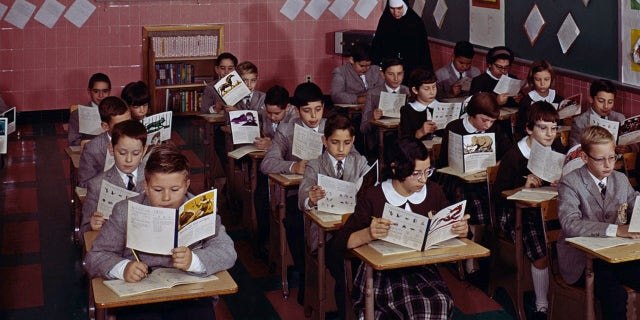
McCluskey says many parents want an education for their children that aligns with their religious values or beliefs. (fake images)
Modern school choice concepts arose in the 1950s, beginning with Milton Friedman, who claimed that instead of the government making educational decisions for families, it should provide vouchers for them to use at the school of their choice.
At the same time, Brown v. The Board of Education ruled that segregation in schools was unconstitutional. The backlash from the ruling resulted in some places wanting to close public schools and then give families money to move elsewhere to avoid the now integrated schools.
“There was this misuse of school choice, but that’s never been the main driver of the modern school choice movement,” McCluskey said.
Beginning in the 1960s and 1970s, school choice began to receive bipartisan support based on the idea that low-income and minority students should have choice. The 1990s saw the first modern school voucher programs in Milwaukee.
“Increasingly, the movement has been, as we’ve moved forward today, about how do we have an education system that’s best for diverse free societies,” McCluskey said.
Where is the debate on school choice today?
In 2021-2022, there were more than 600,000 empowerment scholarship accounts (ESAs), vouchers, and student tax credit scholarships, according to EdChoice. “And we’ve seen a huge increase in interest in it and in states passing bills since really 2021,” McCluskey said.
IOWA JUST FALLEN THE LAST GOVERNMENT SCHOOL DOMINO AND THERE’S NOTHING TEACHERS UNIONS CAN DO ABOUT IT
Then COVID-19 sparked a renewed interest in boosting school choice. Without a way to reconcile all positions on reopening schools or staying closed and masking children, parents became aware of the problems present in the logistics of public education.
This was compounded by the frustration of parents “feeling they were not being listened to and being ignored by school boards,” McCluskey said.
Other events continued the conversation about school choice, such as George Floyd, critical race theory (CRT) policy debates, and gender identity issues.
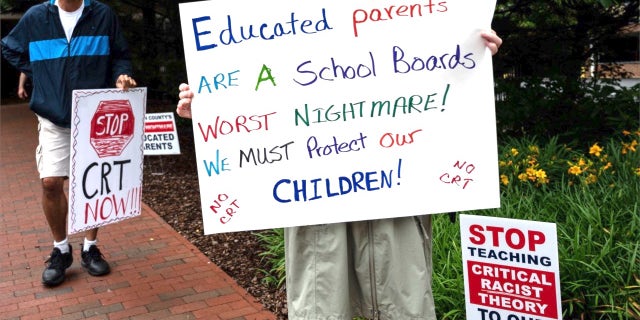
Parents are protesting the presence of critical race theory in public school curricula. (fake images)
Where is the school choice debate headed?
“In the short term, we will see a further expansion of school choice,” McCluskey said. He mentioned states that have recently passed laws or proposed legislation, including Iowa, Utah, Arkansas and Texas.
Before it is fully accepted, McCluskey predicted that there will be a pendulum that will “energize opposition” with “fewer states adopting laws because people who oppose school choice will become more organized, louder and more energized about it.” issue”.
CLICK HERE TO GET THE FOX NEWS APP
This will result in “the acceptance that education should be based on the freedom of parents and teachers,” but there will be growing pains,” McCluskey said.
“The public needs to think about this and understand why public schools are not an essential institution,” McCluskey said. “They are incompatible with American values of liberty and equality before the law.”
To learn more about McCluskey, click here.


