


Some 150 Tibetan exiles held up blank sheets of paper as they rallied in India’s capital on Friday to express solidarity with people in China protesting its “zero COVID” policy.
The blank piece of paper is a symbol of defiance used by some protesters in China against widespread censorship by the ruling Communist Party.
Street protests broke out in several Chinese cities over the weekend fueled by anger over rigid restrictions to combat COVID-19. The “zero COVID” policy seeks to eradicate the virus through sweeping lockdowns, travel restrictions and relentless testing.
CULTURAL GENOCIDE? WHAT IS CHINA DOING IN TIBET TODAY?
Since the protests, some Chinese cities have eased anti-virus restrictions as the government tries to calm public anger.
The demonstration in New Delhi was organized by the Tibetan Youth Congress, which supports the Dalai Lama, the Tibetan spiritual leader. It was held in Jantar Mantar, an area designated by the authorities for protests near the Indian Parliament building.
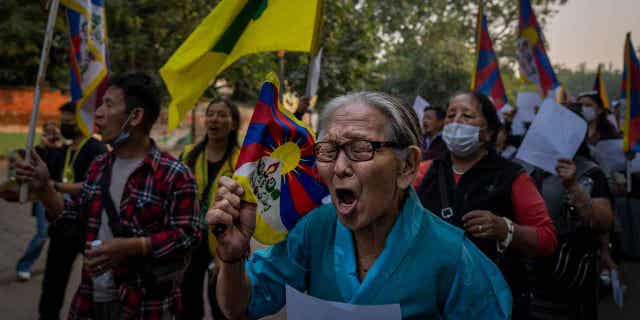
Tibetan exile activists hold up blank white papers symbolizing government censorship in China, during a protest in New Delhi, India, on December 2, 2022. The protest was in solidarity with the “White Paper” protests against continued zero COVID policies of the Chinese government. .
(AP Photo/Altaf Qadri)
The protesters called for the resignation of Chinese President Xi Jinping and chanted “Stop genocide in China” and “Free Tibet, Free China.”
TIBETAN EXILE LEADER WARNS OF CHINESE AGGRESSION: ‘CHINA WILL TRANSFORM THEM’
Tenzin Tsundue, a writer and member of the Tibetan Youth Congress, said he was excited that the Chinese were speaking out against the restrictions and demanding freedom and democracy.
“When protests happen in China, it’s important for us to send this message to the people in China that we stand with you,” Tenzin said.
CLICK HERE FOR THE FOX NEWS APP
Large numbers of Tibetans have been living in exile in India since the Dalai Lama fled Tibet in 1959 after a failed uprising against Chinese control. China does not recognize the self-proclaimed Tibetan government-in-exile in India and rejects the Dalai Lama’s quest for greater Tibetan autonomy from Beijing.


