


Since the age of six, I have called Joburg home. I lived with my family in the south of Joburg, where the phrase “the south” was a very important part of my daily life. After my parents divorced, my dad moved out West.
Having studied finance at university, I began working and socializing more up north, much to the disdain of my mother. In social interactions, when the inevitable question of where one lived arose, my response of “the south” was often met with a somewhat reflective movement from the northerner speaking to me.
I found this confusing as I struggled to relegate people to boxes as arbitrary as which side of Joburg they called home. So, in order to better understand the city, I decided to embark on a tour of these four Rands to get acquainted, so to speak, with the different facets of Joburg’s personality.
What exactly are these Joburg Rands? Well, they’re known as North, East, South, and West, with the Central Business District at the center.
The term Rand (Afrikaans for reef) originates from the former name of what is now mainly Gauteng: Witwatersrand. It is a north-facing escarpment, 56 km long, composed of hard quartzite rock. It has many north-flowing rivers, which form cascades, hence the name Witwatersrand, or “white water ridge”.
Each of the four Rands refers to a loose grouping of areas. The Rands are not formally designated areas, but they are known to everyone and often come up in conversation among Joburgers, even those migrating to Cape Town.
The term Witwatersrand may no longer be official terminology in South Africa in 2022, but its legacy lives on.
The South Rand
If you’re a boy and call the South home, you’re known as a “boytjie from the South.” The South is further divided into the Old South (which includes Turffontein and La Rochelle) and the New South (which includes Mulbarton and Glenvista).
Historically, many people of Portuguese descent settled in the South, particularly the Old South. Immigrating mainly from the island of Madeira, but also from the former Portuguese colonies of Angola and Mozambique, they brought skills including horticulture and trade to the South African shores.
These skills have added to the cultural texture of the South. Famous restaurants and corner shops abound on this side of Joburg, though urban decay is an ever-present challenge, particularly in the Old South.
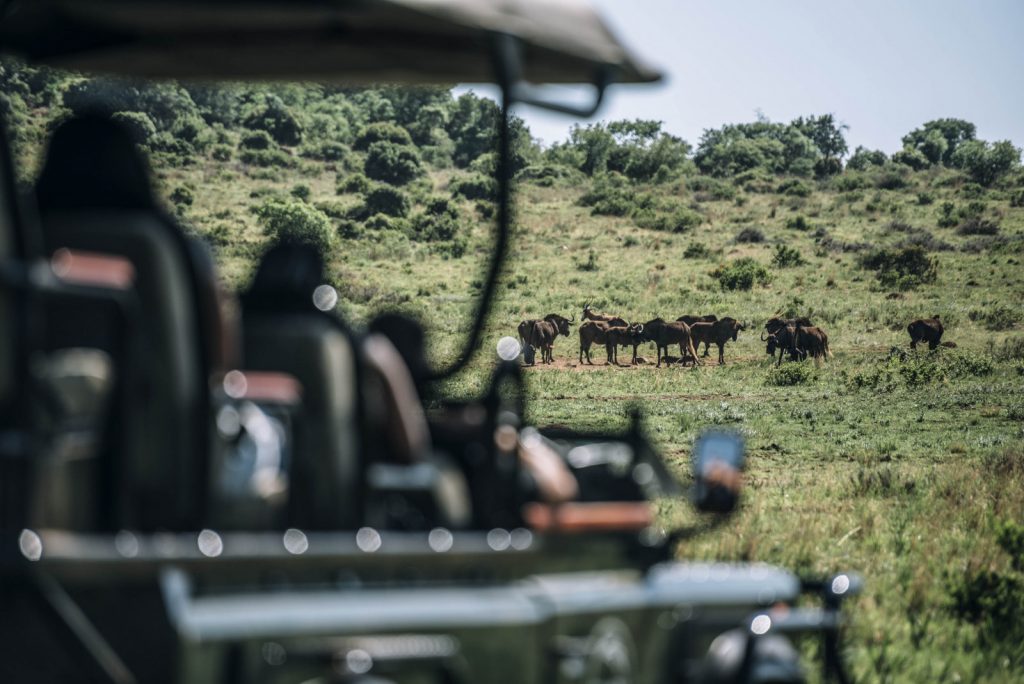
The South also includes important areas of natural beauty, such as the Klipriviersberg Nature Reserve. Joburg’s green heart boasts plains game such as zebra, red hartebeest and black wildebeest, just 10km from the CBD.
The reserve is home to 230 species of birds and is a hotspot for hiking.
Further south, the foundations of Lenasia were laid in 1963, and the suburb was used during apartheid to house Indian families who had been forcibly relocated.
Fort Vanwyksrust, built in 1899 and today just a heap of rubble, stands in present-day Lenasia. The fort was contemporary with the Old Fort at Braamfontein, today the seat of the Constitutional Court.
Turffontein Racecourse, one of the few remaining bastions of entertainment from a bygone era, can be found in the south.
Just down the road is the home of serial poisoner and South Africa’s second woman to be hanged, Daisy de Melker.
She poisoned two husbands with strychnine to earn their life insurance money, then spiked her son with arsenic, though no one is sure why it provoked her wrath.
The south also has one of the best networks for mountain biking and trail running in Gauteng.
Looking for a day filled with good food, good conversation, and time in nature? The boys and girls of the south have you covered.
the northern stripe
There is tension between the North and South Rands. So, with the olive branch outstretched, I bring here the North.
Some of its suburbs are Sandton, Alexandra, Bryanston, Rosebank, Randburg, Northcliff, and Fourways.
Lanseria International Airport is located on this Rand, as is the ever-popular Zoo Lake.
Traditionally the wealthy Rand of the family, the North includes some of the wealthiest and most developed parts of Joburg, both from a housing and commercial point of view.
Sandton, the heart of the north, developed rapidly during the 1990s as a CBD alternative, as the latter fell into decline.
But the North should not be associated only with new developments. The southern section features leafy suburbs such as Parktown North, Parkhurst, and Greenside which, along with other neighborhoods, are collectively known as The Parks.
Many Edwardian houses line the streets of Parks, giving this side of town a unique feel. This, in turn, inspires a constant stream of exciting new art galleries, restaurants, and weekend exploration destinations.
Like much of Joburg, the north is also full of contrasts. One of Joburg’s poorest townships, Alexandra, is to the east of Sandton. Alex dates back to 1904 and started life as a farm.
The legacy of apartheid, and in particular its spatial planning principles, conspired to devalue the lives of residents and led to increased poverty.
A plan to make Alex a Garden City was conceived in 1980, but after the violent Alex Six Days uprising in February 1986, sparked by an attack on residents at a funeral, the plan was shelved permanently.
Mama Africa, the legendary Miriam Makeba, was born in 1932 in Prospect Township near Westdene on the North Rand. Regarded as one of the foremost African artists of the 20th century, she had a successful singing and recording career throughout the world.
Interestingly, the North claims kingship. Leka, Crown Prince of Albania, was born at the Sandton Clinic in 1982, the only grandson of King Zog I of Albania.
At the time of his birth, the South African government temporarily declared the maternity ward Albanian territory to ensure that young Leka was born on Albanian soil.
Rosebank is home to the famous Keyes Art Mile, home to restaurants and art galleries, and further on, the Sin + Tax Cocktail Bar. This was the only bar in Africa to be ranked in the world’s 50 best bars in 2019. This year, it was the only Joburg bar in the top 100. They had to knock on the side alley door.
In search of great food, a walk through a collaborative art gallery on a Sunday morning, or immersing yourself in the rich heritage of African music and culture in Alex, the North has plenty of options for you.
the west rand
This Rand includes Roodepoort, Soweto, Randfontein, Krugersdorp, and Muldersdrift. The cities of Carletonville and Westonaria are often included in the expanded definition of the West Rand.
East Rand has access to the magnificent Magaliesberg and Sterkfontein caves in the Cradle of Humankind World Heritage site. The Maropeng Visitor Center, with its award-winning exhibits, explains the two-million-year history of human development in the area.
Kagiso Rabada, the world’s best young player according to the 2018 Wisden Cricketers’ Almanack (aka The Cricket Bible), spent his early years between Mamelodi in eastern Pretoria and the dusty plains of West Rand.
Soweto, an abbreviation for South Western Townships, is home to more than 1.3 million residents and effectively cuts across the West and South Rands.
Soweto is a largely misunderstood part of Joburg. But there are interesting things happening in this area, as it seeks to define itself based on more than its apartheid legacy.
It’s a place of renewal: urban farming projects and pan-African culinary experiences abound, which you can explore on foot, by bike, or even by tuk-tuk.
The residents are warm and welcoming and have stories to share with those who are eager to listen.
Soweto also has the Chris Hani Baragwanath Hospital, the largest in Africa and the third largest in the world. It employs 6,760 people, has 3,400 beds, and spans 170 acres.
Vilakazi Street, in Orlando West, is considered the most famous street in Soweto, if not all of Joburg. It is the only street in the world where two Nobel laureates, Nelson Mandela and Archbishop Emeritus Desmond Tutu, meet.
The East Rand
Like the Rand I knew least about, the East Rand was waiting to seduce me with allure and mystery. Stretching out to include Germiston, Bedfordview, Edenvale, Benoni, Kempton Park and Springs, many of its areas have connections to Joburg’s early mining days.
Jews and others of various European origins have made their homes on the East Rand in the past, including a large contingent of Lebanese.
OR Tambo International Airport, the busiest in Africa with over 28 million travelers a year passing through its terminals in pre-Covid times, is on this Rand.
Ask any Joburger about East Rand and, in most cases, the first words they utter will be The Vale, Edenvale, aka 1610 (in reference to the ZIP code). This speaks to the deep level of camaraderie found in this Rand. Locals come together socially and in times of need, like the recent lockdowns.
Interestingly, the city of Springs, on the eastern edge of the East Rand, lays claim to the most small-scale art deco buildings in the world, outside of Miami in the United States, earning it the label “child of love.” art deco”. ”.
By the mid-1930s, it was one of the six largest cities in South Africa, often mentioned in conversations along with Joburg, Durban, and Cape Town. Sadly, Springs has not continued to enjoy this level of prosperity, but it’s still a great art deco walking tour.
In the early 20th century, nurseryman William Nelson planted more than 100 km of jacaranda trees on the streets of Kensington, one of Joburg’s oldest suburbs. Come at the end of October each year, when the city is bursting with glorious purple flowers, Kensington puts on one of the best shows in town.
Having shared the impact my time in the Rands has had on me, I find myself reflecting on Joburg, the place I call home. I am grateful for its often extreme juxtapositions. It is a place that continues to inspire me through the smile of a local, or an unexpected conversation in a corner cafe. And in that there is beauty.


