


The majority of South Africans cannot afford daily bread, basic sanitation, decent housing and the resources to search and find work, and are unable to participate in the economy. With more than half the population living on less than R1,335 per month, many cannot afford to meet their food needs, while the top 10% of the population owns 90% of the wealth. The inequalities in the South Are are a time bomb, and if South Africans continue to starve at this rate, it is likely that one day they will eat the rich.

A recent study by Applied Development Research Solutions (ADRS) led by Dr. Ashgar Adelzadeh, Chief Economic Modeler and Director, revealed what many already know: that the tax burden has significantly benefited the country’s wealthy class at the expense of the majority. . The taxable income of the wealthy has declined since 1995 instead of rising with inflation to help the government increase revenue to meet the basic needs and services of all its citizens.
A person with a taxable income of R100,000 used to be taxed at an effective rate of 33.8% in 1995; they paid taxes at 19.8% in 2011 and 18% in 2022, in what the Alternative Information and Development Center (AIDC) calls “the race to the bottom of corporate income tax.”
The redistribution of wealth will not take place as long as the rich do not pay what is due to the State, so that the State has sufficient revenue to maintain the conditions that allow all citizens to participate in the economic, civic and social activities of the community. nation. .
Instead of cutting budgets in key departments such as health, education and sanitation, the government must adopt a fair way of increasing tax revenue and investing that revenue to improve the lives of its people, not to deteriorate the quality of life through key revenue reduction. government expenditure.
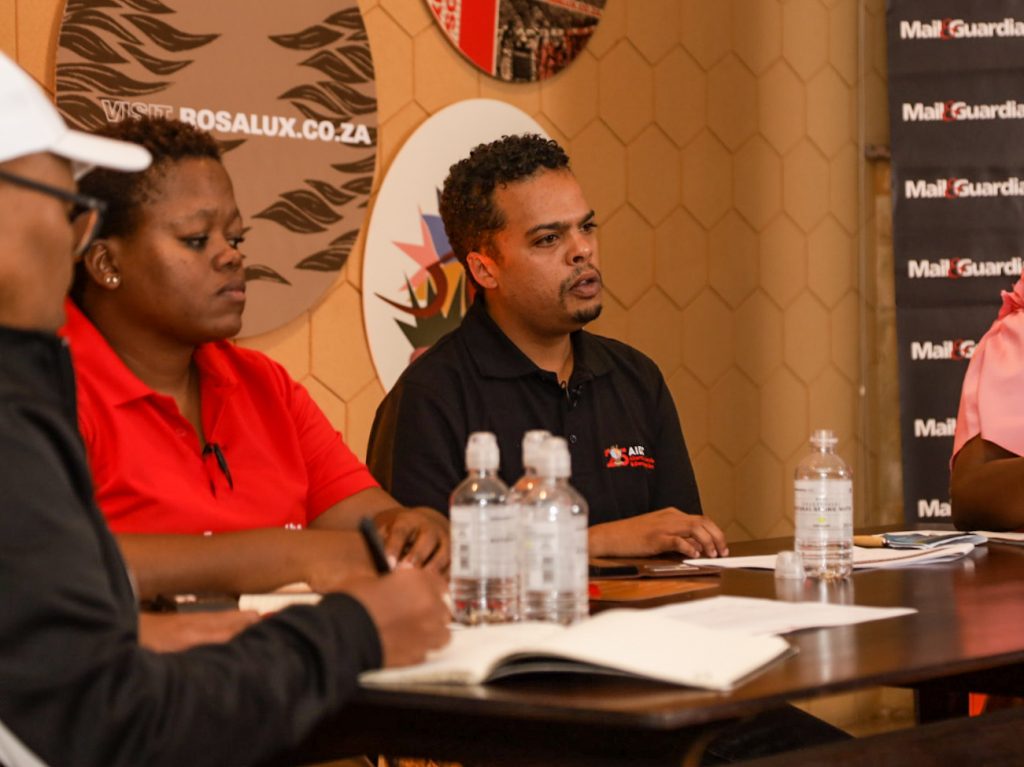
Social Development Minister Lindiwe Zulu participated in the panel on the introduction of the universal basic income grant organized by Rosa Luxemburg Stiftung South Africa in collaboration with Mail & Guardian and AIDC. She sat next to Princess Majola of the Assembly of the Unemployed and Dominic Brown of AIDC, in a dialogue facilitated by Zikhona Ntshona. The minister said the wealthy should be grateful for the peace, security and stability that exists amid stark inequalities, and that they should see their contribution to a universal basic income as a way to keep the peace in the face of injustice inequality.
“I don’t think this country can’t afford to feed its people. This country has enough. The problem in this country is the gap between rich and poor, and we can afford to implement this basic income subsidy,” Zulu said.
Zikhona Ntshona noted that as a journalist reporting on the devastation of the pandemic, she has seen first-hand how the R350 Social Relief of Distress temporary grant can help a family and the access it can give them, especially children and women.
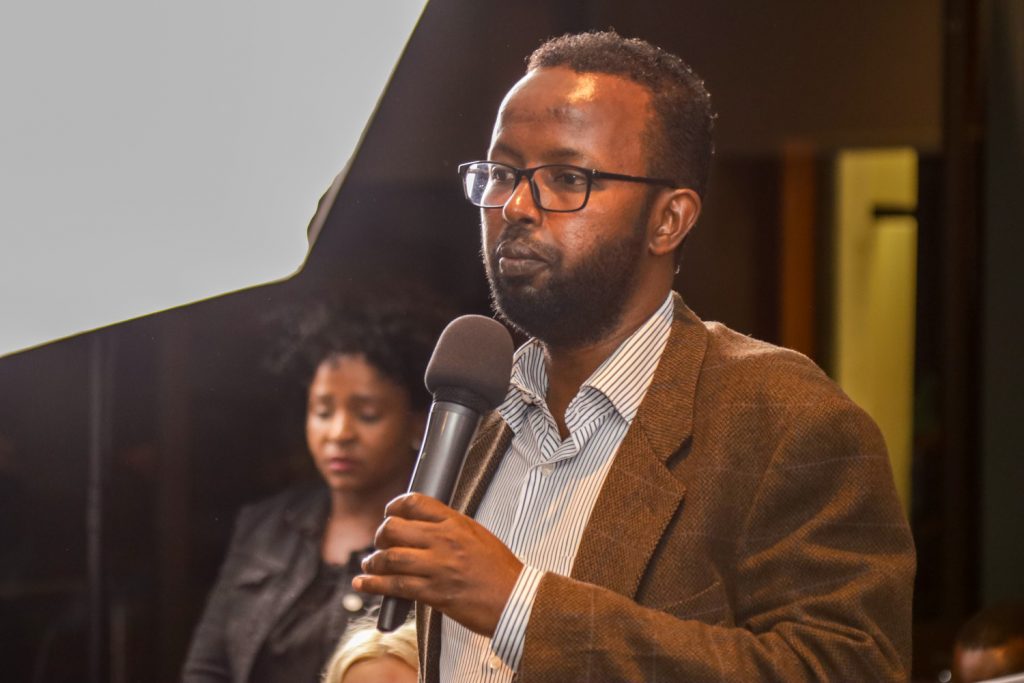
“Young people were able to expand their local businesses selling sweets and buns, others were able to start businesses from scratch, like a group of women who started selling vetkoeks. Young people have also used that money to print resumes, go to internet cafes and do other things to help them get jobs. The grant has also given many women the dignity of being able to buy sanitary napkins.”
Majola lamented that for a mother of two, she would first have to buy food for her children with R350 before she could buy sanitary napkins, and even then, the cheapest food she could afford is chicken powder, which is not very nutritious. Another complained that the R350 couldn’t even afford a loaf for each day of the day. “Living in South Africa is turning into a nightmare,” Majola said.
The nightmare was revealed in reports from the Puerta de la Esperanza Children’s Mission, which claims that more than 141 children were abandoned during the lockdown because mothers simply could not pay to feed them. “Women are fighting for paid work, which is also gender violence,” said Majola, who went on to say, “let’s not be a charity case. Don’t give us leftovers.”
Speaking about where the resources can be found to fund a basic income grant, Brown advocated for an increase in the tax-to-GDP ratio. In addition to restoring effective personal income tax rates to early 2000 levels, which could raise an additional R160 billion each year, Brown highlighted the important need to introduce a progressive tax on net worth. between 3% and 7% for the top 1%.
The R350 grant is a stepping stone and a sample universal basic income test that would not have the means test, Zulu said. “I went back to the committee that initiated the policy document on the universal basic income grant, and it was difficult to pass. We took it to parliament, to the public and to the president. The president said that this is not a question to be asked; it is about the modalities of how we come to implement it.
“Our government was able to get this money out of thin air. It was extended for the second and third time. We can implement this basic income grant, but let this not just be a fight for the social development department alone,” said Zulu, noting that the need for the basic income grant has become more urgent and evident as a result of the pandemic. It was only during the pandemic that the minister discovered that a policy document was in the works for the grant.
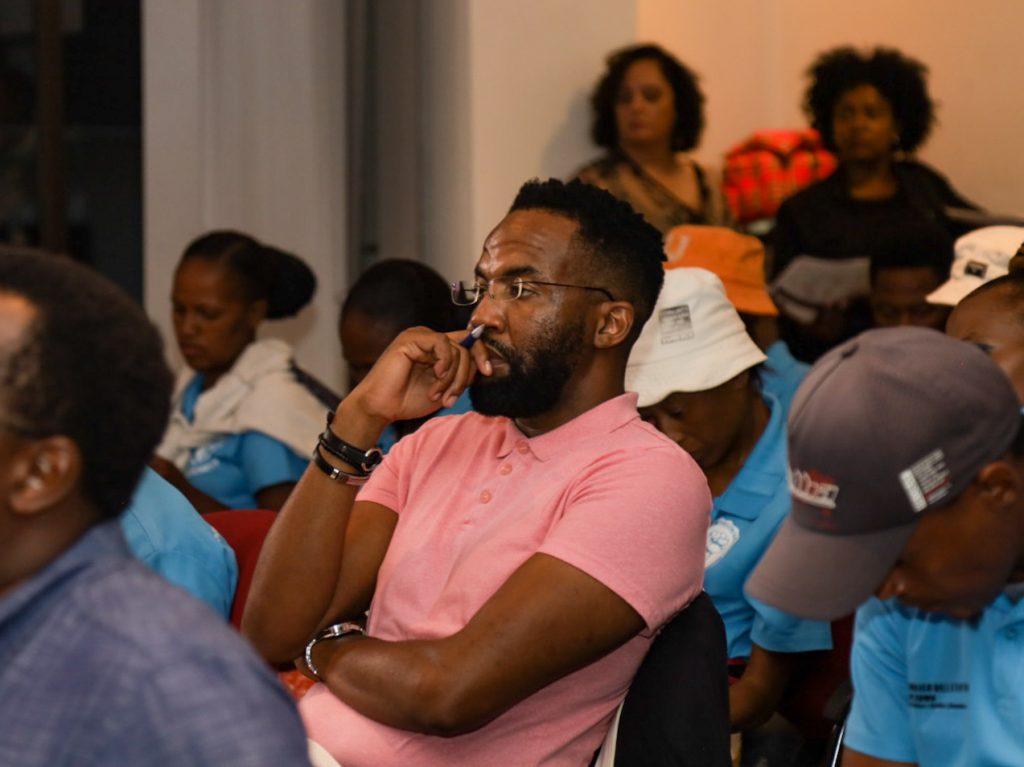
It arose from various members of the audience whether the universal basic income grant would in fact be universal, or whether people would have to be subject to income tests to qualify, as was done with the temporary Social Distress Relief grant, where individuals earning more than R664 or getting other grants would not qualify.
“We need to move towards the universal basic income grant because it would help people have a safety net,” Brown added. “Let’s give the basic income grant to everyone, from the unemployed to Johann Rupert,” Brown said. “Let’s make sure people aren’t denied because of insane thresholds,” he added.
His sentiment was shared by the Deputy Director General of Comprehensive Social Security of the Department of Social Development, Brenda Sibeko.
“We want to eliminate the means test. Current legislation provides for a basic income subsidy. The welfare law should be amended to add the basic income subsidy. It will take time before parliament agrees and the treasury allocates the budget. The R350 is used to configure the systems. People who support the laws often do not have the means to travel to parliament or attend public hearings. Please make your voice heard and help us push this into legislation,” Sibeko said.
A universal basic income will improve the economy by allowing more money to circulate between people, and will empower people to create or find meaningful work instead of worrying about water, food and hygiene and other basic services that prevent them from contributing to the economy. .
According to AIDC, a progressive net worth tax of between 3% and 7% on the richest 1% of the country’s richest people could raise more than R143 billion in revenue each year, which would cover the most of the cost of a basic universal system. income grant. “It seems to me that it’s not a question of whether or not the government has the money to implement, it’s a question of the integrity of our government and their willingness to allocate funds to make it happen,” Brown said.
The Financial Intelligence Center estimates that South Africa loses between $15 billion and $25 billion a year due to illicit financial flows.
“Forty percent of our budget is lost due to corruption. This means that without adding a penny, the government can increase its output by 30-40%,” said former Treasury procurement chief Kenneth Brown. “We could be building more roads and more schools without even adding more money to the current budget,” he added.
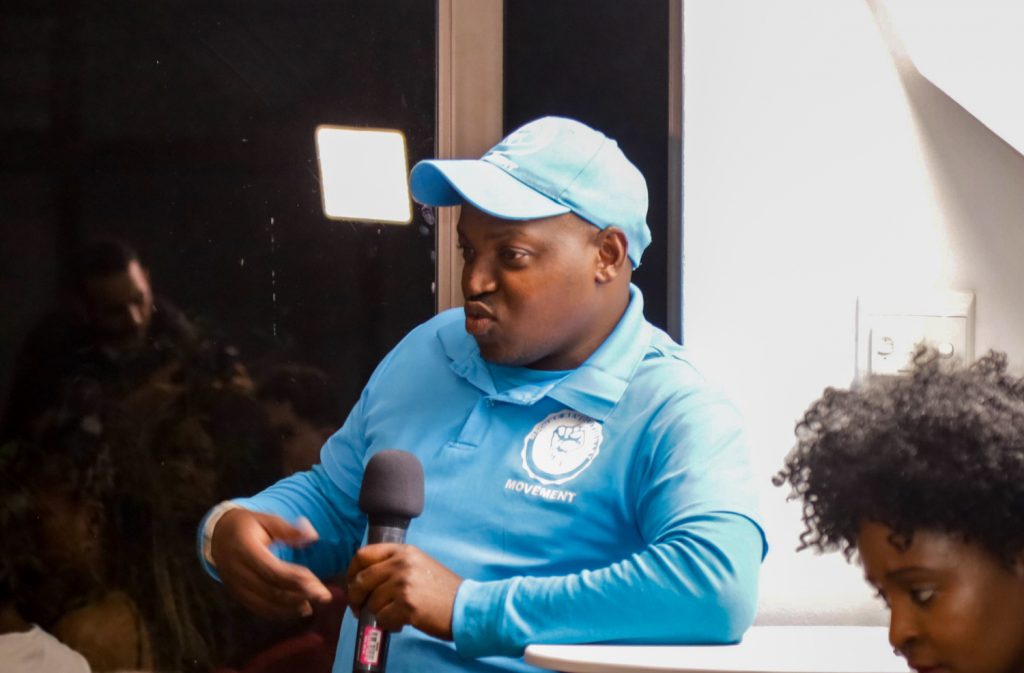
One of the biggest arguments against the universal basic income subsidy, raised by a young entrepreneur in the audience, is that the subsidy could be creating a country of beggars.
“Don’t talk to me about the dependency syndrome. People without work did not ask for it and did not provoke it. This is everyone’s problem,” Zulu said sternly, adding that the private sector was still absent from this conversation because he is one of the first to say we can’t afford it.
“We cannot afford to have the poorest of the poor among us, we cannot afford to have women starve because they have to share what little they have,” Zulu said.
The department proposes to start the universal basic income grant with a minimum of R663, which is the minimum amount for food security.
With the government’s will demonstrated by Zulu and with many citizens like the Assembly of the Unemployed speaking up to advocate for this policy, South Africa can introduce a universal basic income grant that will go a long way in alleviating poverty.
Welcome Mandla Lishivha is a journalist, researcher and author of Boy on the Run.
More information on this topic and a recording of this discussion are available at www.rosalux.co.za


