


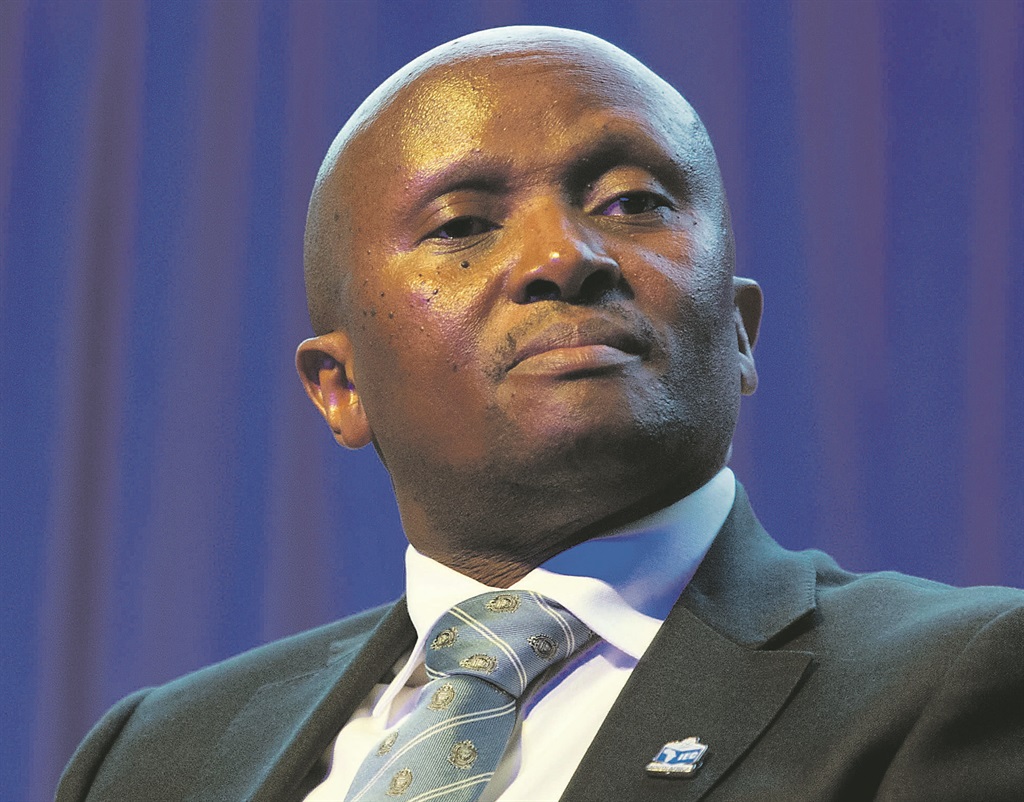
President of IEC Mosotho Moepya.
- The state of disaster will not delay the 2024 elections, according to IEC President Mosotho Moepya.
- Moepya was addressing a meeting of the South African National Publishers Forum.
- The 2024 national and provincial elections in which independent candidates can compete, and one of the issues that the IEC will have to deal with is the provision of three ballots.
The state of disaster imposed by President Cyril Ramaphosa as a result of South Africa’s energy crisis will not delay the 2024 elections, according to South African Electoral Commission (IEC) Chairman Mosotho Moepya.
Moepya was addressing a meeting of the South African National Publishers Forum (Sanef) when he was asked about the impact the state of disaster would have on the IEC.
The state of disaster began with immediate effect after the president announced it in his State of the Union Address.
“The state of disaster will allow us to provide practical steps we need to take to support businesses in food production, storage, and the retail supply chain, including deploying generators, solar panels, and uninterruptible power supplies.”
READ | Takeover: Ramaphosa Seeks Electricity Czar, Faces Lawsuit Over State of Disaster
The president said he would allow the government to exempt critical infrastructure, such as hospitals and water treatment plants, from load disconnection.
Moepya has yet to see the official declaration of the state of disaster, but said he was sure they would look at the possible impact next week.
added:
He won’t even come close to us considering moving the election.
However, it could have an impact on the work of the IEC. For example, if there is a power outage at night, it could affect the time it takes to count the votes.
The next national and provincial elections, which are between 15 and 18 months away, will also be the first in which independent candidates can run.
It follows an order of the Constitutional Court of June 11, 2020, which declared the Electoral Law unconstitutional “to the extent that it requires that citizens of legal age may be elected to the National Assembly and the provincial legislatures only through their affiliation to political parties”.
The Constitutional Court suspended the declaration of unconstitutionality for “24 months to give Parliament the opportunity to remedy the defect that gave rise to the unconstitutionality.”
This means that the initial deadline to pass the legislation was June 10, 2022. On two occasions, Parliament had to approach the high court to request an extension. The bill is due to be enacted by the end of the month.
On Friday, the Home Affairs Portfolio Committee finished its work on the bill and will recommend to the National Assembly that it be adopted.
READ | Election Amendment Bill: Go to court not off the table, says OUTA
Moepya said that the Constitutional Court had ruled and that its decision was final, but added that there were some challenges. One is that the provisions of the Constitution on the financing of political parties are not directed at independent candidates.
The new legislation would mean that in the 2024 election, voters will receive three ballots instead of the usual two. The National Assembly is made up of 400 seats, of which 200 are occupied by the lists of the national parties and 200 by the regional lists or those of the nine provinces.
Independent candidates can only run on regional lists. The new ballot will thus be a regional ballot. Previously, the same ballot was used for the national and regional lists.
Moepya said each province’s regional ballot would be different. This will pose some logistical challenges.
He commented that he had never seen so much interest, so much controversy, so much rigor and debate in a bill.
“This should be welcome,” he said.
The bill that is expected to pass will include a provision that a body should be established to review the electoral system.
This followed a lot of pressure from civil society, due to discontent with the nature of the changes the legislation would make to the electoral system, with a general feeling that it does not go far enough.
Several civil society organizations have been advocating for an electoral system that, at least in part, provides for constituencies.
Moepya said further legislation would be required to allow for the demarcation of national and provincial electoral districts, a process that itself could take up to five years.


