


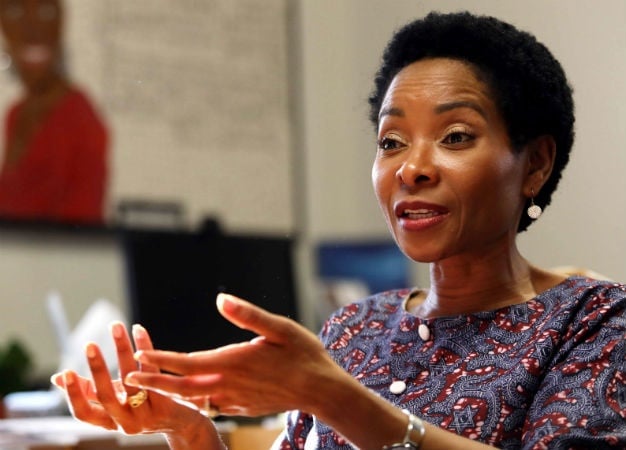
Vice Chancellor of the University of Cape Town, Professor Mamokgethi Phakeng.
Esa Alexander, Gallo Images/Sunday Times
- UCT academic staff are ready to go on strike after salary negotiations have stalled.
- Vice Chancellor Professor Mamokgethi Phakeng says the university executive has been working tirelessly to avoid a strike.
- The Academics Union, which represents the majority of academic staff, canvassed its members on the possibility of going on strike.
University of Cape Town (UCT) Vice-Chancellor Professor Mamokgethi Phakeng says the institution will do all it can to prevent a strike by academic staff after salary negotiations stalled.
Meanwhile, the Academics Union (AU), which represents the majority of the university’s academic staff, polled its members on their willingness to take industrial action, with 87% supporting a three-day strike.
Phakeng said in a campus statement on Saturday that the university executive had been working tirelessly and engaged with the AU in salary negotiations.
“This has taken place against the backdrop of very challenging and unusual circumstances, including a very difficult current economic climate.
“In regular engagements with all unions, the executive has always remained open and transparent about the financial outlook for the university and its implications for the many areas of our operations,” he said.
Phakeng said the executive remained committed to resolving any issues in the bargaining agreement with the AU regarding wage demands. The AU has been locked in wage negotiations with the institution after they were offered a 3% pay rise in November.
Union members rejected the offer and were assured by the union that a revised offer would come, but it had not materialized, the AU charged.
READ | The student activist who gassed UCT security guards and cost them their jobs
“There is currently a process underway to address the issues that have arisen and we are confident that it will give an acceptable result soon,” Phakeng said.
“It is important to emphasize that the executive is approaching each step of the process in accordance with the university’s governance procedures.”
Phakeng added that it was not unusual for the university to have not reached an agreement with either union at this time of year.
“Such is the nature of salary negotiations: it is not always possible to reach an agreement in an ideal time frame given the demands of recognized unions and other factors that the university must consider,” he said.
In the vote carried out by AU members this week, 87% expressed their support for a three-day strike, with additional strikes possible, as soon as the Conciliation, Mediation and Arbitration Commission (CCMA) issues a strike certificate.
The AU said it was also likely to work to rule on days when a strike was not planned. This vote followed the union’s near-unanimous rejection of the 3% offer in a vote held in December last year. The union said in a statement on Friday. : “Academic staff agree to go on strike for what they consider an insulting and derisory salary increase of 3% offered for the year 2023.”


