


Diaspora Expressions: On Spirituality and Rituals opened at the Museo del Caribe Centro de las Artes on November 18 with community art patrons expressing their connection to the theme and their desire to revisit the exhibit. Visual creations by six artists from the Caribbean fill the walls of the galleries above providing reverence and storytelling of the culture and practices of their home countries.

Noted curator Anderson Pilgrim worked with each artist by visiting their studios, observing them at work, and selecting the pieces that would become the Diaspora Expressions of Spirituality and Ritual exhibition.
Pilgrim is President of Diaspora Now Inc., an artist management and exhibition company, as well as CEO of Caribbean Fine Art Fair Barbados, the only Caribbean fine art fair held within the region.
Pilgrim began his career in the arts and was part of the stage management of CARIFESTA in his native Barbados in 1981. “I was in tune with creative people, but I had a different mind and I was able to interact with them and understand their language,” he said. saying. Pilgrim’s mind was oriented towards business organization and management, which led him to New York City to study marketing and management. He realized that artists needed someone to manage his work and then he transitioned into visual arts and studied fashion and art history. He attended Baruch College of the City University of New York, where he graduated with honors in Marketing and Business Administration.
As the US representative for Barbados Investment & Development Corp.’s US Market Development Program from 1999 to 2008, Pilgrim was instrumental in developing and furthering the careers of many of the creative talents of Barbados in the areas of art, fine crafts and fashion. His booth designs and presentations have won several awards over the years, including Best in Show, Manchester Art Show, CT, and the Kuumba Award for First and Second Prize Booth Design, International Black Buyers & Manufacturers Expo, Washington, DC.
“As Africans spread across the New World during the Middle Passage and 400 years of human trade, so too were many of their cultural practices, modes of worship, and rituals that surround life’s moments. These ancestral elements are manifested in religious movements, cultural expressions such as dance, visual arts, and carnival arts, many of which have become widespread while others have been denigrated in popular culture. Growing up in the Caribbean, I would venture to say that most of my contemporaries and I were taught to repudiate Vodou/Santeria/Obeah practices on whatever island we lived on…
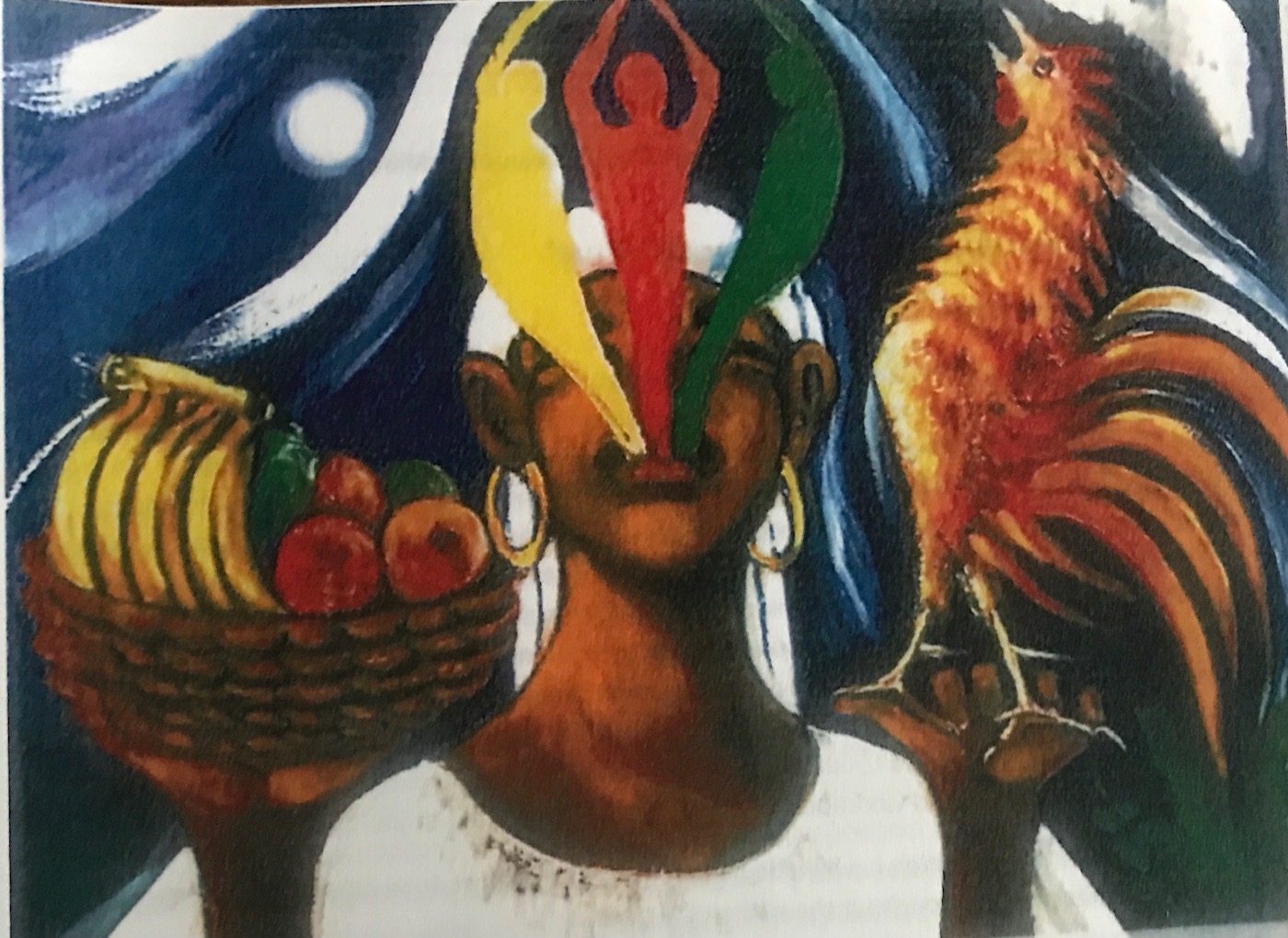
‘Black Magic’ they called it. How ironic. However, there is a movement among contemporary practitioners, especially in the Americas, to try to dispel those misconceptions and reclaim the public narrative about religion,” Pilgrim said.
The article “Black religion that has been misaligned for centuries” written in The Atlantic, June 2022 by Haitian-American environmental educator Alain Pierre Louis says, “Voodoo is very big on respect for nature, on remembering ancestors, and rhythm and vibration through dance, through dance, through singing and the drum. Voodoo is energy.”
“The artists featured in this exhibition have made it a practice to explore various aspects of this ethereal energy, which manifests itself throughout the African diaspora,” Pilgrim said.
Virgin Islander native, resident artist Ademola Olugebefola and Pilgrim worked together for many years. “We decided that we would focus on my prints created in the 1960s and 1970s that are part of my development and give people the opportunity to see some of my earlier work. I’m happy that he [Pilgrim] I chose many of the woodcuts that highlight my career. The museum has an engraving workshop for adolescents under my tutelage and we can use them, ”she said.
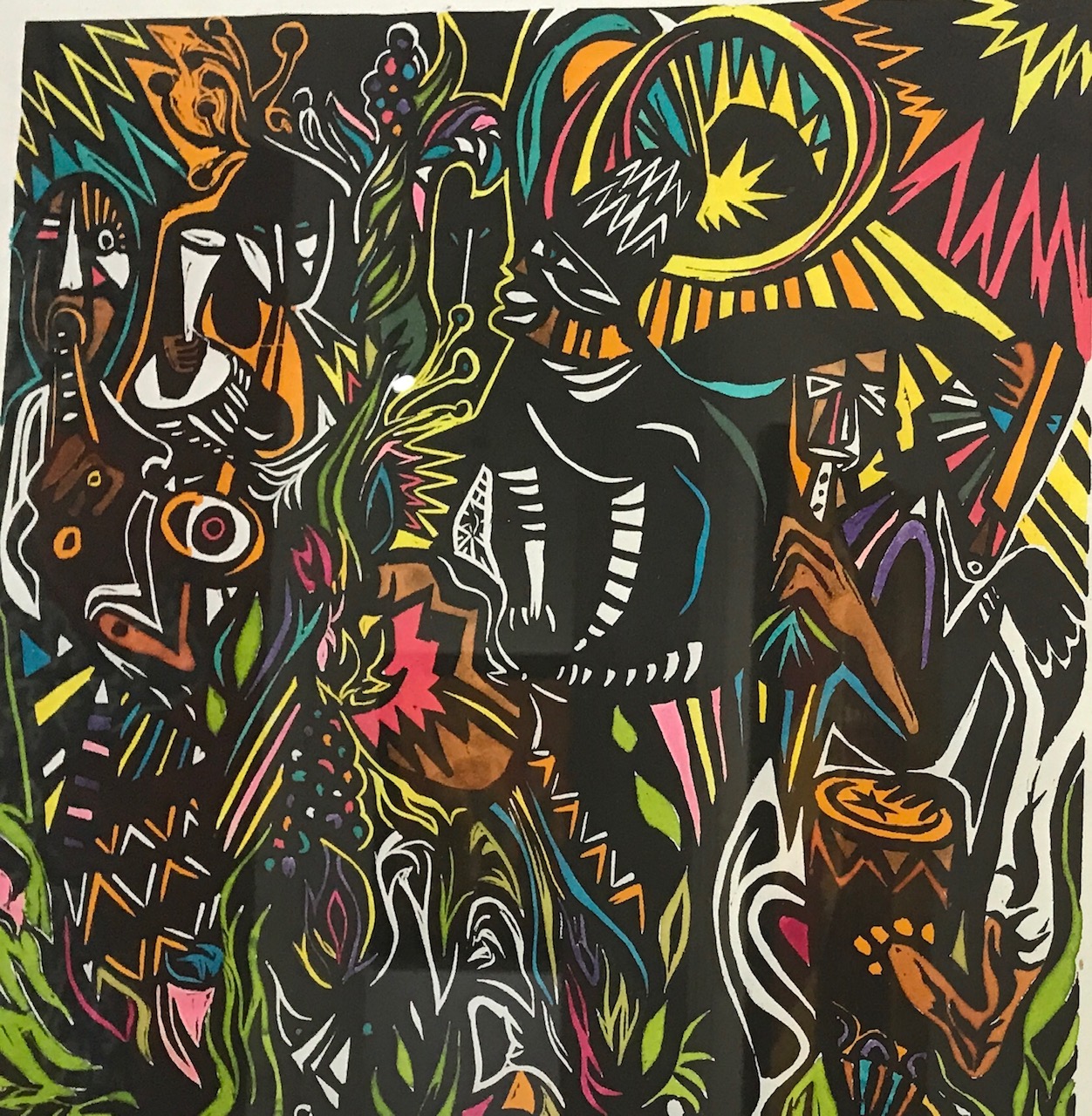
Olugebefola’s artwork has been published on posters, catalogues, and book and magazine covers. Prints from many of his woodcut editions are in the permanent collection of the Schomburg Center for Research in Black Culture. His work has been widely exhibited across the country and he illustrated a book of African Tales, published by Oxford Press, which he and Pilgrim have donated to CMCArts, among others.
A local art patron spoke about her visit to the museum on the opening day of the exhibition. “I am an art lover and I love everything related to spirituality, ritual and religion,” she said. Art offered the patron peace of mind as well as challenges, she said, which reminded her of her experiences of it during her visit to Ghana in the early 2000s.
“Hearing the artist on the zoom exchange gave me a better understanding of what his work was about. Ademola Olugebefola spoke about the psychology of colors and how colors can affect our behavior. The colors created a mood and opened my mind to the different beliefs, customs and practices that her art portrays,” she said. They all conveyed a story to this patron and his connection to the diaspora from Africa to the Caribbean.
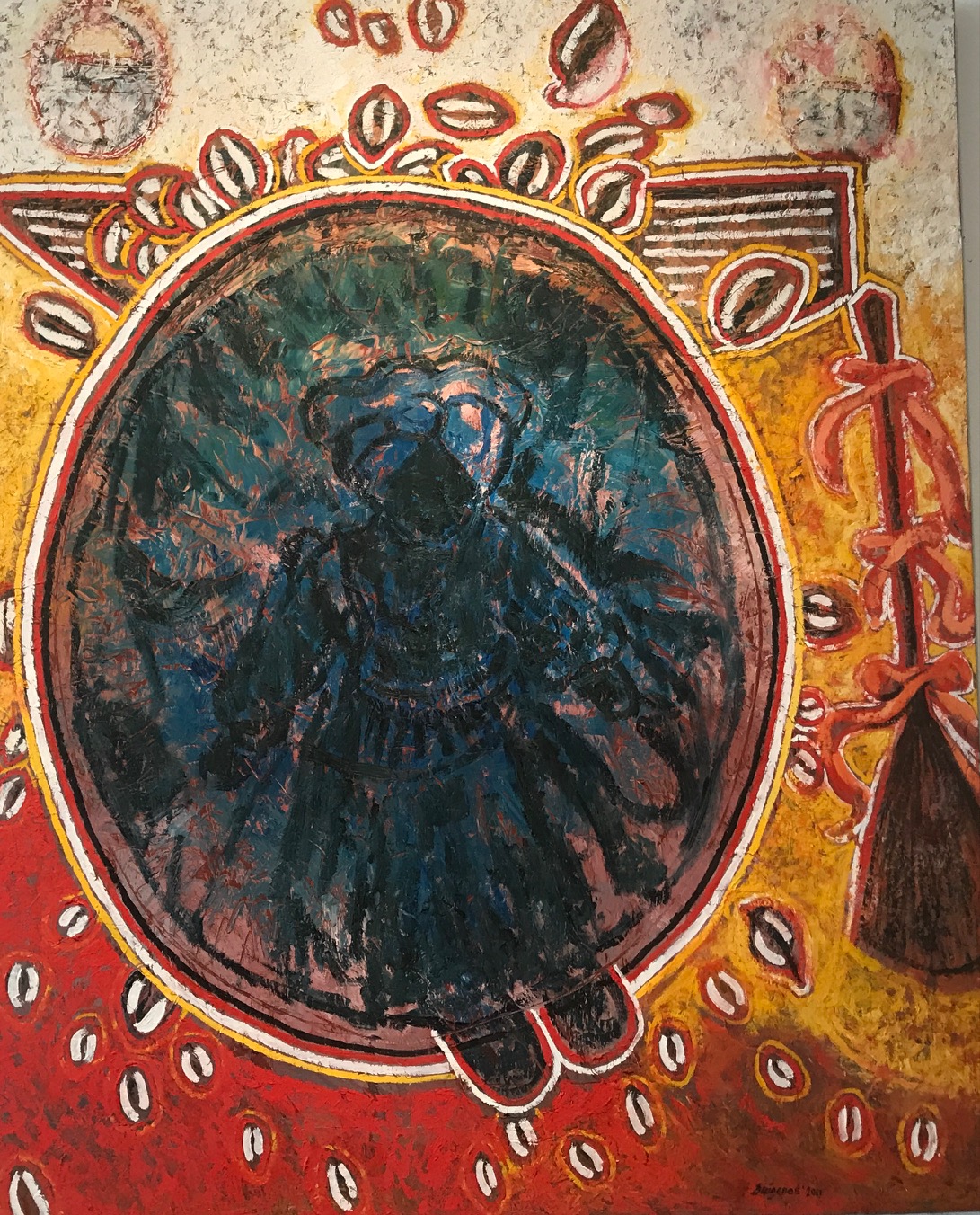
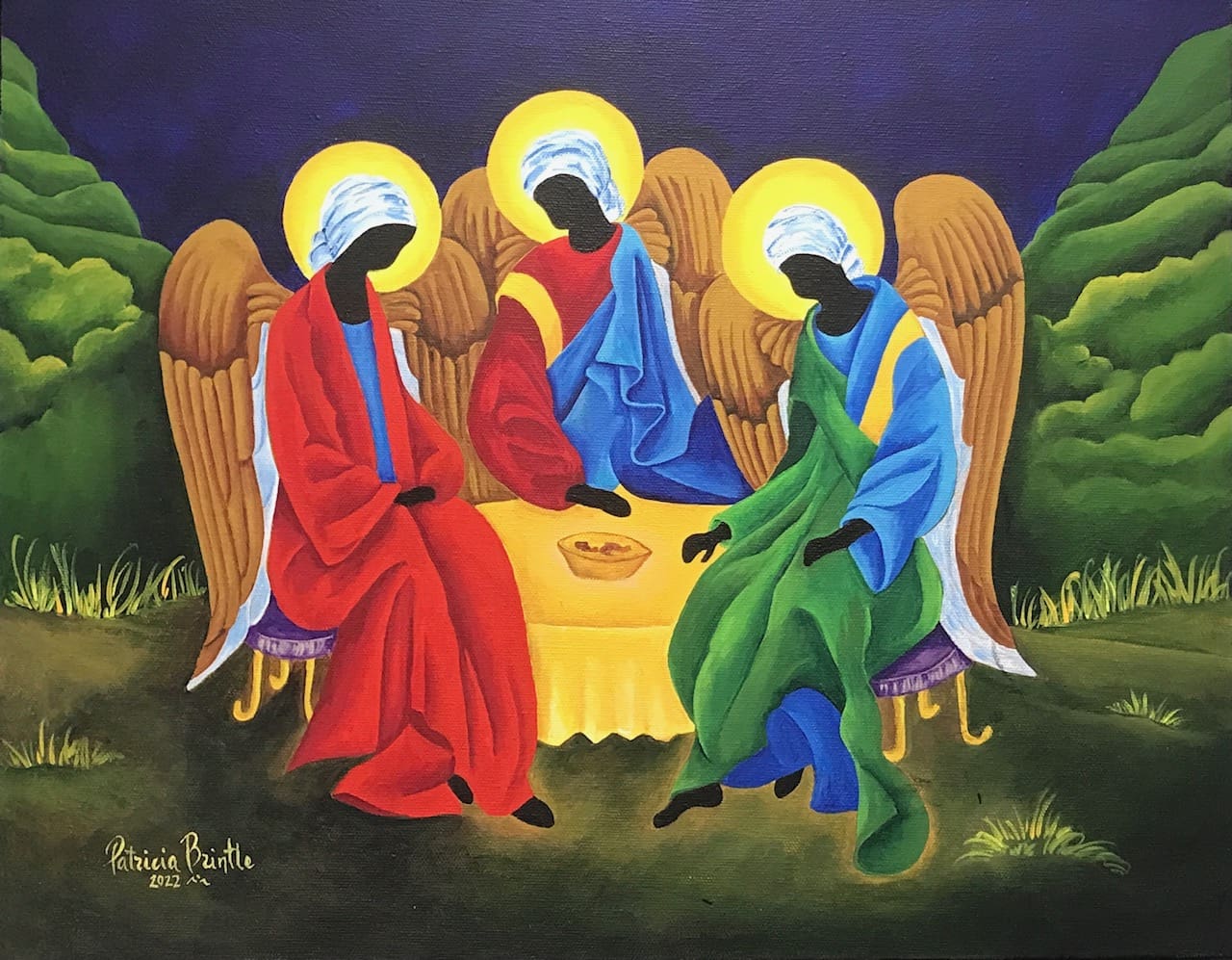
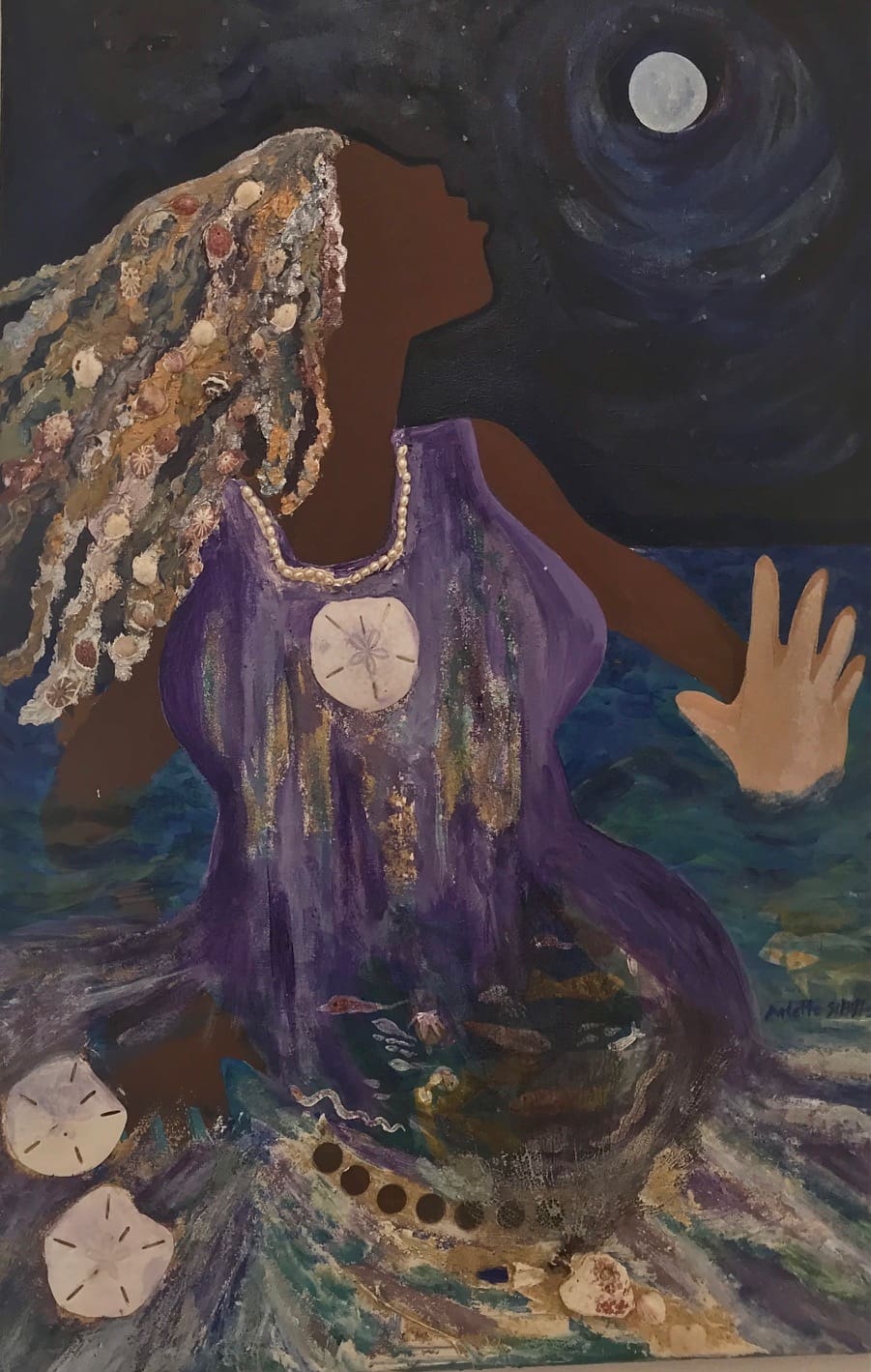
“When I looked at the art of Patricia Brintle from Haiti, I could see the Catholic faith in her work. I liked the objects in the Yemaya piece by Arlette St.Hill. There were stones and shells and familiar colors from the Caribbean.” The late Count Darius Etienne of Dominica displayed fabrics and costumes that reminded her of the masqueraders here on St. Croix when she was a child. The costumes took her back to the days of watching them dance in the streets and the performances they had at the time, she said.
This patron enjoyed the artwork with the percussionists, which reminded her of a percussion session here on St. Croix that created different moods for her and she especially liked the work of Bernard Stanley Hoyes. “I loved how the influence of Africa manifests itself in the artists’ work. The exhibit is worthy of another visit,” she said.
CMArts CEO Lisa Mordhorst was extremely pleased, she said. “The show is really beautiful. I thank Anderson Pilgrim for another space where he brings some very talented artists to our place to share with us. Not only that. It’s a really beautiful show.
I must mention that it complements the previous show that dealt with the ‘energies of Puerto Rican and Cuban art,’” he said.
“I think there is something about these themes of spirituality that is incredibly compelling, regardless of who represents the dialogue around it. It is the story of us. And it’s irresistible. It speaks to the depths of our human capacity to revere other spaces beyond our physicality. I just think it’s really powerful when we look at and talk about these issues as a dialogue. I am incredibly excited that the artists who were unable to be here with us physically on St. Croix were able to join us on Zoom. I am delighted with the audience. I loved that our audience stayed in the galleries after Zoom to continue the conversation about art. And that is very special,” Mordhorst said.
“The power that resides in a museum or gallery exhibit is to celebrate it among other people, but then if you also experience it on your own in a quiet space without all the other stuff going on, it changes your life and your perspective. I really want to encourage people to come back as often as they want and as much as they can to be alone with work,” she added.
Expressions of the diaspora: on spirituality and rituals in the galleries above until December 24, sea. to Sat. 9 a.m. to 4 p.m.
Resident artist Ademola Olugebefola will give workshops:
Workshops for teenagers: Wednesday, November 30 and Thursday, December 1, from 4 pm to 6 pm
Workshop for adults: Friday, December 2, from 6 pm to 8 pm
Artist Talk: Saturday, December 3, from 1 pm to 2:30 pm
For more information:
www.cmcarts.org
ampilgrim@hotmail.com



