


In recent years, the month of January has been marked by the deaths of prominent figures in the African art and cultural scene; people without whose investment and cultural capital South Africa would have had to fight sustained battles to free itself from the chains of oppression, the remnants of which are manifested in our daily interactions in the public and private domains.
It is hard to imagine a future without these national monuments. Starting with bra Hugh Masekela in 2018, the baton of death has passed year after year taking the likes of bras Willie Kgositsile, Jonas Gwangwa, Oliver Mtukudzi, as well as mam’ Sibongile Khumalo.
There’s no denying that mam’ Sibongile was amazing. A leading figure in the music industry, she wore multiple hats throughout her career that spanned more than 30 years: administrator, educator, activist, singer, and songwriter. She composed universes and stood by while her other gifts propelled them into whatever corner they needed to occupy.
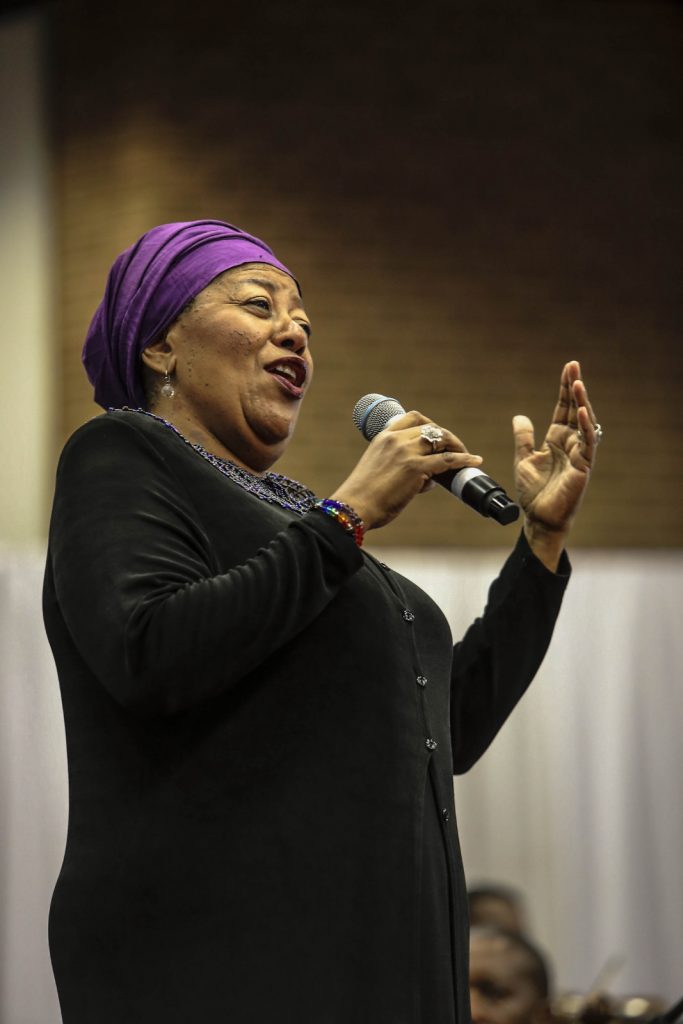
Her death in January 2021 from a stroke after a long illness shattered everyone who knew her, from the inner circle of family and friends who had long been aware of her condition to the broader musical world of collaborators. and admirers.
In her tribute, bra Herbie Tsoaeli, who played with her live in the market album, as well as in the all-star sextet Uhadi Ensemble, he reflected on his professionalism in music; how the peaks and valleys she reached kept the musicians who had accompanied her during her performances going. “She moved with the spirits,” she wrote.
Whether flexing her vocal range as part of orchestras, magnetizing audiences as a theater performer, or communicating with the ancestors in her jazz offerings, she was one of a kind.
Sis’ Brenda Sisane, a close friend, recalled her larger-than-life personality. “Yes there are [was] something that needed a community leader, she would step in and take that position without fear or favor, just because she thought we needed to be there.
“I was included in that place of women thanks to Sibongile, who later extended my relationship with her to meet and hang out with Dorothy Masuka, with Abigail. [Khubeka].”
Sisane tells of someone who spread the knowledge and kindness she had experienced while reaching out to those who were allied with her, and to the younger ones as well. “[That’s why] she could be as bold as an established artist. I found that from the case study of her, it seems that this is how you have to be as a woman”.
The kindness also extended to younger artists, such as Thandi Ntuli and Nomfundo Xaluva. As Xaluva wrote in her loving tribute to him: “His career was the embodiment of artistic prowess, a tree with many branches equal in strength and solidity.”
Bra Hugh Masekela writes about her in his biography, still grazing.
“There must have been close to twenty thousand people at the Moretele Park Festival that Sunday. Sibongile Khumalo, who was my broadcast partner on a Sunday radio show and one of South Africa’s leading jazz and opera divas, also performed.
“After our radio show that morning, the last one together, I told Sibongile that I was going to England to recover from substance abuse. He was so happy for me that he was jumping for joy, squealing with joy and relief. It started pouring down rain just as Sibongile finished his performance. The twenty thousand people who had waited for me didn’t care.”
There are some artists on the continent who have had as illustrious and distinguished a career as Masekela had. Alexandra’s homie grew up in a home of disciplinarians who championed the importance of education and instilled a learning-oriented mindset that would see him and his siblings through many difficult situations. His mother, Pauline, was a social worker and his father, a health inspector and sculptor.
But it was his early introduction to life as a touring musician that allowed him to navigate the music industry, even during the many years he spent in exile. He was a serial collaborator recording or producing groundbreaking projects with The Jazz Epistles, The Union of South Africa (alongside Jonas Gwangwa and Caiphus Semenya) and Hedzoleh Soundz, whom his friend Fela Kuti recommended to him over the years. in West Africa.
He also maintained lasting relationships with people and fostered an environment in which the young musicians he encountered were advancing at breakneck speed to become luminaries.
Moses Molelekwa, who would turn 50 this April, was invited to join bra Hugh’s first South African group on his return from exile in 1992, he was one of them. Previously, Tshepo Tshola found refuge in Masekela after parting ways with the Sankomota, a group he helped establish.
In one of his last public engagements before falling ill, rapper Riky Rick joined Bra Hugh in a series of conversations ahead of the Joy of Jazz festival. An emcee who had long bubbled into underground rap while planning the moves that would make him an artist conversing with a statesman whose rock star status had endeared him to Miles Davis, what could be better? It was a memorable night.
Bra Hugh sported her usual casual charm as she regaled both Riky Rick and the audience with stories of her bold appearance. They talked about music and fashion, two things they both prided themselves on.
“They not only dressed up, but they set the standard for dressing in the world. In the 1930s and 1940s, everyone wanted to be African American all over the world. I always say if it weren’t for Louis Armstrong [and] all those people, we’d probably still be wearing white powdered wigs and those buckled shoes that George Washington used to wear,” Bra Hugh said, referring to how jazz musicians changed things for the better.
A few months after that link, on the morning of January 22, 2018, the father of African jazz left Earth. To say that he left many hearts broken is an understatement. Two other musicians would suffer the same fate in the following years.
“If you seek to name a musician whose life embodies the South African people’s struggle for a national culture, it must be trombonist, composer and cultural activist Jonas Mosa Gwangwa,” his sister Gwen Ansell wrote after his death in 2021.
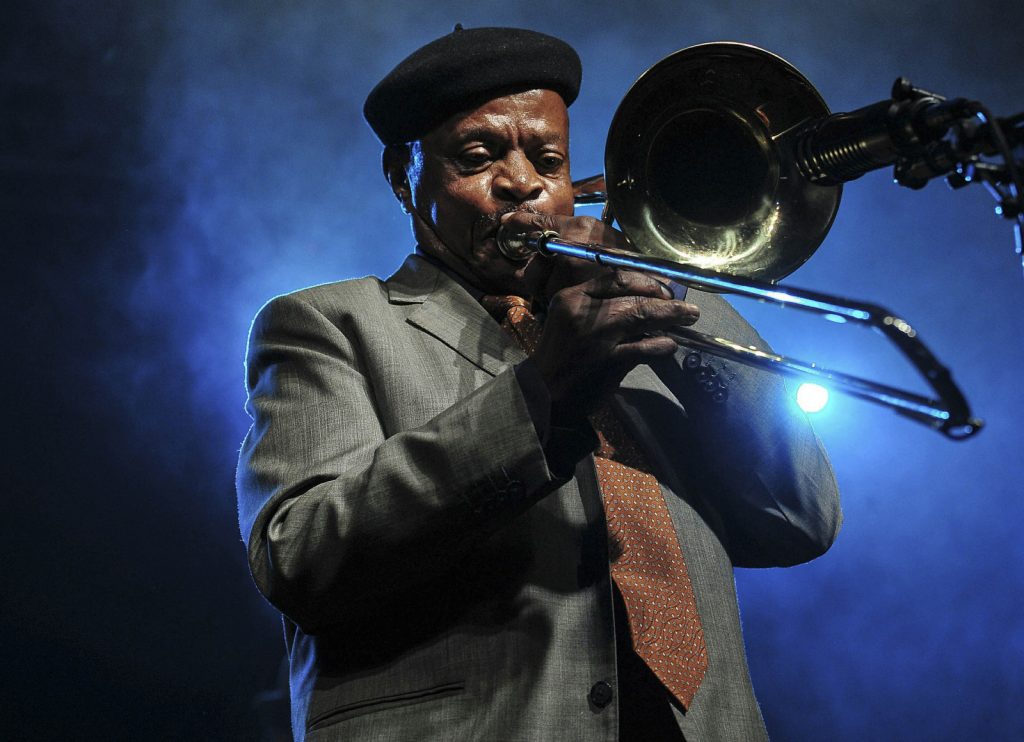
A cultural figure deeply immersed in the resistance movement against apartheid, he left behind a legacy of “political education as heard through music” unlike any of his day, and did with the trombone what uMkhonto us generals. of Sizwe, we did in the camps.
He fought the enemy with singular focus; he channeled victory, but he was aware that it could not be achieved alone. Before founding the Amandla Cultural Ensemble and traveling the world in the 1980s, ntate Gwangwa was having a good time with Hughie and Caiphus. [Semenya] in the United States as part of the trio The Union of South Africa, which had to disband after Gwangwa suffered a leg injury that made it impossible to tour.
Recalling those years, bra Hugh writes in his book that he received a call from ntate Caiphus Semenya. “Jonas had come to Los Angeles and was staying with him. The three of us form a group called The Union of South Africa.”
Intense daily rehearsals followed, the sessions of which resulted in their self-titled epic of an album. The rest of the band featured the likes of frequent Masekela collaborator Joe Sample, as well as Wayne Henderson and fellow Jazz Crusaders members Wilton Felder and Arthur Adams.
“[The album] it was completed in two weeks, mainly because we had rehearsed very intensively for at least three weeks. The results were a masterpiece.”
Bra Steve Dyer met ntate Gwangwa during the 1980s. I called him to talk about my memories of him and mukuru Oliver Mtukudzi, whose hit album tuku music produced, along with five other projects.
“I helped him form this group called Shakawe in Botswana, and that was the music division of Medu (Arts Collective). She would spend half her time on tour with the Amandla Cultural Ensemble outside, going to all the different places in the world, and then she would spend half the time with us.
“Some of the stuff that he recorded later, we used to play in Botswana. Ledimo lea Tsoga, Diphoror, Ulibambe Lingashoni. [The music] I had a message. Bra Hugh came along a couple of years later, and they were the two predominant bands there. Bra Hugh was political in his way, but maybe not as specifically as bra Jonas,” he said.
The story of how he ended up in Botswana is an interesting one. According to Dyer, she flew in from the United States on tour. She didn’t feel like going back, so she took the return ticket money, drank it at the President Hotel, and then stayed. He was always a guy who loved the community of home, and I really missed that when he was away.
His enduring work with the ensemble is one part, and has influenced musicians like Mandla Mlangeni and his Amandla Freedom Ensemble to do the work they have been doing in recent years.
On the other hand is his work as a soloist. The repertoire was wide; everything from American blues to African wedding songs was part of one great melting pot. In addition to the classics Dyer refers to, Kgomo, Maseru, morwa and many others are testimonials to his compositional power.
Of producing Tuku’s music, bra Steve had this to say: “I had to do a lot less with him and his band at that stage. Many of the songs were largely arranged, even his backing vocalists at the time were great too. I was just enhancing what was already there for me.
“His microphone technique in the studio was impeccable, and so was his work ethic. He did not smoke and did not drink. [It doesn’t matter] that he had made 40 albums, if we were to do a rehearsal, he would be the first in rehearsal. He was driven and consistent, and he had great songs and a great voice and a great message. What more do you need from an artist?
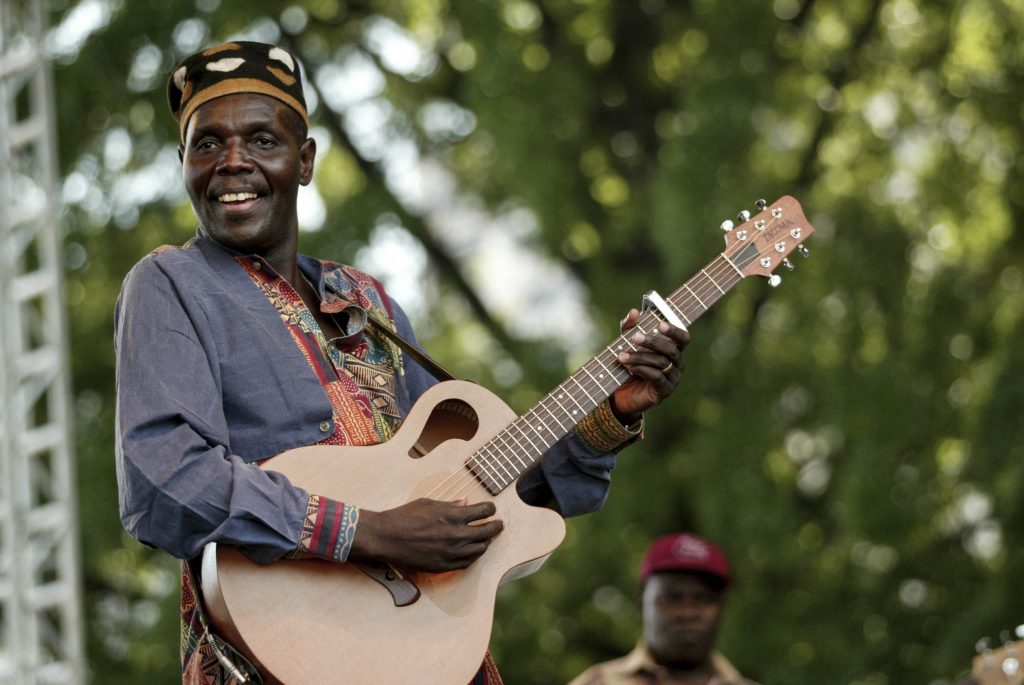
One of the last times Tuku, who died on January 23, 2019, honored us with eMzansi was during Arts Alive’s Jazz on the Lake festival in 2018.
He was unable to arrive before daylight, and Dyer took it upon himself to rehearse the band.
“He had never met [them] before going on stage. She had a later concert at another venue out of town, but she knew it was going to be okay. We had communicated before; we agreed on the song list. He just went on stage, we knew the arrangements, and that’s how it happened. I’ve never done that before, but it worked back in the day.
“I never knew it was going to be the last time on stage with him. What can you say?” said Bra Steve.
“He seemed strong at the time. You never know about these things; when he is going to pass I did not see him long after that, until I received the news that he was no longer there.
Such has been the presence of death in our lives, especially during the worst moments of the Covid-19 pandemic, that it is difficult to think about the future with a clear head.
But the new guard is here, carrying on the work and imparting that wisdom of the elders to those who come after them. The roads that our ancestors burned down will shine brighter from one generation to the next.


